


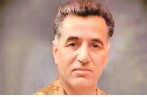
In a first for Pakistan, a military court has sentenced former Inter-Services Intelligence chief Faiz Hameed to 14 years of rigorous imprisonment. The Inter-Services Public Relations announced that the punishment followed a court martial that began on 12 August 2024. He was convicted of engaging in political activities, breaching the Official Secrets Act, misusing authority and state resources, and causing losses to private individuals. He is the first former ISI chief to face a court martial in the country’s history.
Faiz’s downfall is closely linked to his association with former prime minister Imran Khan, who has been jailed since 2023. Their political alignment placed him at odds with the current power structure led by Army chief Field Marshal Asim Munir and Prime Minister Shehbaz Sharif. According to Dawn, the ISPR said that the court found Faiz guilty on all four charges after extensive legal proceedings.
The ISPR also disclosed that a separate case is underway against him for allegedly helping stir political unrest in cooperation with certain political groups. This relates to accusations that he was involved in the agitation that erupted on 9 May 2023 when supporters of Khan’s Pakistan Tehreek-i-Insaf mounted nationwide protests targeting military installations. Demonstrators vandalised the homes of senior Army officers and stormed the Army headquarters, an unprecedented challenge to the military’s authority.
The 9 May events form a key part of the allegations against Faiz. The Army has previously stated that his actions contributed to the unrest that led to multiple incidents of instability driven by political interests. These developments severely damaged the standing of both Imran Khan and the Army at a critical political moment.
Faiz had risen to prominence in August 2021 when he appeared in Kabul shortly after the Taliban takeover of Afghanistan. Pictures of him at a hotel in the Afghan capital were seen as evidence of Pakistan’s influence in the region. However, his career trajectory shifted after Imran Khan was removed from office in April 2022. Imran accused the United States, the military establishment, and major political parties of orchestrating his ouster.
As ISI chief, Faiz had already drawn criticism for his alleged role in the removal of former prime minister Nawaz Sharif through the Panama Papers case. He was also widely viewed as instrumental in helping Imran Khan rise to power in 2018. In October 2021, he was replaced as ISI chief despite Imran’s reported efforts to retain him. Army chief Qamar Javed Bajwa is believed to have insisted on his transfer to the 11 Corps.
By August 2022 it had become clear that Faiz no longer enjoyed institutional support. He was moved from the influential 11 Corps to the 31 Corps, and in November he opted for early retirement as Asim Munir assumed command of the Army. His sentencing now marks a dramatic culmination of his fall from power.