


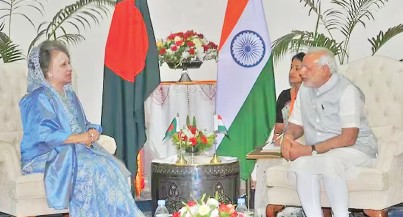
Khaleda Zia, who died at the age of 80 in late December 2025, was a defining figure in Bangladesh’s political history as the country’s first woman prime minister and a leader whose tenure deeply affected India-Bangladesh relations. Her life story bridges South Asia’s post-Partition era, democratic struggles, regional diplomacy and sustained rivalry with fellow politician Sheikh Hasina, creating a complex legacy that shaped her country’s politics for more than three decades.
Born Khaleda Khanam on August 15, 1945, in Jalpaiguri in what was then undivided British India, her early life had roots on both sides of the eventual India-Bangladesh border. After the 1947 Partition, her family moved to Dinajpur in what became East Pakistan and later Bangladesh. She married Ziaur Rahman, an army officer who rose to become president of Bangladesh, and following his assassination in 1981, she entered politics in a turbulent period dominated by military rule and demands for democratic reform.
Zia quickly became a central figure in the Bangladesh Nationalist Party (BNP), assuming its leadership and spearheading the movement against military ruler Hussain Muhammad Ershad. Her efforts helped bring about national elections in 1991, launching her first term as prime minister and marking her as the first woman to hold the office. During this initial period, she helped restore parliamentary democracy and initiated structural reforms, including establishing a caretaker government system to oversee free and fair elections and introducing new economic policies aimed at modernising the financial sector.
Despite these early achievements, relations between Dhaka and New Delhi during Zia’s leadership were frequently strained and politically charged. She positioned her party’s platform around a strong sense of national sovereignty, often contrasting her approach with that of her bitter rival Sheikh Hasina, whose party was seen as more India-friendly. Zia’s first term included a firm stance on water sharing from the Ganges and resistance to transit privileges that would allow India overland access to its northeastern states through Bangladesh. She argued that such arrangements could compromise Bangladesh’s security and autonomy, framing her positions as defending national interests.
The electoral victory of 2001 brought Zia back to power for a full term that would become the most controversial and defining phase of her premiership. Her government aligned with the right-wing Islamist party Jamaat-e-Islami, a partnership that drew significant criticism at home and abroad. New Delhi viewed this period as one of the lowest points in bilateral relations, with Bangladesh accused of providing space to insurgent groups that destabilised India’s northeastern states. Zia’s government also strengthened defence ties with China and was perceived as distancing itself from deeper cooperation with India. She openly characterised elements of Indian transit proposals as tantamount to domination, even comparing toll-free Indian truck movement through Bangladesh to “slavery.”
Within Bangladesh, her tenure was also marked by ongoing political polarisation and allegations of corruption involving her inner circle. Her elder son, Tarique Rahman, was widely perceived as wielding significant influence in government decision-making, and critics accused him of running a parallel power centre. Controversies culminated in legal proceedings that would shadow her political career for years, including convictions in corruption cases linked to charitable trusts. Zia’s supporters maintained these charges were politically motivated attempts by rival forces to weaken the BNP, while opponents argued they reflected deep systemic corruption.
The rivalry between Zia and Hasina became one of the most enduring aspects of Bangladesh’s political scene, often described as the “Battle of the Begums.”
After losing elections and boycotting some polls, Zia’s party remained a major force in opposition, while Hasina’s Awami League enjoyed periods of sustained governance.