


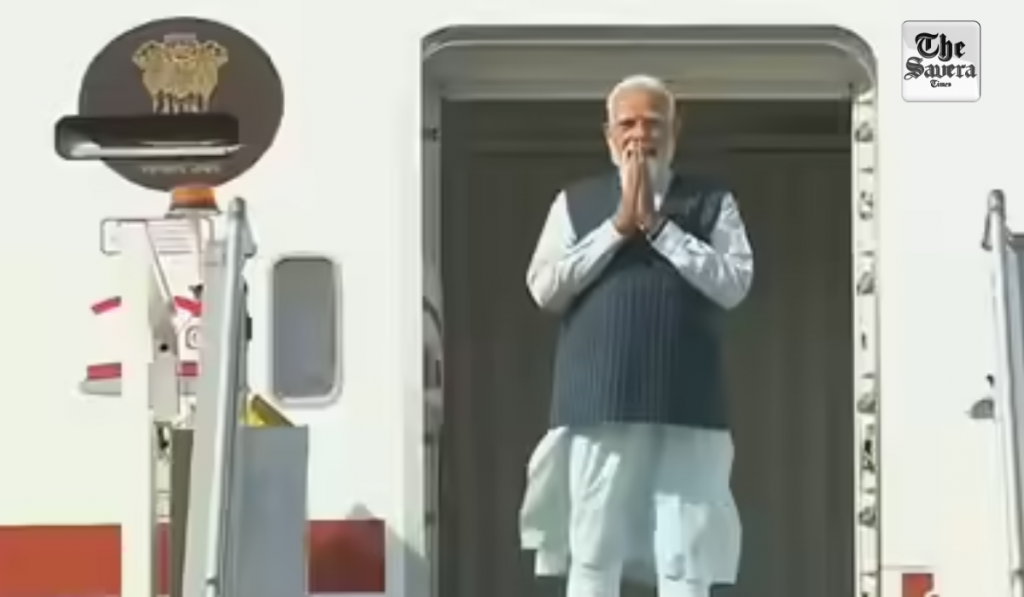
In the business of statecraft, optics are often mistaken for substance. The Prime Minister’s recent fivenation tour—spanning the UAE, the Netherlands, Sweden, Norway, and Italy—might have been dismissed by skeptics as another marathon of high-table diplomacy.
Yet, beneath the diplomatic theatre, there lies a coherent, cold-eyed strategy: moving India from the periphery of the global supply chain to its center. At a time when global capital is skittish and supply chains are being radically re-imagined, this trip was effectively a hunt for long-term anchors.
The nearly $40 billion investment pipeline unveiled across these five nations is not just a statistical headline; it is a signal of confidence in the India story. The most immediate impact of these engagements is the move into high-value manufacturing. For decades, India has chased foreign investment as a generic goal.
This tour, however, was clearly sectoral. Whether it is the Dutch expertise in water management and climate-resilient infrastructure or the UAE’s focus on integrated logistics, the intent is to bring specific, hightech capabilities into the Indian market. When these partnerships take root, they do more than bring in capital; they force a skilling upgrade within our domestic industry.
This is the difference between simply “doing business” and building a sustainable industrial base that can compete on quality, not just cost. Equally important is the strategic diversification.
For years, India’s foreign policy often leaned heavily on traditional power centers. This tour reflects a shift toward “multialignment.” By deepening ties with the Nordic nations—leaders in green transition and circular economies—and elevating the partnership with Italy, New Delhi is ensuring it is not caught in the crosshairs of a bipolar global order. Consider the access to critical minerals and renewable energy tech. In the race to 2030, energy security is the new national security.
By securing these European and Gulf partnerships, India is essentially insulating itself against the volatility of global energy markets. It is a hedge against future shocks, ensuring that our growth story isn’t derailed by external supply-side constraints. There is also the matter of our standing.
We are seeing a rare moment where India is viewed not merely as a consumer market, but as a stabilizing force. In a world defined by the “polycrisis”—from geopolitical friction to economic stagnation—India is projecting an image of predictable, steady growth. This perception is perhaps our most valuable export. When European and Gulf capitals see India as a reliable partner, they don’t just invest money; they invest in our regulatory environment and our long-term trajectory.
Of course, the real test of such tours is always in the execution. Announcements are easy; implementation is where Indian diplomacy has historically struggled. The coordination required between the Ministry of External Affairs and the various state governments—where these factories and research centers will actually sit—will be the true barometer of this trip’s success.
We need a seamless bridge between the enthusiasm of a foreign boardroom and the realities of our local land, labor, and compliance laws. Ultimately, this tour suggests that the government has recognized that foreign policy is no longer an abstract luxury. It is, quite literally, the plumbing of our domestic economy.
If these $40 billion in commitments translate into functioning semiconductor fabs, greener transport networks, and advanced research collaborations, then this trip will have done more than just boost our international profile—it will have provided the tangible fuel our economy needs to hit its next growth milestone.
The world is currently in a state of flux, looking for partners that are both democratic and dynamic. By staking our claim as that partner, the Prime Minister has done more than secure investments; he has ensured that India is not just a witness to the changing global order, but a primary architect of it.