


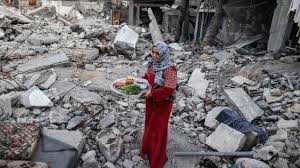
Global acute hunger has nearly doubled over the past decade and shows no sign of retreating. In fact, two famines were declared last year — in Gaza and parts of Sudan — marking the first time in the report’s history that famine was declared in more than one country in the same year.
The scale underscores how deeply entrenched acute food insecurity and malnutrition is, but the crises has increasingly been concentrated in a core group of countries.
The recent report by the United Nations (UN), the European Union, Ministry of Economic Cooperation and Development, Germany, the UK Foreign, Commonwealth & Development Office, the Government of Ireland, the Group of Seven Plus and governmental and non-governmental agencies working together to address food crises.
In its 10th edition, the report found that 22.9 per cent of the analysed population across 47 countries (about 266 million people) experienced high levels of acute food insecurity in 2025, a marginal increase from 2024.
While the headline figure appears broadly stable, the report cautions that this is largely due to a reduced number of countries assessed this year rather than any meaningful improvement in conditions. The share of people facing acute hunger has remained above 20 per cent since 2020 and is nearly double what it was in 2016.The crisis was found to be concentrated in certain regions: Just 10 countries — Afghanistan, Bangladesh, the Democratic Republic of the Congo, Myanmar, Nigeria, Pakistan, South Sudan, Sudan, Syrian Arab Republic and Yemen — accounted for two-thirds of all people facing high levels of acute hunger. Afghanistan, South Sudan, Sudan, and Yemen experienced the largest food crisis both in terms of the share and absolute number of people affected.