


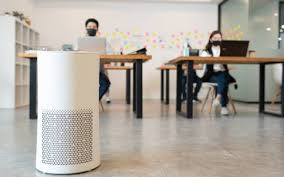
According to new research from the University of East Anglia, air filtration systems do not reduce the risk of contracting viral illnesses.
A new study reveals that technologies designed to make social interactions safer in indoor spaces are not effective in the real world.
The team studied technologies including air filtration, germicidal lights and ionisers. They looked at all the available evidence but found little to support hopes that these technologies can make air safe from respiratory or gastrointestinal infections.Prof Paul Hunter, from UEA’s Norwich Medical School, said: “Air cleaners are designed to filter pollutants or contaminants out of the air that passes through them.
“When the Covid pandemic hit, many large companies and governments – including the NHS, the British military, and New York City and regional German governments – investigated installing this type of technology in a bid to reduce airborne virus particles in buildings and small spaces.”But air treatment technologies can be expensive. So it’s reasonable to weigh up the benefits against costs, and to understand the current capabilities of such technologies.”The research team studied evidence about whether air cleaning technologies make people safe from catching airborne respiratory or gastrointestinal infections.
They analysed evidence about microbial infections or symptoms in people exposed or not to air treatment technologies in 32 studies, all conducted in real world settings like schools or care homes. So far none of the studies of air treatment started during the Covid era have been published.Lead researcher Dr Julii Brainard, also from UEA’s Norwich Medical School, said: “The kinds of technologies that we considered included filtration, germicidal lights, ionisers and any other way of safely removing viruses or deactivating them in breathable air.”In short, we found no strong evidence that air treatment technologies are likely to protect people in real world settings.
“There is a lot of existing evidence that environmental and surface contamination can be reduced by several air treatment strategies, especially germicidal lights and high efficiency particulate air filtration (HEPA)