


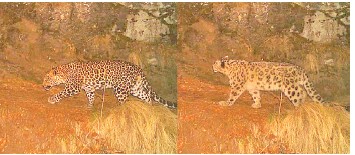
Recent research shows Himalayan big cats like snow leopards and common leopards are sharing parts of the same landscape, but scientists aren’t sure if this means they’re coexisting long term or just bumping into each other occasionally. Cameras set up in Nepal’s Annapurna Conservation Area recorded common leopards as high as 3,800 metres, a surprising find because these cats are traditionally forest dwellers while snow leopards are mountain specialists. Historical and camera-trap data from the 1950s through 2023 suggest overlaps happen most in the winter when snow leopards descend to lower altitudes and common leopards move upslope.
The study’s author, conservation ecologist Paras B Singh, argues the overlap isn’t driven primarily by climate change but by natural ecological dynamics and species adaptability. For example, common leopards have been filmed surviving sub-zero temperatures and giving birth at around 3,500 metres, showing they can adjust to harsher conditions than previously thought. Singh also notes that while range overlaps occur, there is still general habitat segregation: common leopards stick closer to forests, and snow leopards stick above the treeline.
This interaction raises conservation questions because apex predators tend to carve out distinct niches to avoid direct competition. Overlap could lead to competition for the same prey, especially in winter when resources are scarce, and might increase conflicts with livestock herders who share the landscape with both cats. Singh’s research shows common leopards occupy about 96 per cent of snow leopard habitat, but snow leopards overlap only around 61 per cent of common leopard ranges, suggesting the former still retains stronger footholds in its core high-altitude territories.
In India’s Gangotri landscape, researchers observe similar patterns: common leopards and snow leopards sometimes meet in subalpine zones where their ranges intersect, especially under seasonal shifts. During winter when snow thickens at higher elevations, both species may move to similar altitude bands in search of prey. In summer, livestock movement upslope can attract both predators, increasing interactions.
Despite these findings of overlap, experts aren’t ready to say that multiple big cat species are truly sharing the Himalayas in an ecological sense. According to Abhishek Ghoshal from the Wildlife Trust of India, occasional sightings of species outside their classic ranges—like tigers or common leopards at higher altitudes, or snow leopards lower down—reflect exploratory behaviour rather than established coexistence. These animals are adaptable and range beyond usual zones, but that doesn’t necessarily mean stable, long-term habitat sharing.
Technological advances like camera traps have increased our ability to detect these overlaps, revealing patterns that were previously invisible.