


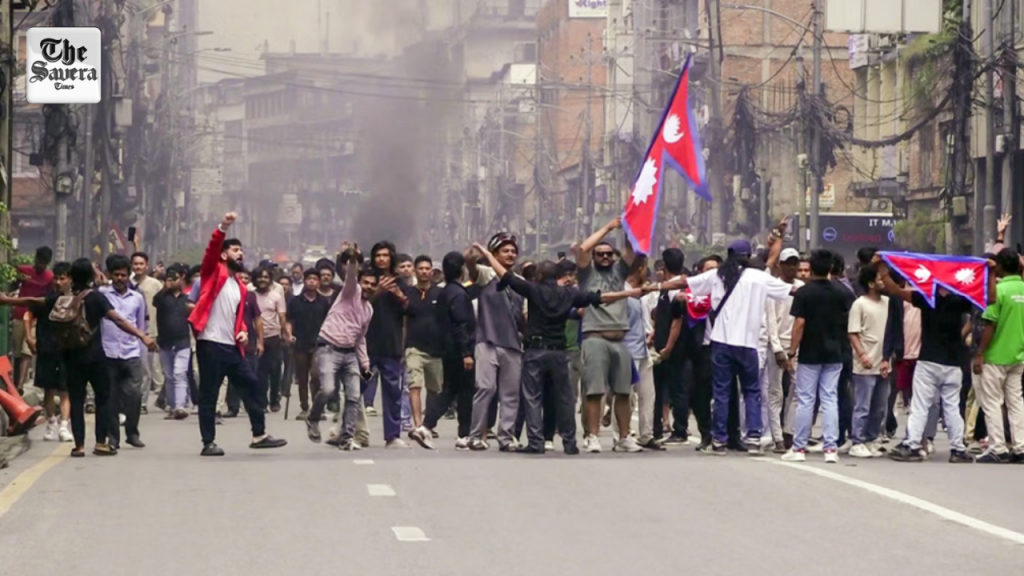
New Delhi: Nearly 2,000 Indians have crossed back into the country in the past three days through the Panitanki border in Siliguri, West Bengal, after being caught in the violent unrest sweeping Nepal.
Relief After Harrowing Experience
According to a senior Sashastra Seema Bal (SSB) official, the evacuees included both labourers and tourists. “The Indians who returned home breathed a sigh of relief. The shadow of the terrible experience due to the unrest in Nepal was visible on their faces,” he said.
Special Evacuation Efforts
On Thursday, the evacuation of stranded Telugu people began. A special flight carrying 12 people took off from Simikot, while another group of 22 travelled by road to safety.
Minister for Real Time Governance Nara Lokesh, who supervised the operation, announced that an IndiGo flight from Kathmandu to New Delhi would bring back over 200 people. He posted on X that 133 evacuees had already been escorted to the airport under convoy protection.
In another operation, 22 people travelling by bus from Hetauda crossed into India safely and are currently en route to Delhi via Bihar. Separately, a special flight moved 12 Indians from Simikot to Nepalganj, from where they were transported by road to Lucknow and onward to Hyderabad. TDP MP Sana Satish coordinated with local authorities for the smooth execution of this evacuation.
Political Crisis Deepens in Nepal
Amid the unrest, Nepal’s President Ram Chandra Poudel on Thursday appealed for calm, urging all stakeholders to address protesters’ demands while upholding democratic values. “Efforts are being made to find a solution within the framework set,” he said, warning against any deviation from the constitutional course.
The President’s statement comes amid fears that ongoing negotiations led by the Nepal Army with Gen-Z protest leaders could pave the way for military dominance. A curfew was imposed across the Kathmandu Valley till Friday morning as demonstrations continued, with some groups demanding the preservation of democracy and resisting the possibility of army rule.
Interim Leadership on the Horizon
Former Chief Justice Sushila Karki has emerged as the frontrunner to lead an interim government, with strong backing from youth leaders and civil society. Kathmandu Mayor Balen Shah has also thrown his support behind her candidacy.
President Poudel, as the ceremonial Commander-in-Chief of the Nepal Army, has insisted he is steering the negotiations. However, concerns remain over the army’s increasing role in shaping the country’s political trajectory following the Gen-Z revolution that ousted Prime Minister K P Sharma Oli.