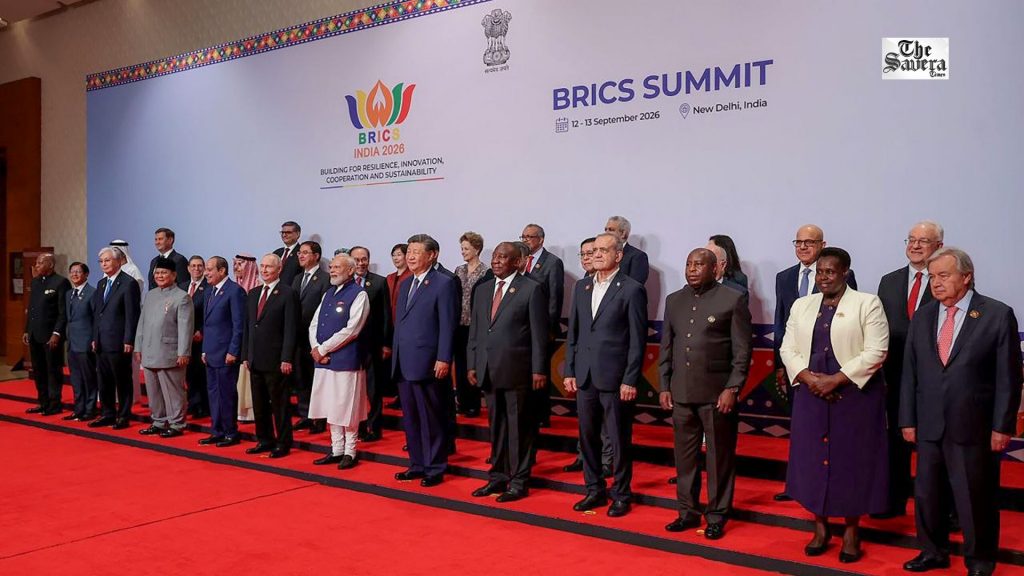
The growing interest of Southeast Asian countries in BRICS reflects a broader push for strategic autonomy and diversification of economic and diplomatic partnerships amid shifts in the global order. The recently concluded 18th BRICS Summit, held in New Delhi on September 12-13, 2026, under India’s chairship, brought renewed attention to the grouping’s growing relevance among ASEAN countries. The summit was held under the theme, “Building for Resilience, Innovation, Cooperation and Sustainability”, with a focus on strengthening cooperation across political and security, economic and financial, and cultural and people-topeople pillars. ASEAN’s interest in BRICS merits attention as the Southeast Asian grouping has traditionally positioned itself as a regional platform for small and middle powers, emphasising consultation and cooperation rather than coercion. BRICS is increasingly being viewed in Southeast Asia as a platform through which countries can diversify their economic and diplomatic engagements without subscribing to a ‘West vs. the rest’ binary. Filipino President Ferdinand Marcos Jr., who attended the New Delhi summit as ASEAN Chair and an Outreach Country, said ASEAN nations would engage with BRICS on advancing peace, inclusive growth, sustainable development and a rules-based international order. The Philippines’ interest in expanding its diplomatic and strategic options comes amid its sovereignty dispute with China in the South China Sea. It said BRICS could provide Manila with an additional platform to broaden its engagement while avoiding direct confrontation with Beijing. On the sidelines of the summit, India and the Philippines also held discussions on expanding their strategic partnership across defence, trade, space and infrastructure. The Philippines had purchased the shore-based version of India’s BrahMos anti-ship cruise missile in 2022, with deliveries of launch systems beginning in April 2024. According to the Vietnamese ambassador to India, through engagement, Vietnam aims to contribute to the overall success of BRICS, helping strengthen the voice of developing countries, while it will provide Vietnam with additional space to diversify markets and partners. Vietnam became a BRICS partner country in 2025, while Vietnamese Prime Minister Le Minh Hung attended the New Delhi summit at Prime Minister Narendra Modi’s invitation. Hanoi sees BRICS as another platform beyond ASEAN through which it can expand partnerships while maintaining ties with China, the United States, Japan and Europe. India and Vietnam also agreed to strengthen defence and maritime cooperation on the sidelines of the summit. Malaysia, another BRICS partner state, is also looking at the grouping as an avenue to expand economic and diplomatic engagement with major emerging markets amid global economic uncertainty and regional conflicts. India is Malaysia’s largest trading partner in Asia and said “Indian companies had 293 approved manufacturing projects in Malaysia worth US$2.95 billion as of June 2026, which is expected to create 28,455 jobs.”
ASEAN Countries Show Growing Interest in BRICS