


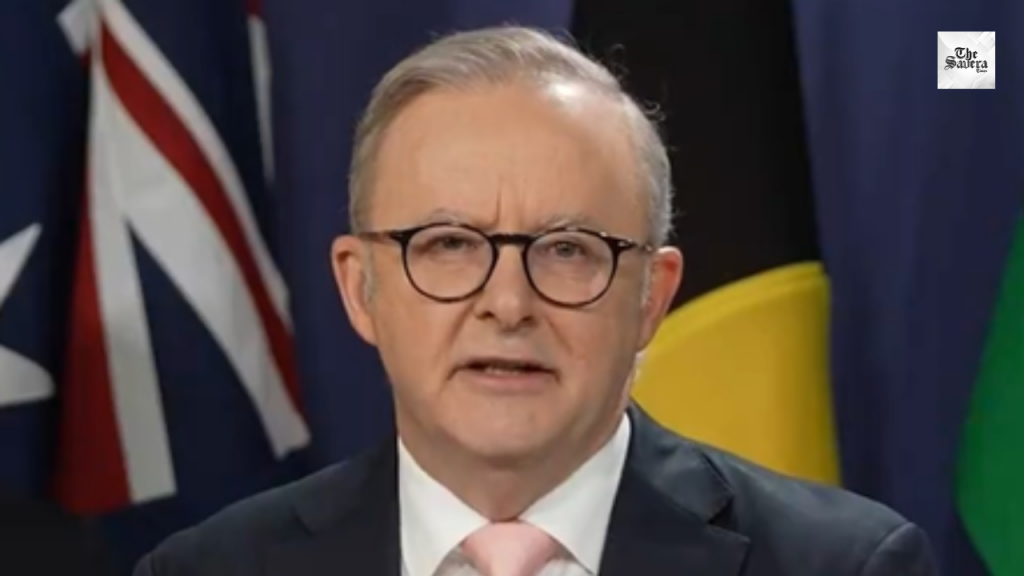
Anthony Albanese on Wednesday highlighted a set of proposed measures aimed at protecting Australia’s economy from increasing global economic uncertainty, particularly driven by ongoing international conflicts and economic fluctuations. The Prime Minister described the current global situation as volatile and warned that Australia must bolster its economic buffers to withstand future shocks.
Albanese made the remarks during a speech to an automotive industry group in Canberra, where he emphasized that recent global disruptions — including the effects of the Middle East conflict have created fresh risks for economic growth, inflation, and supply chains.
Global uncertainty seen as major risk
In his address, Albanese said the world is facing “one of the worst” sequences of shocks in recent years, referencing the COVID‑19 pandemic, the Russia‑Ukraine conflict, and geopolitical tensions in the Middle East. These events, he noted, have put pressure on global markets, trade flows, and energy prices, increasing risks for Australia’s export‑oriented economy.
The Prime Minister stressed the need for Australia to prepare for ongoing uncertainty by introducing policies that strengthen economic resilience and support households and businesses against external pressures.
Measures to strengthen economic resilience
While specific policy details are still being finalised, Albanese’s remarks pointed toward several areas of focus. These include steps to safeguard key sectors against volatility, support employment, and enhance domestic production capacity. Analysts say such measures could involve targeted investment in strategic industries, incentives for local manufacturing, and reforms to improve productivity.
These policy ideas align with broader government efforts to build economic buffers that reduce reliance on international supply chains and external markets, a strategy increasingly cited by Treasurer Jim Chalmers and economic advisers.
Domestic economic context
Australia’s economy has shown resilience in the face of previous global disruptions. According to recent reports from the International Monetary Fund (IMF), the country has maintained solid growth and low unemployment despite external risks, though inflation remains above target in many advanced economies. The IMF also noted that Australia’s responsible fiscal and monetary policies have helped support economic stability.
These domestic conditions provide a foundation for the government’s plans, although economists caution that continued global uncertainty could still affect consumer confidence and investment.
Industry reactions and business confidence
Leaders in the automotive and manufacturing sectors welcomed Albanese’s focus on economic stability. Industry representatives said policy certainty and targeted support would help businesses make long‑term investment decisions, particularly in areas requiring advanced technology and export potential.
Some business groups have also urged the government to balance protective measures with efforts to keep markets open and competitive.
Political and public response
Opposition parties have acknowledged the need to address global economic risks but called for greater clarity on how proposed measures will be implemented and funded. Public commentators have highlighted the importance of shielding cost‑of‑living pressures for ordinary Australians while maintaining fiscal discipline.
Albanese vowed to continue consultations with state leaders, industry stakeholders, and economic advisers as the government refines its strategy ahead of the next federal budget.