


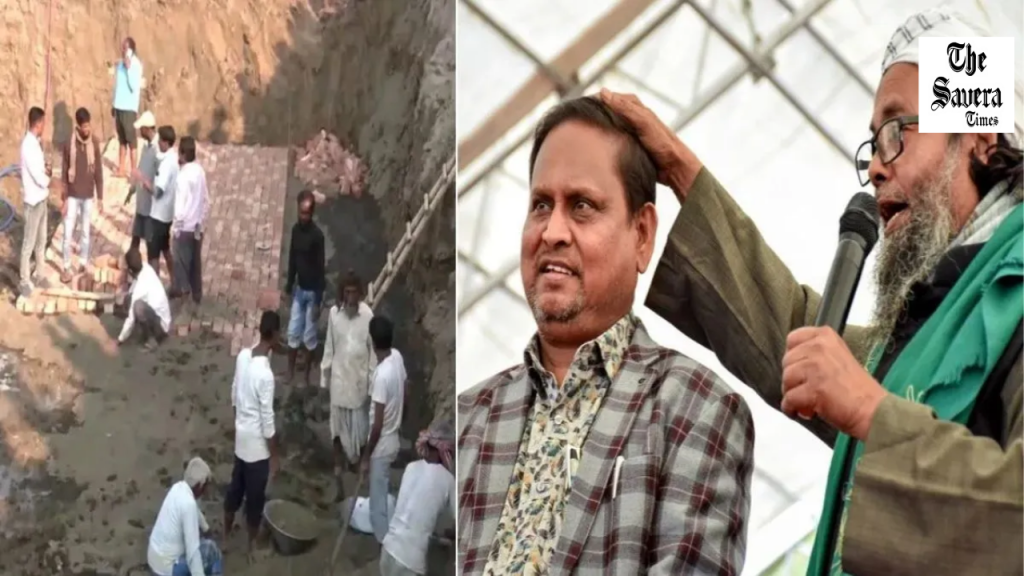
Murshidabad (West Bengal), Feb 11: Construction of a Babri Masjid‑style mosque began on Wednesday at Beldanga in Murshidabad district, drawing both attention and protests nationwide. The event widely publicized by suspended Trinamool Congress leader Humayun Kabir began with recitation of the Holy Quran by a large number of clerics and religious scholars before formal laying of the first bricks. Organizers said around 1,000 to 1,200 imams, muftis and maulanas were invited for the Quran recitation as part of the programme.
Humayun Kabir Leads Mosque Project
The mosque project, inspired by the original Babri Masjid structure in Ayodhya, is being spearheaded by Humayun Kabir, chief of the Janata Unnayan Party (JUP) and former MLA. Kabir has said that the mosque’s construction work will continue over the next two to three years, with an estimated total cost of around ₹300 crore. In addition to the mosque itself, plans reportedly include auxiliary facilities such as a hospital, school and community services, according to project details released by organisers.
Religious Ceremony and Symbolic Start
Wednesday’s event began with the Quran recitation ceremony, a significant ritual in Islamic tradition symbolising spiritual blessings and community support before the start of construction. The formal commencement was scheduled to take place at around 12:00 PM on the site near National Highway 12, reflecting the organisers’ intention to give the project both religious and public visibility.
Political Reactions and Controversy
The announcement and start of construction have triggered political debate and protests. Leaders from other states, including Uttar Pradesh Chief Minister Yogi Adityanath, publicly stated that “a Babri structure will never be rebuilt,” a comment that drew a firm rebuttal from Kabir, who insisted on his constitutional right to build a mosque.
The Trinamool Congress (TMC) has distanced itself from Kabir’s initiative, arguing that the project could be politically motivated, especially with West Bengal Assembly elections approaching later this year. TMC leaders have suggested the mosque construction could become a tool to influence vote banks before polls.
Security and Administration Response
Murshidabad district authorities maintained a heightened security presence during the event to ensure law and order, given the potentially sensitive nature of the mosque’s construction and the expected large gathering of religious figures. Police deployment in and around Beldanga was aimed at preventing clashes or public unrest.
Wider Public and Religious Responses
In addition to political reactions, the construction has drawn responses from religious organisations. Some Hindu groups, including the Vishwa Hindu Parishad (VHP), have called the move unlawful and urged the state government to take action against Kabir under relevant provisions of the Bharatiya Nyaya Sanhita (Indian Penal Code successor), alleging that the plan could hurt religious sentiments.
Meanwhile, clerics and community leaders have also emphasised the importance of maintaining peace and harmony, reminding the public of the Supreme Court’s 2019 Ayodhya verdict and urging all parties not to reopen old communal wounds.
Project Outlook and Future Plans
With construction work officially underway, organisers aim to bring the mosque to completion within a few years, despite ongoing debate. A “Babri Yatra,” or procession, has also been planned to begin from Feb 12, covering several districts to raise awareness about the project and counter misinformation, according to project associates.
The start of the mosque’s construction in Murshidabad has reignited discussions on religious identity, community rights, and political strategy, underlining the sensitive intersection of faith and politics in contemporary India.