


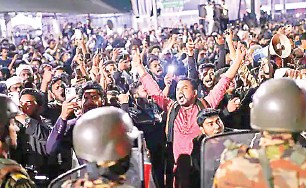
Bangladesh plunged deeper into turmoil after the funeral of Sharif Osman Hadi, a prominent youth leader whose assassination last week triggered widespread unrest across the country. Hadi, known for his role in the 2024 student uprising that toppled former prime minister Sheikh Hasina and his outspoken politics, was shot in Dhaka on December 12 and later died in Singapore. His death set off intense protests that spiraled into grave violence and lawlessness.
Tens of thousands of mourners gathered in the South Plaza of the Jatiya Sangsad (Parliament) and nearby areas in Dhaka on December 20 for Hadi’s funeral prayer and burial next to national poet Kazi Nazrul Islam. The event was held under tight security, with police and paramilitary forces deployed to manage the massive crowds and prevent violence.
But despite the heavy security, a portion of the crowd turned defiant. Protesters broke through barricades around the parliament complex and stormed the building, vandalising parts of the premises. Video circulating on social media shows demonstrators forcing their way past police lines and entering the legislative compound in a dramatic escalation of unrest.
This was not an isolated outbreak of disorder. Furious crowds have also attacked independent media offices, including the headquarters of Bangladesh’s largest newspapers, Prothom Alo and The Daily Star. Protesters set both buildings on fire and clashed with security personnel as tensions in Dhaka reached a boiling point. Journalists were reported to be trapped inside as flames and smoke engulfed the offices.
The violence has spread beyond the capital, with reports of attacks on cultural centres and political offices in other districts. Demonstrators have also targeted symbols they see as aligned with rivals or external powers, including incidents involving Indian diplomatic facilities, reflecting rising anti-India sentiments among portions of the protest movement.
The political backdrop is fraught. Bangladesh is heading into a national election scheduled for February 2026, and Hadi had been an independent candidate for a parliamentary seat before his shooting. His death has sharpened fault lines in the country’s volatile transition after the interim government took power in 2024 following Hasina’s ouster.
Interim Chief Adviser Muhammad Yunus declared a national day of mourning for Hadi and urged calm, condemning the violence while affirming investigations into his killing. International voices, including the US embassy in Dhaka, have cautioned citizens to remain vigilant as protests continue.
Still, the breaches of the parliament compound and the attacks on media institutions signal a deepening crisis. What began as grief and outrage over one leader’s death has become a flashpoint for underlying tensions about governance, freedom of expression, and political direction in Bangladesh.