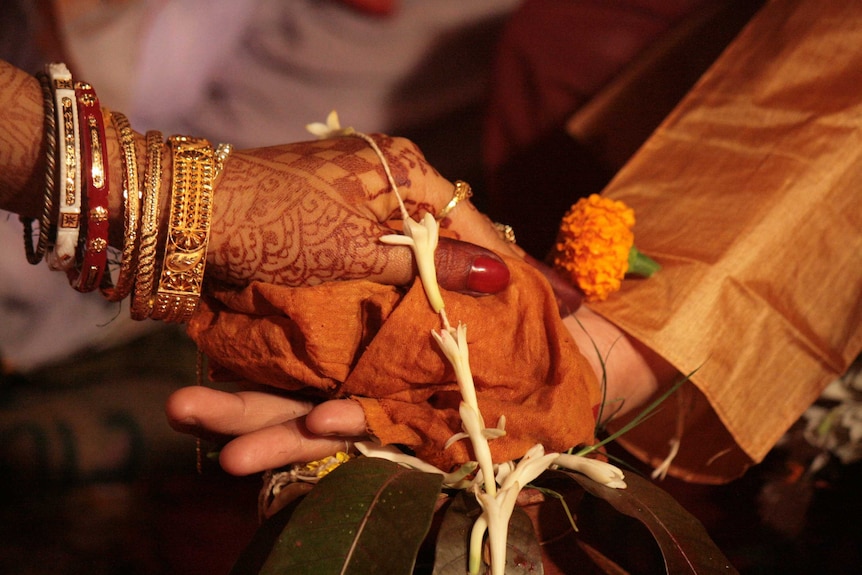
A few days ago, I met someone I had not seen or spoken to for almost ten years. It was one of those unexpected encounters that make you pause. We exchanged smiles, spoke about life, careers, family. From the outside, everything seemed perfectly in place. A successful life. A family. A marriage that had lasted nearly two decades. And then, a few days later, came the real story. Twenty years of marriage—and twenty years of quiet suffering. Not necessarily violence. Not necessarily dramatic confrontation. Something more difficult to see: emotional exhaustion, loneliness inside a relationship, conversations that had died years ago, companionship replaced by obligation, and two people continuing to inhabit the same house while, somewhere along the way, they had stopped inhabiting the same life. It made me wonder: How many marriages in India look perfectly intact from the outside while quietly suffocating the people inside them? We often celebrate the longevity of a marriage as though duration itself were evidence of happiness. “Twenty-five years!” “Thirty years!” “Still together!” But perhaps we should sometimes ask a different question: Together—but how? Indian society places enormous moral value on preserving marriage. Marriage is not merely a relationship between two individuals; it becomes an alliance between families, communities, social identities, economic interests and reputations. Separation is rarely seen as simply a private decision. It becomes a “family matter”, a matter of honour, a matter of children, property, relatives and social standing. And therefore, many people stay. They stay for their children. They stay for their parents. They stay because of money. They stay because of social status. They stay because they fear loneliness. They stay because starting again at forty or fifty feels impossible. They stay because society asks, “Log kya kahenge?” And sometimes they stay simply because they have spent twenty years building a life that they no longer know how to dismantle. But there is a profound question we must ask: If two people no longer want to live together, whom are they actually staying together for? Society? Children? Family honour? Financial convenience? Or themselves? The answer is rarely simple. Sociologist Erving Goffman’s idea of “presentation of self” is particularly relevant here: human beings often manage the image they present to society. A family photograph can therefore become a performance—a picture of harmony that conceals an entirely different private reality. The living room may look beautiful. The marriage may look respectable. The Instagram photographs may look perfect. And yet, two people may return home each evening to an emotional desert. Psychology has increasingly taught us that the quality of a relationship matters enormously, not merely its formal existence. John Gottman’s decades of research on couples identified patterns such as criticism, contempt, defensiveness and stonewalling as deeply destructive relationship behaviours. His research also highlights the importance of emotional connection and everyday responsiveness. (Gottman Institute ) And then there is Eli Finkel’s fascinating “Suffocation Model” of marriage. Finkel argues that modern marriage increasingly carries expectations of intimacy, personal fulfilment, autonomy and growth. When a marriage cannot meet these expectations, dissatisfaction can become profound. The Indian situation adds another layer: social endurance. We have traditionally been taught that compromise is virtue. And compromise is indeed essential to marriage. But there is a difference between compromise and disappearance. There is a difference between adjusting to another human being and gradually losing oneself. There is a difference between preserving a family and preserving the appearance of a family. Children complicate the question even further. Many parents say, “We are staying together for the children.” But research by sociologist Paul Amato and colleagues suggests that children exposed to persistent, high-conflict marriages can suffer significant psychological consequences. In one longitudinal study, young adults from high-conflict families sometimes showed better well-being when their parents divorced than when they remained together in a high-conflict marriage. This does not mean that divorce is automatically better. Nor does it mean that every unhappy marriage should end. That would be an equally simplistic conclusion. Some marriages can be repaired. Some require honest conversations. Some require couples counselling. Some require boundaries with extended families. Some require financial independence. Some require simply rediscovering friendship between two people who have become strangers. And some relationships may genuinely have reached their natural conclusion. The point is not to glorify divorce. The point is to stop glorifying suffering. Perhaps we need a new definition of a successful Indian marriage. Not “They stayed together for thirty years.” But: “They remained kind to each other for thirty years.” Not: “They never separated.” But: “They never stopped respecting each other.” Not: “They sacrificed everything for the family.” But: “They built a family in which nobody had to sacrifice their entire self.” Before staying, ask why. Before leaving, ask why. Before blaming your spouse, look honestly at yourself. Before sacrificing your entire life for society, ask whether society will live that life for you. Because ultimately, marriage is not a prison sentence to be completed. It is a relationship that two human beings must consciously choose—again and again. And perhaps the most important conversation in Indian marriages is the one we have avoided for generations: Are we staying because we still want to be together—or because we are afraid of what will happen if we are not? That question may be uncomfortable. But sometimes, uncomfortable questions are the beginning.
Behind Closed Doors: When Indian Marriages Survive, but the People Inside Them Stop Living