


NITI Aayog is developing a national index to benchmark states on manufacturing and infrastructure performance and is studying a regional plan to stabilise critical resource supply chains, member Arvind Virmani said on September 18.
Speaking on the sidelines of the Confederation of Indian Industry’s India Mining Summit, Virmani said the index will consolidate state-level data on policies, infrastructure readiness, logistics efficiency and ease of approvals into a single composite scorecard.
The aim is to promote competitive and cooperative federalism by giving investors and policymakers a clear comparative tool. “The broad aspects of the index have been worked out and a survey is underway to see how precisely it can be implemented. This is the second stage before finalisation,” Virmani said. The index will be housed within NITI Aayog and is intended to help governments and investors make more informed decisions, he added.
The announcement comes as India presses to secure critical minerals after China briefly tightened rare earth exports earlier this year. Virmani noted that the Indian government is taking a major interest in critical minerals to build a stable domestic supply chain. Virmani also flagged slow progress in critical mineral block auctions, attributing delays to the complexities of auction design.
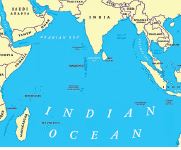
“There is a whole theory of auctions, and it is not as simple as it seems. Minerals bring in pollution, community and environmental concerns, and involve multiple levels of government. Optimal auction design is not easy,” he said, arguing that auction procedures would improve as regulatory and institutional frameworks evolve. In a separate research initiative, Virmani said he is preparing a paper on a metals and energy community within the Indian Ocean Region to diversify supply chains and reduce vulnerability to chokepoint disruptions such as the Red Sea blockade or the Malacca Strait bottleneck. The proposed community would bring together suppliers, producers and consumers in the region to build geographically diversified supply chains for metals and energy. “Perhaps the easiest and quickest way to do this is through a metals and energy community,” Virmani said, citing the European Coal and Steel Community as an inspiration. He stressed the idea remains at research stage and is not government policy.
“Please do not say it is government policy. This is just a research paper I am working on with some research assistants. Hopefully in a month or so we will have it out,” he added. Virmani urged a multi-pronged approach to secure critical resources, combining domestic reforms, partnerships with resource-rich countries and innovation in alternative battery chemistries such as aluminium and zinc based technologies. He warned that the world had effectively ceded rare earth dominance to one country over two decades.
“The world slept while one country’s rare earth share went from nothing to 80-90 per cent in 20 years. We can’t reverse that overnight, but we can start building competitive supply chains now,” he said. The initiatives reflect a broader government push to strengthen industrial competitiveness and reduce strategic vulnerabilities in the face of shifting global supply dynamics.