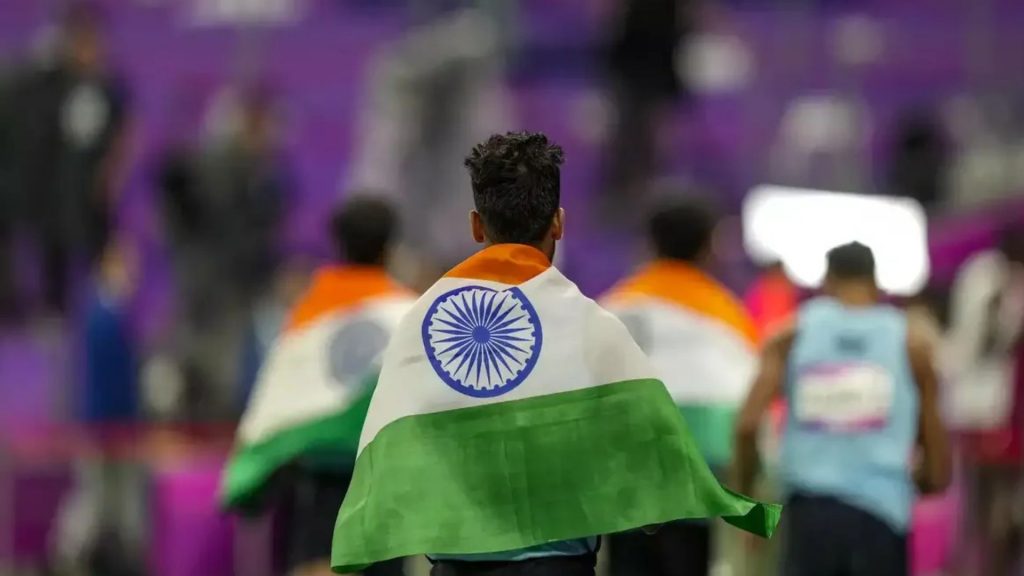
Sports play an important role in building a healthy, confident and disciplined society. They teach teamwork, leadership, patience, determination and the ability to face challenges. India has a large population, a young workforce and enormous sporting potential. Yet, despite producing world-class athletes in several disciplines, the country has struggled to establish itself as a consistent sporting powerhouse. While cricket enjoys extraordinary popularity and financial support, many other sports continue to fight for recognition, infrastructure and investment. If India wants to become a leading sporting nation, it must move beyond its obsession with a single game and develop a broader sporting culture. One of the biggest challenges facing Indian sports is the lack of adequate infrastructure at the grassroots level. In several towns and villages, talented children have limited access to proper playgrounds, training centres, sports equipment and qualified coaches. Many government schools lack even basic facilities for physical education. As a result, young athletes with considerable potential are unable to develop their abilities. Sports facilities should not remain limited to major cities or elite institutions. Every district should have accessible playgrounds, training academies and properly maintained sports complexes. Another concern is the unequal distribution of attention and financial resources among different sporting disciplines. Cricket receives significant media coverage, sponsorship and commercial investment, while athletes representing sports such as athletics, hockey, wrestling, boxing, swimming and badminton often struggle to secure adequate support. Their achievements frequently receive public attention only during major international competitions. A country with India’s population cannot afford to overlook talented players simply because they participate in less commercially popular sports. Greater corporate participation, transparent funding and equal opportunities are essential for developing talent across disciplines. The importance of identifying talent at an early age cannot be ignored. Schools and colleges should become the starting points of India’s sporting development. Physical education must be treated as an essential part of the academic curriculum rather than an optional activity. Regular competitions, interschool tournaments and district-level championships can help identify promising athletes. Children should be encouraged to participate in different sports without facing pressure to prioritise academics at the cost of physical development. The role of coaches and sports professionals is equally significant. A talented athlete needs proper guidance, scientific training, nutrition, fitness support and psychological preparation to compete at the highest level. Unfortunately, several young players lack access to these facilities. India must invest in qualified coaches, sports science centres, physiotherapists and modern training methods.
Beyond cricket, a nation must build a sporting culture A