


Harjot Singh Sidhu – Director, Maharaja Ranjit Singh Punjab Technical University, Bathinda
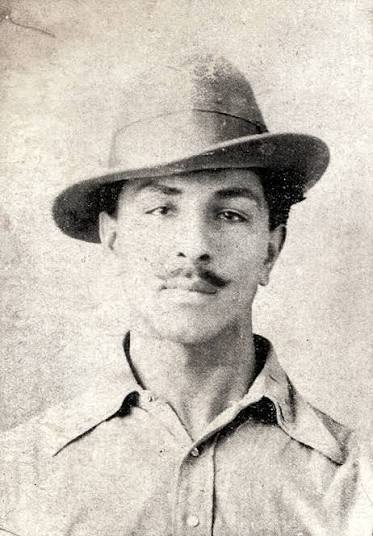
Bhagat Singh’s village – The soil carried from to Prayagraj is more than a symbol of shared revolutionary history. It reminds us that the legacy of the martyrs must be reflected in the choices and aspirations of the young.*
Some places are more than geographical locations. They are living memories of a nation’s history. Khatkar Kalan is one such place. Prayagraj (Earlier known as Allahabad) is another.
My first visit to Khatkar Kalan was in March 2011. We travelled by bus from our village, Sangat Kalan. There was an interesting coincidence in the names: both villages carry the word ‘Kalan’, a Persian word meaning ‘large’, traditionally used along with ‘Khurd’, meaning ‘small’, to distinguish villages with similar names.
But that day, Khatkar Kalan meant much more to us than a village. It was the land of Bhagat Singh. Many of those travelling with us wore basanti-coloured turbans. There was a sense of anticipation and hope. We were going to attend the formation ceremony of a new political party in Punjab. Khatkar Kalan was crowded with lakhs of people. Standing there, it seemed that the aspirations of Punjab had gathered at the birthplace of one of its most enduring icons.
That memory has remained with me.
The museum at Khatkar Kalan preserves the life and ideas of Bhagat Singh. Every year, on his birth anniversary and martyrdom day, political, social and governmental organisations hold programmes there. People arrive, pay floral tributes, raise slogans and return. But the question is whether remembrance should end at the memorial.
The legacy of a martyr is meaningful only when his or her ideas find some reflection in society.
*A journey to Prayagraj*
In July 2024, a visit to Prayagraj unexpectedly brought that thought back to me.
Allahabad, now Prayagraj, was an important centre of political and revolutionary activity during India’s freedom struggle. The fourth and eighth sessions of the Indian National Congress were held there in 1888 and 1892. By the early decades of the 20th century, the city had also become associated with several revolutionary activities.
Bhagat Singh had visited Allahabad. In 1928, he spent a night with Ajay Ghosh at Holland Hall Hostel of Allahabad University. The region was also associated with revolutionaries such as Ram Prasad Bismil, Ashfaqullah Khan and Thakur Roshan Singh.
Yet the most moving part of my visit was Chandrashekhar Azad Park. Established in 1870, the park was known during British rule as Alfred Park and Company Bagh. It is now named after Chandrashekhar Azad, who died there on February 27, 1931.
That evening, a light-and-sound programme was being presented in the park. Sitting among the audience, I found my thoughts travelling back nearly a century.
On February 27, 1931, Azad was surrounded by the police in Alfred Park. His associate Sukhdev Raj managed to escape while Azad continued to resist the police. He was determined not to be captured alive. Azad died there at the age of 24. The scene has since become part of India’s collective memory.
*When two soils met*
After paying tribute at Azad’s statue, I visited the Allahabad Museum. On entering, I mentioned to the staff that we are from Punjab. Later, while we were sitting in the waiting hall, a staff member approached me.
“Since you are from Punjab, I want to tell you something,” she said.
She told me that relatives of Bhagat Singh had visited the museum the previous year and had brought soil from Khatkar Kalan. She then took us towards a jamun tree near Azad’s statue. The soil from Khatkar Kalan had been scattered beneath that tree.
For a few moments, I had no words.
The soil of Khatkar Kalan. The land of Prayagraj. Bhagat Singh. Chandrashekhar Azad. Two young men from different parts of India whose lives became inseparable from the freedom struggle.
Both died in 1931. Bhagat Singh was 23; Azad was 24.
The moment made me think not only about their sacrifice, but also about the meaning of youth.
*What has changed in a century?*
At 23 or 24 today, a young person is normally thinking about education, employment, career, family and the future. These are natural aspirations. Bhagat Singh and Azad, too, had lives ahead of them. They belonged to an age when young people had dreams, friendships and hopes for the future. Yet they chose to dedicate their youth to a cause they considered larger than themselves.
That does not mean today’s young people must replicate the choices of the revolutionaries. The circumstances are completely different.
But their lives do raise a question: What purpose are we giving to our youth?
This question becomes particularly relevant in Punjab, where the problem of drug addiction among young people continues to cause concern. The issue cannot be viewed only through the lens of substance use. Unemployment, frustration, social isolation, lack of opportunity and the absence of a sense of purpose can also form part of the wider discussion.
A young person struggling with addiction does not need condemnation. They need support, opportunity, education, treatment and a society willing to stand beside them.
Behind every such struggle is a family. A mother waits for her son to return safely. A sister worries about her brother. A father hopes that his child will build a secure future. When a young life is lost to addiction, the loss extends far beyond one individual.
*The meaning of ‘Inquilab’*
Bhagat Singh’s appeal to young people during the freedom struggle was not simply because of his image as a revolutionary. His ideas, writings and willingness to question established beliefs made him particularly influential among the youth.
During the proceedings against him, students would gather outside the court hoping to see him. His appearance would be met with the cry of “Inquilab Zindabad”. But ‘Inquilab’ was more than a slogan. For Bhagat Singh, revolution was connected with ideas, social change and a questioning spirit.
That is perhaps where his legacy remains relevant today.
The basanti colour associated with the revolutionary tradition should not merely be worn on commemorative occasions. It can also remind us of courage, hope and responsibility. Similarly, Khatkar Kalan should not be seen merely as a memorial destination. It represents an inheritance of ideas. And that jamun tree in Prayagraj, beneath which soil from Khatkar Kalan was placed, represents something equally powerful: the shared history of two regions and a generation of young Indians who imagined freedom beyond the boundaries of their own lives.
*A tribute that goes beyond flowers*
A meaningful tribute to Bhagat Singh and Chandrashekhar Azad cannot be restricted to garlands, speeches and commemorative events.
It could mean helping a young person stay away from drugs and encouraging them towards education, sport, skills, creativity or meaningful work.
It could mean creating opportunities for unemployed youth to become self-reliant.
It could mean building classrooms and campuses where students are encouraged to ask questions rather than merely memorise answers.
It could mean creating a Punjab where parents look forward to news of their children’s achievements rather than worrying about addiction.
Most importantly, it could mean helping young people discover a sense of purpose.
The journey from Khatkar Kalan to Prayagraj is, therefore, not merely a journey across geography. It is a journey across memory.
The soil carried from Bhagat Singh’s village to the land associated with Azad may have been a small physical act, but its symbolism is much larger. It connects Punjab with Uttar Pradesh, one revolutionary with another, and the memory of the freedom struggle with the questions confronting young India today.
The martyrs are remembered because they died for an idea. Perhaps the most meaningful way to remember them is to ensure that their ideas continue to live.
The thread connecting Khatkar Kalan and Prayagraj is not made of soil. It is made of ideas. And ideas, unlike monuments, remain alive only when each generation chooses to carry them.