


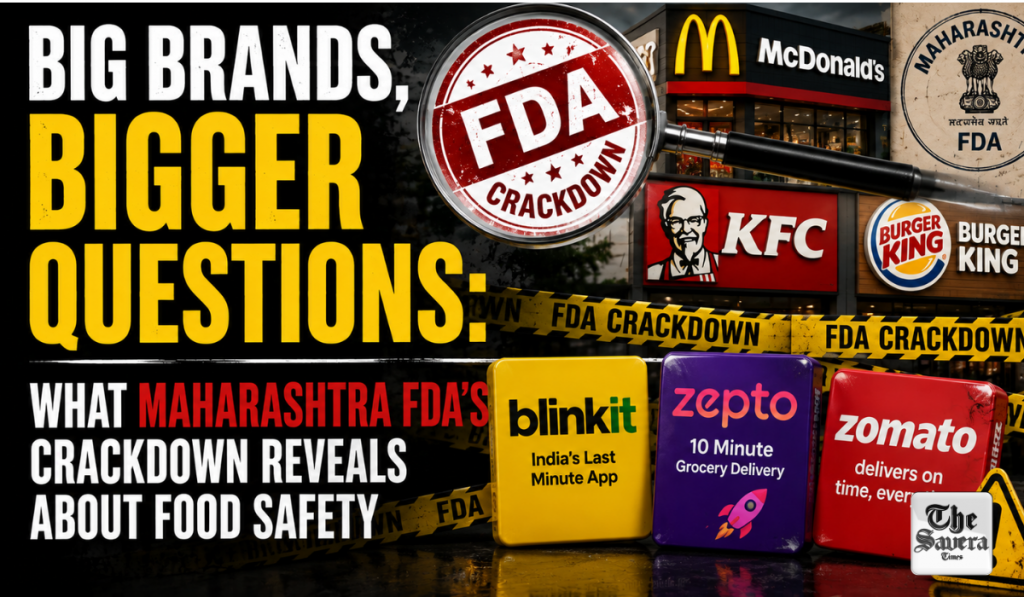
A familiar brand name, a brightly lit outlet and a popular menu may make customers feel reassured. But Maharashtra’s latest food safety crackdown has raised a bigger question: Can a big brand name alone guarantee safe and hygienic food?
The Maharashtra Food and Drug Administration’s recent inspection drive put prominent food chains under the scanner. According to reports, the FDA inspected 104 establishments operated by brands including Domino’s, KFC, Pizza Hut, McDonald’s, Subway, Burger King, Starbucks and Monginis. The drive resulted in 95 improvement notices, 2 immediate operation halts, and 5 food business license suspensions due to severe hygiene and safety violations
What Happened in the Latest Crackdown?
The latest action is part of Maharashtra FDA’s wider crackdown on food safety and hygiene violations. Reports said licences of food establishments across different districts were suspended following inspections on August 11, 2026 which found serious lapses.
Four Domino’s outlets and one Pizza Hut outlet were among those whose licences were suspended in the latest major action. Reported violations included grease and residue, pest-related concerns and issues involving food products and expiry-date compliance.
Importantly, McDonald’s, Burger King, KFC and other major eateries being part of the inspection drive does not mean that all these brands, or all their outlets, were found guilty of violations. The action and findings apply to specific establishments inspected by the regulator.
Common Violations Found
- Pests and Insects: Inspectors found cockroaches, live rats, and houseflies near stored vegetables, fruits, and preparation areas.
- Expired or Damaged Food: Outlets stored items past their “use by” dates, alongside tampered packages and fungal growth on produce.
- Poor Storage and Cleanliness: Food was frequently kept directly on the floor, coupled with broken cold-chain temperature controls, grease buildup, and rusted storage racks.
- Worker and Record Lapses: Handlers lacked required medical fitness certificates, identity cards, or protective gear, alongside missing food safety documentation.
What Do Food Safety Inspectors Actually Check?
Food safety is not limited to whether a meal tastes fresh. Inspectors can examine the entire process, from ingredients entering the kitchen to food reaching the customer.
Key areas include:
- Kitchen cleanliness and sanitation
- Storage conditions and temperatures
- Expiry dates and labelling
- Quality and traceability of ingredients
- Food handling practices
- Pest control
- Staff hygiene and medical fitness records
- Cleaning of utensils and food-contact equipment
- Quality and records related to cooking oil
- Drinking water testing
- FSSAI licence and regulatory compliance
Does Licence Suspension Mean a Brand Is Unsafe Everywhere?
No. This is an important distinction.
Food safety enforcement generally targets specific outlets and their individual compliance. A licence suspension at one location does not automatically mean that every outlet of the same chain is unsafe or has violated food safety rules.
Large restaurant chains may have standard operating procedures, but day-to-day implementation can differ from one outlet to another. Kitchen management, staff training, maintenance and supervision can all affect compliance.
How Could This Affect Public Trust?
For consumers, big brands often represent consistency and trust. People may assume that a recognised chain has stricter quality checks than a small local eatery.
That is why action against prominent outlets can have a wider impact. It reminds customers that brand reputation and actual compliance are not always the same thing. Trust ultimately depends on what happens inside each individual kitchen.
At the same time, stronger inspections can also improve confidence in the regulatory system. If authorities inspect both famous chains and smaller establishments, consumers may feel that food safety rules are being enforced more equally.
The Bigger Question: Are Big Eateries Immune to Food Safety Lapses?
The Maharashtra crackdown suggests that no food business should be beyond inspection simply because it is popular or internationally recognised.
Food safety requires constant monitoring, not just a licence on display. Conditions can change with staff turnover, poor maintenance, inadequate cleaning or weak supervision.
For customers, basic caution still matters. Visible cleanliness, proper food packaging and unusual smell or appearance should not be ignored. Suspected food safety violations can also be reported through official food safety authorities.
The Maharashtra crackdown is therefore bigger than action against a few outlets. It raises a simple but important question: When we trust a brand with our food, how closely are the kitchens behind that trust being monitored?