


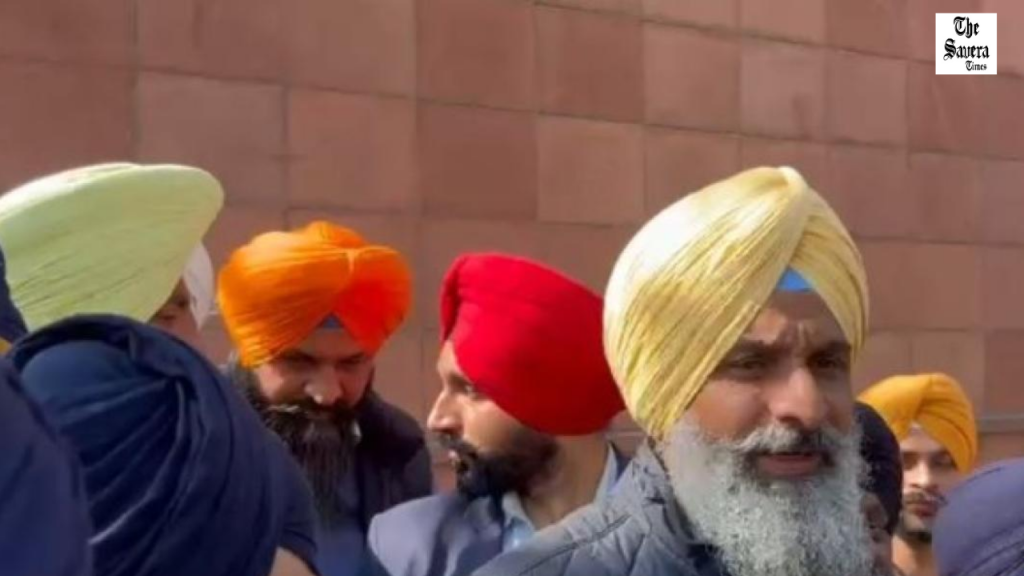
Senior Shiromani Akali Dal (SAD) leader and former Punjab minister Bikram Singh Majithia sharply criticized the Punjab government’s handling of the state’s law and order situation, demanding the immediate appointment of a permanent Director General of Police (DGP) to address the ongoing crisis. Majithia’s comments came shortly after he appeared in court in Mohali on February 7, 2026, following his release on bail earlier this week.
In his remarks to the media, Majithia alleged that the current acting DGP, Gaurav Yadav, is focused more on securing his own position than tackling rising crime and insecurity in the state. He asserted that Punjab is grappling with a deteriorating law enforcement scenario that requires strong, decisive leadership at the top of the police force.
Demand for Permanent DGP Appointment
Majithia pressed the Punjab government to appoint a full-time DGP immediately, stressing that a permanent head of police would provide consistency and accountability in dealing with crime and public safety challenges. According to him, leaving the top police post in an “acting” capacity for an extended period undermines the effectiveness and morale of the force at a time when robust law enforcement is crucial.
His call is rooted in growing frustration among opposition leaders and sections of the public that the police leadership has been in a temporary setup for years, contributing to weak institutional responses to criminal cases. A recent Supreme Court directive has also kept pressure on the state to expedite the appointment of a permanent DGP.
Criticism of Government and Interference Claims
Beyond law-and-order concerns, Majithia took aim at the ruling Aam Aadmi Party (AAP) government, accusing political figures such as Arvind Kejriwal and Sushil Gupta of interfering in Punjab’s administration. He alleged that decisions within the state are increasingly being directed by outside influences rather than by elected representatives accountable to the people.
Majithia’s remarks reflect broader opposition sentiment in Punjab, where critics have highlighted a range of issues — from policing to governance — as evidence of administrative failure. His party, the SAD, has been vocal about these points, including staging protests such as sit-ins at the DGP office in Chandigarh in recent days.
Ongoing Legal and Political Context
Majithia’s criticism comes against the backdrop of his own high-profile cases. He was released on bail from judicial custody earlier this week and appeared in Mohali court on February 7 as part of proceedings in a disproportionate assets case. His legal battles and political confrontations with the state government continue to shape his public statements and campaign narrative.
Observers note that Punjab’s law and order situation has been a subject of heated political debate, with various parties offering differing analyses and solutions as the state navigates social and administrative challenges.
Public Reaction and Political Implications
Majithia’s demand for a permanent DGP has struck a chord among critics of the current administration, who see it as symptomatic of deeper governance issues. Meanwhile, supporters of the government have defended its approach, pointing to legislative frameworks for police appointments and ongoing reforms. The disagreement underscores the intensifying political contest in Punjab, where security and administration remain central voter concerns.
Conclusion
With rising public and political focus on law enforcement efficacy and leadership stability in Punjab, Majithia’s call for a permanent DGP adds pressure on the state government ahead of future electoral and governance challenges. The debate over law-and-order underscores larger questions about accountability, institutional integrity, and public confidence in state administration.