


Abhishek Vij
Over the past few days, efforts have been underway between the two sides—the U.S. and Iran—to negotiate an end to the blockade imposed by both nations at the Strait of Hormuz. It was speculated that since U.S. President Donald Trump would need to seek parliamentary approval to escalate the conflict by May 1st, the blockade might be lifted by then; however, the blockade continues unabated.
Amidst reports regarding the difficulties Iran faces due to the blockade—specifically claims that its oil reserves have accumulated to such an extent that there is no longer any scope for further production—Iran has issued a denial, labeling such news as misleading.
Another circulating rumor suggested that growing public discontent against Trump within the U.S. would compel him to alter his policy; however, there has been no visible indication of this occurring either. Consequently, due to the prolonged blockade of Hormuz, developing nations—such as India—as well as the Gulf countries, now appear to be grappling with economic difficulties.
Thus far, India has relied on its existing reserves of crude oil and gas, which is why it has refrained from raising fuel prices; however, a report by the Ministry of Finance itself acknowledges that, under these circumstances, maintaining control over prices will become increasingly difficult. Another major issue is emerging regarding urea fertilizer. A shortage of nitrogen threatens to severely disrupt agricultural operations in India and several other nations. While keeping prices under control over the past few months has been nothing short of a challenge, the continued prolongation of the conflict means that oil and gas supplies remain in a precarious state.
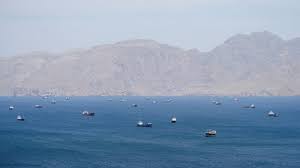
India and the global community alike are eager to see the resumption of oil tanker traffic through the Strait of Hormuz; yet, dozens of vessels remain stranded within the Gulf of Hormuz. There appears to be no end in sight to the difficulties facing the affected nations. When crude oil, natural gas, and fertilizers are unavailable, it is only natural for the situation to become a cause for grave concern. India also imports bitumen—a material used for road construction—from the Gulf nations. If this route does not open up, road construction projects will be left in limbo due to a shortage of asphalt.
Contractors will find themselves with a ready-made excuse: how are they supposed to proceed with the work now? It is not merely small nations whose difficulties have mounted; even European countries have not been spared. The situation has now devolved into a battle of egos. The United States, in its arrogance, feels it cannot simply lift the blockade on the Strait of Hormuz—a move of such magnitude—without securing some form of resolution or concession. Meanwhile, in a recent statement, the Iranian cleric Mojtaba Khamenei asserted that Iran’s missile and nuclear programs constitute a national asset, and that the country will continue to pursue them under any circumstances. While nations actively engaged in conflict are inevitably enduring devastation, even those countries not directly involved in the war are grappling with supply crises.
Ordinary citizens are facing hardships, while hoarders and profiteers are making a fortune. The inflation fueled by black-market activities is actively destabilizing the nation’s economy. At times, signs of a potential settlement appear on the horizon; yet, invariably, inflammatory rhetoric emerges that derails the progress being made. The pressing question remains: how will this conflict—which has become a thorn in the side of the entire world—ultimately come to an end?
The United States remains adamant in its demand to seize Iran’s stockpile of enriched uranium and insists on the unconditional lifting of the blockade on the Strait of Hormuz; why, then, would Iran possibly agree to such terms? Iran is absolutely unwilling to compromise its national dignity or to bow down to external pressure. For the time being, there appears to be no glimmer of hope suggesting that this futile conflict is anywhere near its conclusion