


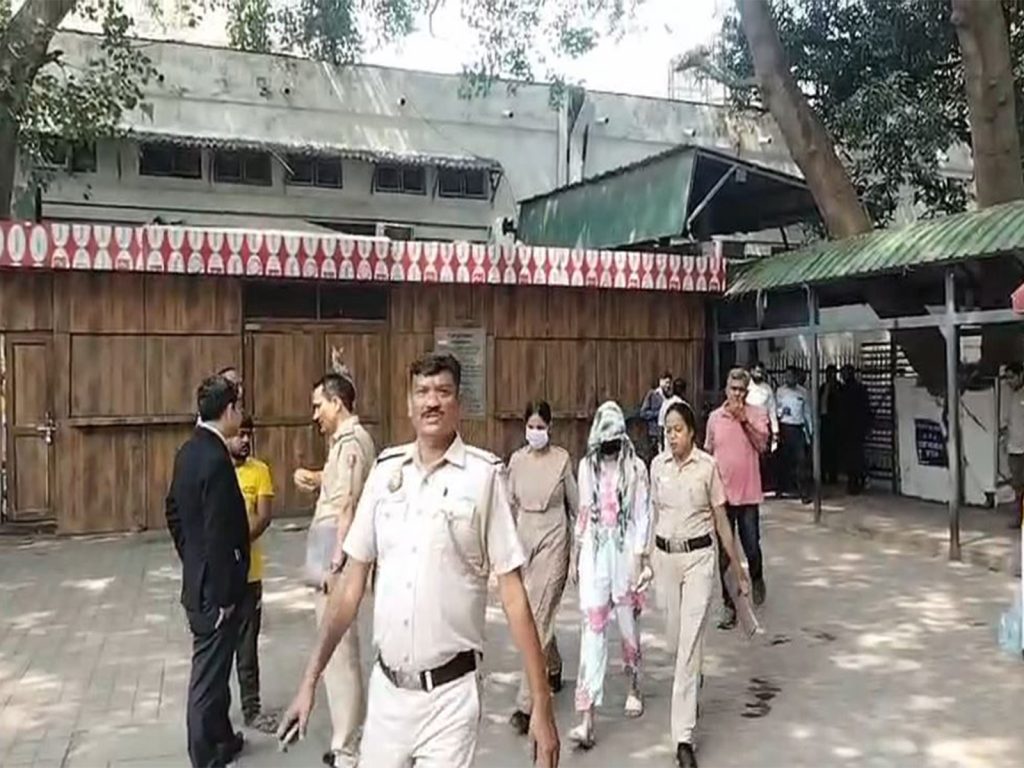
New Delhi: A Delhi court on Saturday granted bail to Gaganpreet Kaur, accused in the BMW crash case, while also raising serious questions over possible medical negligence at the scene.
The Patiala House Court, presided over by Judicial Magistrate First Class (JMFC) Ankit Garg, granted bail on a bond of Rs 1 lakh with two sureties of the same amount. As conditions, Kaur has been directed to surrender her passport, appear at every hearing, and not contact staff members of Nulife Hospital or witness Gulfam.
Before pronouncing the bail order, the court questioned medical negligence and stated that an ambulance arrived within seconds and remained on site for 30 seconds. However, they did not take the injured to the hospital, even though they had no emergency assignment and were heading to the Army Base Hospital, the nearest hospital. Hence, it further asked the police, ‘What should be done with this ambulance?’ Are they not accused of the offence of death due to a negligent act?
Later, the Court also observed that the Ambulance with a paramedic was duty-bound to take the injured to the hospital. The Paramedics inquired of the bystanders whether anybody wanted help, the Court observed. However, the Patiala court also questioned why the best-equipped vehicle was present, but the Ambulance left the spot within 30 seconds. Is it not the medical negligence?
Earlier, on September 25, the court had reserved the order on the bail plea of Gaganpreet Kaur. During the hearing, the court looked at the CCTV footage and heard the arguements of the counsel. During the bail hearing, SPP Atul Shrivastava submitted that there are more than a dozen hospitals available at lesser distance. However, the accused took the injured person to a hospital far away. Nulife is a small nursing home.
The SPP also argued that the car’s speed was high, as evidenced by its condition. The maximum speed on the stretch is 50 km per hour, as submitted by SPP. He also said that the vehicle was travelling at high speed and hit the bike. Additionally, he also submitted that Nulife Hospital is a Nursing home, which is meant for subsequent care, and hospitals are meant for initial treatment.
But advocate Pradeep Rana, along with Advocate Gagan Bhatnagar, Abhishek Rana, Counsel for the accused, submitted that in not a single frame of footage was the motorcycle of the deceased ahead of the car.
It was submitted that when the car collided with the footpath and overturned, the bike followed the vehicle. Both were at the same speed.
However, advocate Pradeep Rana argued that the driver had no knowledge that the bike was following and would collide with the car. Gaganpreet Kaur did not know; therefore, there is no intention. Hence, there is no ground to invoke Section 304 IPC (Culpable homicide not amounting to murder).
Further, the defence counsel argued that the accused, Gaganpreet Kaur, did not flee from the spot. Instead, she took the injured to the hospital. He further argued that the elements of rash and negligent driving, as well as the aspect of intention, cannot coexist.
SPP argued that, according to a statement from a person in an ambulance, the accused refused to accept assistance. Although the ambulance driver offered to take the injured person to the nearest hospital, she declined the help. Furthermore, SPP stated that the accused, who was in perfect physical condition, was admitted to the ICU at Nulife Hospital. Still, her blood sample was not collected until seven hours after the incident.
As a result, SPP contended that the investigation is still ongoing. Under BNSS, authorities are entitled to take custody within 60 days, so bail should not be granted to the accused. SPP also noted that the accused transported the injured person to the hospital in her own custody, which ultimately proved fatal for the injured individual. He further emphasised that the accident occurred due to the accused’s negligence, as detailed accurately in the FIR.