


-Abhishek Vij
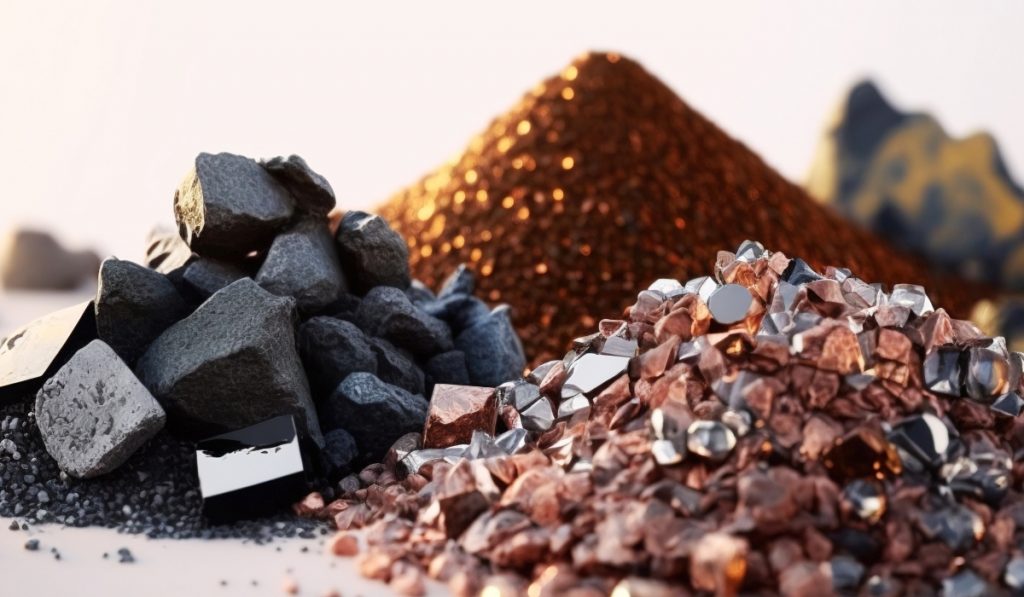
As of Monday, June 1, a Free Trade Agreement between India and Oman has come into effect. In the economic sphere, this undoubtedly marks a major achievement for both nations. However, India’s mineral agreements with other countries are equally significant, promising long-term benefits for the nation. Amidst the backdrop of the Gulf conflict, the United States, Australia, Japan, and India— collectively known as the Quad nations—recently entered into an agreement. Under this pact, the four countries have pledged to collaborate on securing energy resources, bolstering security, and developing critical mineral infrastructure. Furthermore, in light of China’s growing assertiveness in the Indo-Pacific region, efforts will be undertaken to strengthen maritime surveillance and port infrastructure. While this agreement is certainly aimed at combating terrorism, India is also falling victim to “economic terrorism”—a consequence of the scarcity of energy resources and mineral commodities. All the Quad nations harbor concerns regarding China— particularly India and the United States. One key factor contributing to China’s growing global power is its dominion over regions rich in rare natural minerals. To avert a potential energy crisis, China has undertaken its own distinct initiatives, driven by the fact that it remains up to 90% dependent on Iran for its crude oil requirements. Rather than pursuing overt diplomatic agreements, China has opted to indirectly supply Iran with weaponry and aid, thereby enabling Iran to maintain its strategic foothold against the United States and Israel. Now, in this era of digitalization and robotics, the critical challenge lies in the production of microchips and semiconductors. To advance in this domain, India requires access to critical minerals. However, the rare mineral elements and metals essential for establishing these technological supply chains are currently controlled by China. Consequently, a strategic alternative to China has been devised: the four nations comprising the Quad group will enter into critical mineral agreements encompassing mining, processing, recycling, and associated investments. External Affairs Minister S. Jaishankar has stated that the primary objective of this framework is to develop robust supply chains for critical and rare earth minerals across the entire region. This framework is designed to be flexible and adaptable. While this addresses the subject of natural minerals—resources deemed essential for the dawning “Sputnik era”—the immediate energy requirements, specifically regarding crude oil and fertilizers, remain inextricably linked to Iran. At present, however, the fulfillment of these demands appears uncertain. In recent times, the government has attempted to sustain operations in Ladakh by activating the Oil and Natural Gas Corporation to extract geothermal energy amidst the cold climate; however, the question arises: when will priority be given to the core task at hand? Our ONGC has been unable to discover new oil wells; consequently, a mutual agreement with the Quad nations would prove beneficial. Nevertheless, true self-reliance will only be achieved when we discover oil wells within our own country. To date, the Oil and Natural Gas Commission has not met with any significant success in this endeavor. For several years, the ONGC attempted to explore for oil in the vicinity of Jwala Ji—a religious site in Himachal Pradesh—but ultimately failed and withdrew its operations from the region. Nor have we been able to sufficiently develop solar energy to meet our electricity demands or to power our vehicles. The closure of the Strait of Hormuz has resulted in a significant disruption to India’s energy supply. The government has attempted to stabilize the economy by implementing changes to its monetary policy; however, the prevailing circumstances are hindering the attainment of success. If India can succeed in navigating the path toward self-reliance, its trajectory of development will never be impeded