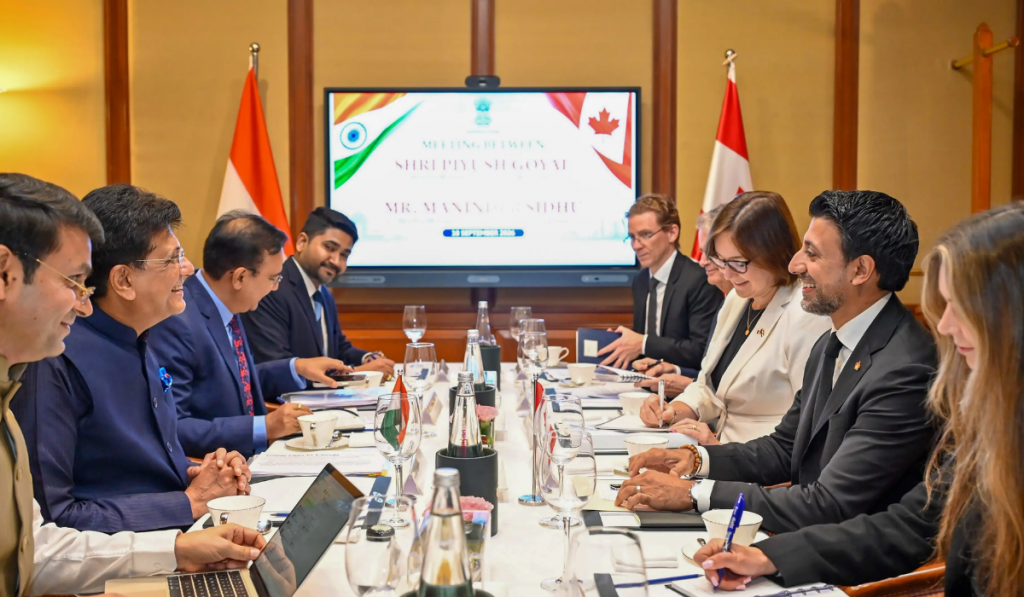
The relations between Canada and India continue to improve at a rapid pace. There is growing confidence that negotiations on a Comprehensive Economic Partnership Agreement (CEPA) are nearing a conclusion. That momentum should allow leaders to conclude negotiations during Prime Minister Narendra Modi’s visit to Canada in December. The CEPA would be an important achievement and featured regularly in recent discussions among Canadian and Indian business leaders seeking stronger economic ties. But in the broader context of Canada-India relations, the agreement should be viewed as the beginning, not the end, of the bilateral journey. Parallel negotiations are ongoing for the Foreign Investment Promotion and Protection Agreement. Canadian businesses remain deeply interested in stronger investment protections, making an investment treaty the logical next priority once the CEPA is concluded. Canada must also ensure that the CEPA is fully implemented and that businesses are equipped to take advantage of the opportunities it creates. It highlights the importance of Mumbai, India’s financial hub, as poised to play an important role in the next stage of economic relations between the two countries. The scale of construction across Mumbai is remarkable. It is difficult to imagine another city undergoing as much transformation, at such speed and scale, as Mumbai will over the next decade or so. It underlines that both Canadian and Indian business leaders see the need for the two countries to work more closely so that they are less vulnerable to economic coercion. India has faced significant disruptions to its supply chains and trade, and it is actively pursuing reliable partners such as Canada. This was a useful reminder that the bilateral relationship is not only about market access. It is also about diversification, economic resilience, and building dependable partnerships in a more uncertain global economy.
Canada, India ties Improving at Rapid pace