


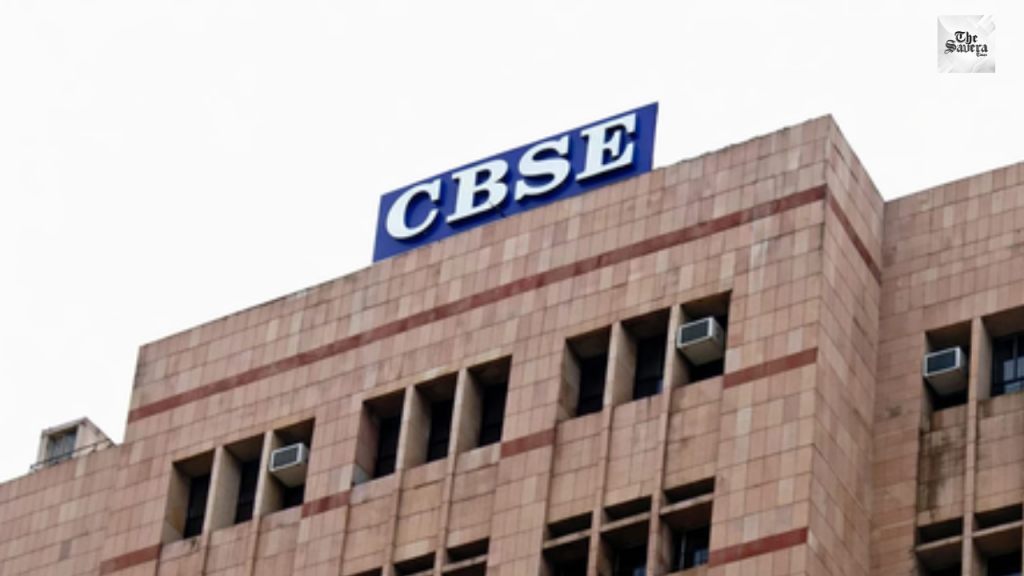
The Central Board of Secondary Education (CBSE) has cancelled the remaining Class 12 board examinations for students studying in several West Asian countries due to the deteriorating security situation in the region. The decision comes amid rising tensions linked to the ongoing conflict involving Iran, the United States and Israel, which has disrupted normal life in parts of the Middle East.
In an official circular issued on March 15, the board stated that the examinations scheduled from March 16 to April 10, 2026, for CBSE-affiliated schools in the affected countries would not be conducted. The move was taken keeping in mind the safety and well-being of students, teachers and school staff.
Exams cancelled in seven countries
The cancellation affects CBSE schools located in Bahrain, Iran, Kuwait, Oman, Qatar, Saudi Arabia and the United Arab Emirates (UAE). Thousands of Indian students studying in these countries through CBSE-affiliated institutions are impacted by the decision.
Earlier, the board had postponed several exam papers due to security concerns in the region. However, after reviewing the situation and considering the continuing instability, CBSE decided to cancel the remaining examinations entirely.
Safety of student’s top priority
The board emphasized that the safety of students remains its highest priority, especially as geopolitical tensions have increased uncertainty across the region. Schools and educational institutions in several West Asian countries have also experienced disruptions due to the conflict.
Authorities noted that conducting large-scale examinations under such conditions could pose risks to students and school staff. Therefore, the board opted to cancel the remaining papers rather than postpone them indefinitely.
Results to be declared through alternative assessment
CBSE said that the method for calculating the results of Class 12 students in these West Asian centres will be announced later. The board is expected to use an alternative evaluation system based on internal assessments, practical exams and marks from already conducted papers.
Officials have advised students to stay in contact with their respective schools and follow official CBSE notifications for further updates regarding the evaluation process and result declaration.
Earlier postponements before final decision
Before cancelling the examinations, CBSE had initially postponed several Class 12 papers scheduled in early March due to the unstable situation in the region. The board had planned to review the situation before deciding on new dates.
However, as tensions continued to escalate and the security situation remained uncertain, the board decided that cancelling the remaining exams would be the safest option.
Impact on Indian students abroad
The decision effects thousands of Indian students studying in CBSE-affiliated schools across the Gulf and other West Asian countries. Many of these students are preparing for university admissions in India and abroad, making the board’s decision particularly significant for their academic future.
School authorities have assured students and parents that CBSE will soon provide clarity on the assessment formula and result declaration process to ensure that students are not academically disadvantaged.
Education sector affected by regional tensions
The cancellation highlights how geopolitical conflicts can disrupt education systems, especially for international school networks. With many Indian students studying in the Gulf region, CBSE examinations play an important role in their academic progression.
Education experts say the board’s decision reflects a precautionary approach aimed at protecting students during an uncertain security situation.
CBSE is expected to release detailed guidelines soon on how the final results will be calculated and when they will be declared for affected students in West Asian countries.