


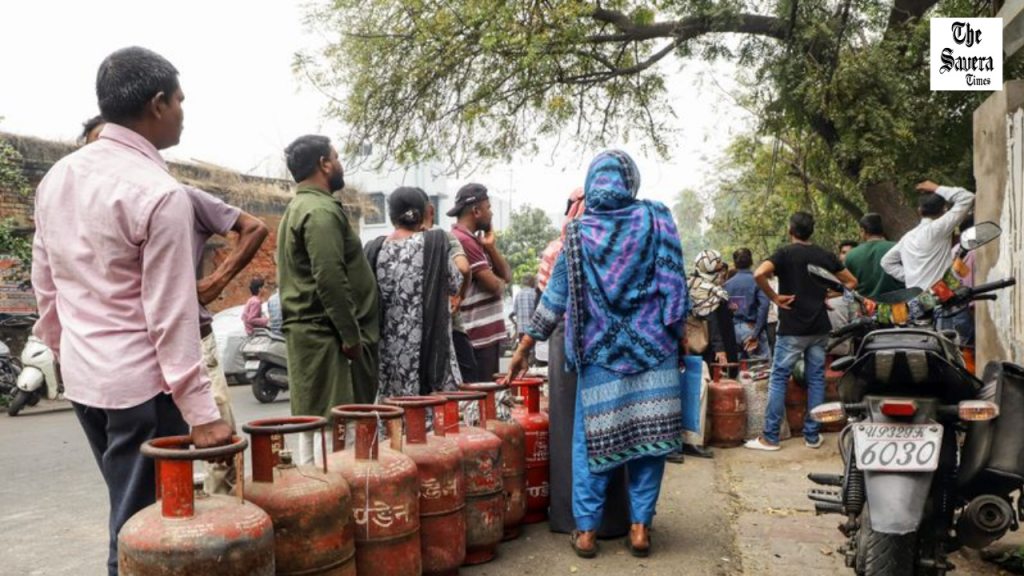
The Central Government has moved quickly to calm public concerns about a possible shortage of liquefied petroleum gas (LPG), stating that domestic consumers will receive top priority in the distribution of cooking gas supplies. The reassurance comes amid fears of disruption in global energy supply chains due to geopolitical tensions in West Asia.
Officials from the Ministry of Petroleum and Natural Gas said there is no LPG crisis in the country, adding that the government has taken proactive steps to manage supplies and prevent shortages. According to senior sources, LPG distributors across India still have adequate stock, and refill bookings are being delivered within the usual timeframe of around two and a half days.
The government emphasised that the situation is being monitored closely and there is no reason for consumers to panic or resort to hoarding cooking gas cylinders.
New Gas Allocation Order Issued
To manage supplies effectively, the Centre has issued the Natural Gas (Supply Regulation) Order, 2026 under the Essential Commodities Act. The order was introduced after disruptions in liquefied natural gas (LNG) shipments caused by the ongoing conflict in the Middle East.
Under the new framework, gas supply has been divided into four priority categories to ensure essential sectors continue receiving adequate fuel.
The highest priority sector will receive 100 per cent of its average gas consumption over the past six months. This category includes domestic piped natural gas (PNG), compressed natural gas (CNG) used in transport, LPG production and gas required for pipeline operations.
The second priority category includes fertiliser plants, which will receive at least 70 per cent of their average gas consumption. Industrial sectors such as tea manufacturing and other large consumers will receive around 80 per cent depending on availability.
Non-priority sectors like petrochemical industries may face the first cuts in gas supply if the shortage intensifies.
Efforts to Secure Alternative Supplies
Government sources said India has diversified its crude and gas supply routes to reduce dependence on vulnerable transit routes such as the Strait of Hormuz, through which a large portion of India’s energy imports previously passed.
Officials noted that while around 55 per cent of India’s crude imports were earlier routed through the Hormuz corridor, the country has now shifted a significant share of imports to alternative sources and routes. This diversification is aimed at safeguarding India’s energy security during the ongoing geopolitical tensions.
Authorities also said LPG and LNG shipments are now arriving from other suppliers and additional measures are being taken to maintain stable supply.
Committee Formed to Address Industry Concerns
To address concerns raised by commercial establishments such as hotels and restaurants, the government has formed a three-member committee comprising executive directors from Indian Oil Corporation, Bharat Petroleum Corporation and Hindustan Petroleum Corporation.
The panel will engage with stakeholders and assess the impact of supply management measures on commercial users.
Officials reiterated that the government’s priority remains clear: if a choice has to be made between domestic households and commercial sectors, domestic consumers will receive the first preference.
With these measures in place, the Centre maintains that India is better prepared than ever to handle disruptions in global energy supply and ensure uninterrupted cooking gas availability for millions of households.