


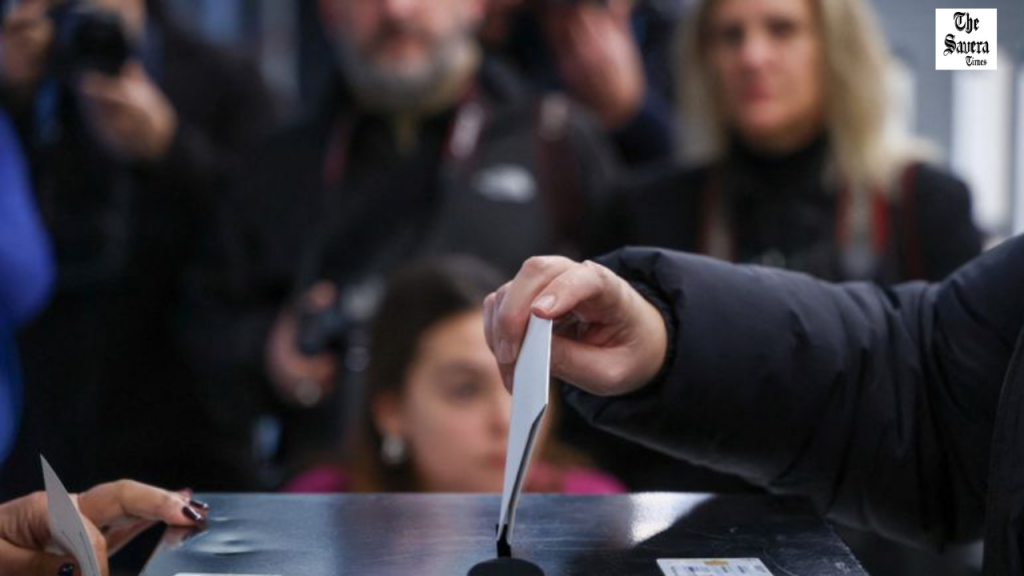
In a unique electoral initiative during Portugal’s presidential election, children accompanying their parents at polling stations were given the opportunity to cast a vote of their own on a special ballot though not for the official candidates, but for fictional characters instead. This educational experiment drew attention both nationally and internationally for its creative approach to involve young people in democratic processes.
The official election in Portugal continued with adult citizens casting ballots in the runoff for the presidency but select polling stations offered children a fun and symbolic way to participate.
How the Children’s Vote Worked
At some polling stations, particularly in Lisbon, children received a separate ballot paper listing well‑known fictional characters — such as Super Mario and Roblox characters instead of the real presidential candidates. The children were then encouraged to mark their choice and drop it into a ballot box, much like their parents were doing for the official election.
The exercise was explicitly designed to be fun and non‑binding, placing characters popular with kids on the paper to make the process engaging for young voters who are not legally eligible to vote.
Purpose: Civic Education and Early Engagement
The main aim of this initiative was educational to help children understand the mechanics of voting and instil the importance of democratic participation at an early age. Many parents welcomed the idea, saying that such hands‑on experience will encourage children to take voting seriously when they reach the legal voting age of 18, the requirement for real electoral participation in Portugal.
Parents like Catarina Barbosa, whose eight‑year‑old son participated, said the activity made voting more relatable and enjoyable. Barbosa noted that by allowing children to emulate the act of voting, families can foster a sense of civic duty early on.
Why This Matters in a Presidential Election
Portugal’s voting age for national elections, including the presidential race, is 18 years and above according to electoral law — children do not have a legal right to vote in official ballots.
But this symbolic voting initiative aligns with broader efforts globally to introduce civic education and democratic awareness early in life. By giving children, a chance to “vote” in a supervised and engaging manner, educators and parents hope that future generations will be more informed and motivated participants in democracy once they reach adulthood.
Public Reaction and Educational Value
The concept of a mock or symbolic vote at real polling stations has drawn largely positive responses from both families and observers. Many see it as a creative classroom extension, turning a civic event into a teaching moment of rights, responsibilities, and the democratic process.
While not a legal change to voting rights for children, the initiative highlights an innovative approach to civic engagement that could inspire similar exercises in other countries keen to build democratic habits from an early age.