


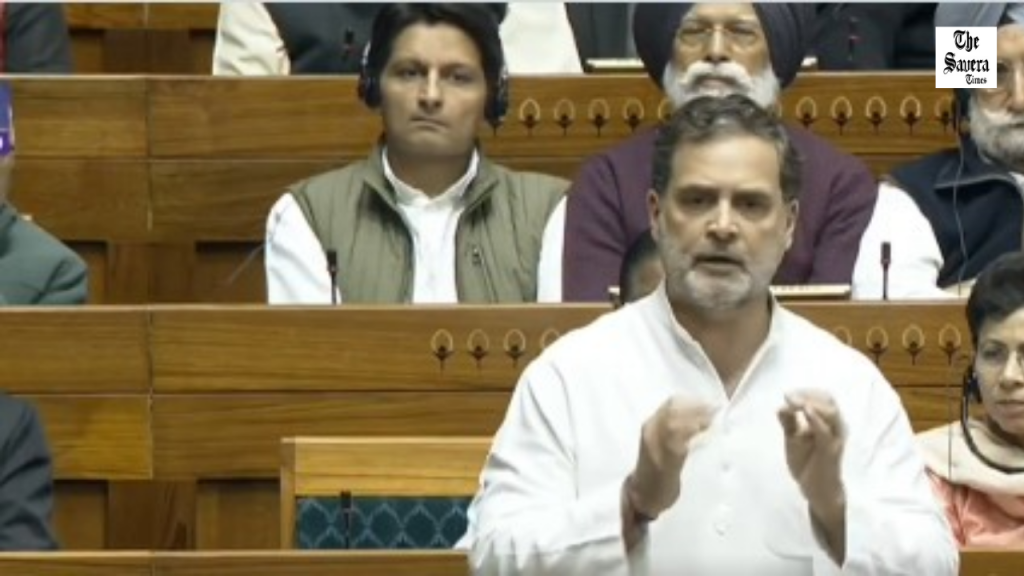
Leader of the Opposition Rahul Gandhi recently recorded a dissent note during a high-level meeting of a Prime Minister-led panel on the selection of the Chief Information Commissioner (CIC) and other key appointments. Gandhi objected to what he described as insufficient representation of Scheduled Castes (SC), Scheduled Tribes (ST), Other Backward Classes (OBC) and minority communities in the shortlist of candidates for CIC and Information Commissioner posts.
Rahul Gandhi has blatantly lied in Parliament about the appointment of the Election Commissioner.
When has the Election Commissioner ever been chosen by a panel consisting of the CJI and the LoP?
Complete lie! Congress PMs always appointed ECs directly.
In 2005, Sonia Gandhi’s… pic.twitter.com/MnstWMOd0V
— Political Kida (@PoliticalKida) December 9, 2025
However, official data on past appointments to the Central Information Commission (CIC) suggests a different narrative, indicating that Gandhi’s criticism may not fully align with the historical record.
Panel Meeting and Gandhi’s Dissent Note
On December 10, 2025, a three-member panel headed by Prime Minister Narendra Modi, which also included Home Minister Amit Shah and Rahul Gandhi as Leader of the Opposition, met to decide on appointments for the Chief Information Commissioner, eight Information Commissioners, and a Vigilance Commissioner. Gandhi registered his dissent, citing concerns about diversity and representation in the proposed list of names.
Officials said Gandhi objected to the lack of representation of SC, ST, OBC, Economically Backward Classes (EBC), and minority community nominees among the shortlisted candidates. His dissent highlighted broader concerns about inclusivity in constitutional and autonomous institution appointments.
Appointment History Tells a Different Story
Data on CIC appointments dating back to its establishment in 2005 shows that earlier governments also lacked representation from disadvantaged communities. Between 2005 and 2014, during the UPA government’s tenure, no SC or ST individual was appointed as either a Commission member or its head.
Notably, it was under the NDA government that the first ST member, Suresh Chandra, was appointed in 2018, and Heeralal Samariya, from the Scheduled Caste community, became Information Commissioner in 2020 and later the Chief Information Commissioner in 2023 the first person from the SC category to hold the top post.
In the latest round of deliberations, sources say the government recommended names for eight vacancies that included one SC, one ST, one OBC, one minority representative, and one woman among the appointees meaning five out of eight recommendations were from disadvantaged sections of society.
Broader Context and Political Debate
Rahul Gandhi’s objections reflect ongoing political debates over diversity and representation in high-level institutions. Proponents of his stance argue that ensuring more inclusive representation strengthens democratic governance, while critics point to historical appointment data to question claims of systematic exclusion.
The CIC plays a key role in enforcing the Right to Information (RTI) Act, and its composition has been at the centre of discussions over transparency, fairness, and equity in public appointment