


Athar Parvaiz
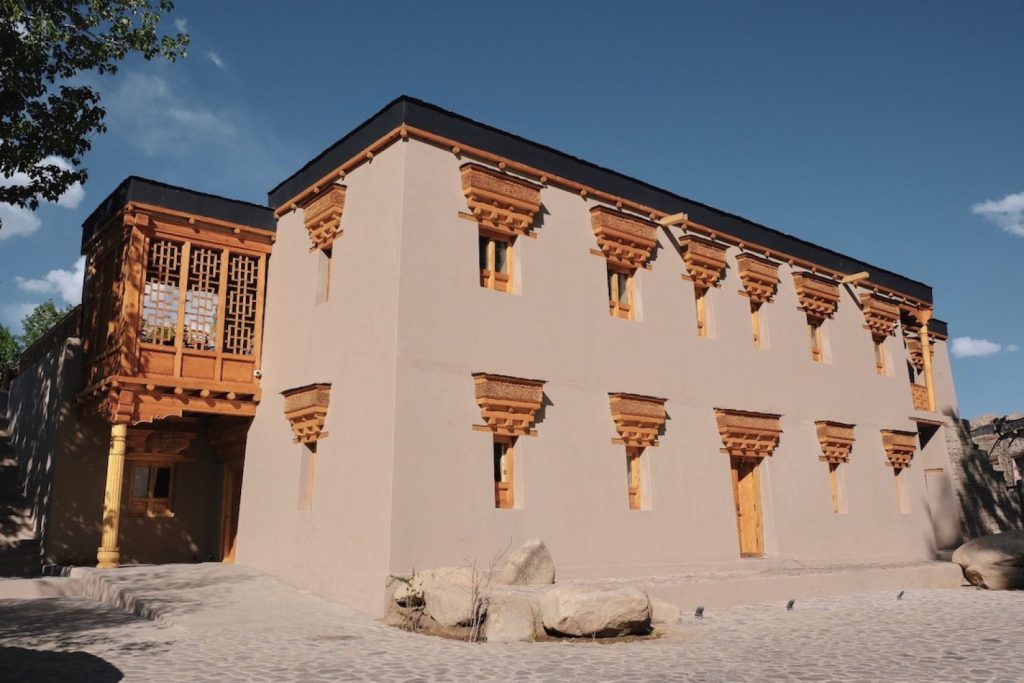
Traditional Ladakhi architecture represents centuries of adaptation to one of the world’s harshest environments. For generations, families across this high-altitude cold desert have lived under thick earthen roofs that rarely failed them besides offering thermal comfort. Built with layers of grass (locally known as Yakzas) and mud laid over wooden beams obtained from locally grown trees, the roofs perfectly suited to a landscape where rain was once so infrequent that most people scarcely planned for it. The thick mud walls kept homes warm through freezing winters and comfortable in summers while locally available materials made repairs affordable and sustainable. People in Ladakh say that flat roofs double as outdoor workspaces also as families dry vegetables, apricots and barley, and carry out other household chores as well using those spaces. But many residents now say that the traditional architecture of Ladakh feels like “a mismatch with the new weather realities.” And they are fast adapting, one roof at a time. Signs of the transition are hard to miss. For example, while one drives up towards the Khardung La pass, corrugated tin sheets over several homes can be seen glinting in villages such as Ganglas. Elsewhere, reinforced concrete slabs have begun replacing traditional roofs altogether. Residents say that the change is a matter of necessity rather than preference. “The kind of rainfalls we witness now are different from what we used to experience some 15 years back. Mud roofs are increasingly leaking, forcing repeated repairs and prompting many families to replace them with corrugated tin sheets or reinforced concrete slabs,” said Lobzang Vishuda, a Leh resident who has also protected his house with tin-sheets.
People across Ladakh such as in Basgo, Khardung, Diskit and Hunder, recounted similar experiences of a changing climate. They said winters are becoming less severe, summers hotter while rainfall is increasingly common in a region where rainfall has historically been minimal. “There is a clear change in temperature,” said Sonam Dorje, a resident of Hunder as he waited for a local festival to begin along with his fellow villagers. “We now experience much more rainfall and much less snowfall. I would say rainfall has increased by at least 30 per cent,” Dorje said adding that the changing weather prompted him to install a concrete roof rather than the traditional one when he built the house recently. The material for making concrete roofs, Dorje said, is expensive in the region and costs almost double the prices elsewhere. For example, he said, a bag of cement costs about Rs 800 while 100 kg of iron reinforcement bars needed for a roof slab cost around Rs 7,500.
Every bag of cement, iron rod and corrugated roofing sheet must be transported hundreds of kilometres through mountain highways that remain snowbound for months each year. Transportation costs inflate construction expenses in one of India’s most remote regions, making new constructions using such material and home improvements difficult for families. Scientists have long warned that climate change is amplifying weather extremes across the Himalaya. According to various scientistic studies, the experiences described by residents in Ladakh reflect broader changes unfolding across the Trans-Himalayan region. Meteorologists monitoring weather in Ladakh say that episodes of intense rainfall are drawing greater attention because of their implications for housing, infrastructure and disaster preparedness in this fragile Himalayan landscape.
Senior meteorologist and the Director of Indian Meteorological Department (IMD) in Leh, Sonam Lotus, said the region is experiencing intense and mostly localised rainfall, exposing a new vulnerability in homes never built to withstand intense rainfall or prolonged moisture. “While the average annual rainfall has not changed significantly, what we have witnessed in recent years is a growing frequency of short, intense and highly localised downpours. These episodes often leave residents scrambling to protect their roofs with tin sheets or reinforced concrete slabs, and at times even trigger flash flooding,” Lotus told this writer in an interview at the IMD office in Leh. Ladakh’s vernacular character at stake While residents are adapting in whatever ways they can, heritage conservationists warn that these hasty measures are gradually eroding Ladakh’s centuries-old architectural heritage.
Conservationists worry that if heavier rainfall continues to push households towards concrete and metal, entire villages could gradually lose the vernacular character that has defined them for centuries