


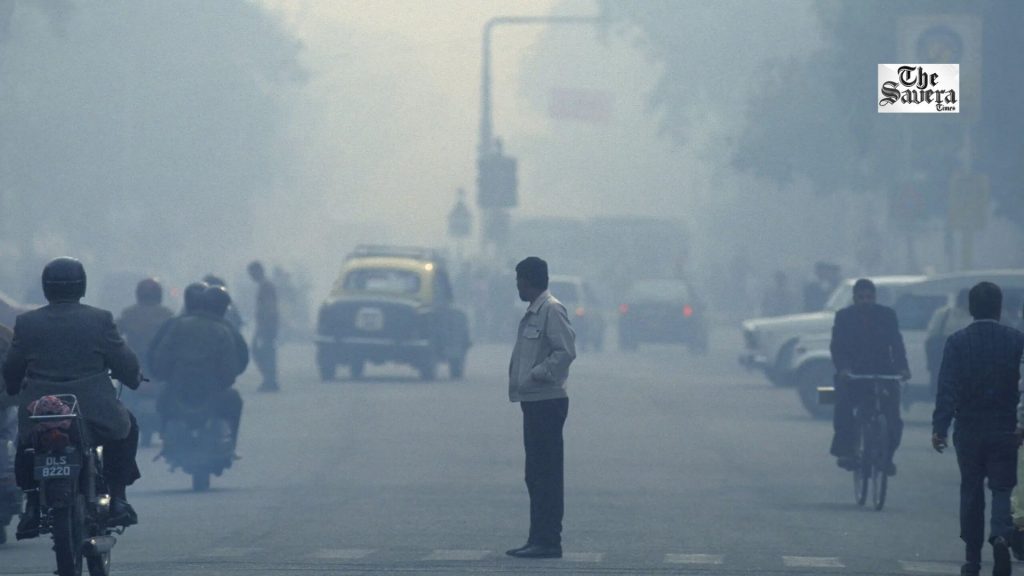
New Delhi: The Commission for Air Quality Management (CAQM) has directed all government and private offices across Delhi-NCR to operate with 50 per cent of their staff strength, with the remaining employees working from home, as authorities step up measures to prevent a rise in air pollution.
The order, issued on October 30, will apply to offices in Delhi, Gurugram, Faridabad, Sonipat, Ghaziabad and Noida. Industrial establishments and essential services where such an arrangement is not feasible have been exempted.
The commission has also prohibited demolition and outdoor construction activities across the affected areas from November 5 to November 20. The restrictions are aimed at limiting activities that could add to pollution levels in the region.
Which Construction Projects Are Exempt?
The construction restrictions will not apply to certain essential infrastructure and public projects. These include:
-
Railway and metro projects
-
Airport-related works
-
Inter-state bus terminals
-
Hospitals
-
Water supply and sanitation projects
-
National security and defence-related activities
The CAQM said the measures were preventive in nature and had been introduced for a specific period and geographical area, keeping in view the seasonal vulnerability of Delhi-NCR to air pollution.
It added that exemptions had been provided to ensure that essential public infrastructure, national security and other critical services were not disrupted.
Delhi Records Cleanest October Day in Four Years
The restrictions come even as Delhi-NCR witnessed a sharp improvement in air quality following heavy rainfall over the last two days.
According to the Central Pollution Control Board (CPCB), Delhi’s Air Quality Index (AQI) stood at 60 on Friday, making it the city’s cleanest October day since October 10, 2022.
Of the 54 air quality monitoring stations in Delhi, 33 recorded satisfactory air quality, 17 reported good air quality and four remained in the moderate category.
Lodhi Road recorded the cleanest air, with an AQI of 33, while Pusa reported the highest reading at 105.
AQI Likely to Deteriorate Again From November 1
Despite the recent improvement, the Air Quality Early Warning System has cautioned that Delhi’s air quality could slip into the poor category on November 1 due to unfavourable weather conditions.
The warning indicates that the situation may persist for the next six days, with AQI levels likely to remain between poor and very poor.
Under the CPCB classification, an AQI of 0–50 is considered good, 51–100 satisfactory, 101–200 moderate, 201–300 poor, 301–400 very poor and 401–500 severe.
The latest restrictions are intended to limit pollution-generating activities and reduce the risk of a further deterioration in air quality across the national capital region.