


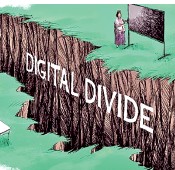
India presents a striking contradiction. It is home to a thriving technology sector, global IT giants, and one of the world’s largest digital populations. At the same time, millions remain excluded from the benefits of the digital revolution.
Smartphones, digital payments, and online services are now embedded in daily life. Government services, banking, healthcare, and even education increasingly rely on digital platforms. For many, this has brought efficiency and access. For others, it has created new forms of exclusion.India’s push toward digital governance has been rapid. Welfare schemes, subsidies, and documentation are increasingly accessed through apps and biometric systems. While this has reduced leakage and improved tracking, it has also made access contingent on connectivity and digital literacy.In rural areas and urban slums, people often rely on intermediaries to navigate online systems, paying fees for services meant to be free. Elderly citizens, migrant workers, and people with disabilities face particular challenges.“When technology fails, the system fails,” said a social worker in Jharkhand. “And it usually fails for the poorest.”
India’s startup ecosystem has grown dramatically, attracting global investment and producing high-profile success stories. Yet much of this growth is concentrated in a few urban centres.Outside major cities, opportunities remain limited. Skilled workers migrate, draining smaller towns of talent. Many startups focus on urban consumers, leaving rural and marginalised communities underserved.Even within the tech workforce, inequality persists. Contractual employment, long working hours, and job insecurity have become common, particularly in platform-based work such as food delivery and ride-hailing.As digital systems expand, concerns about data privacy and surveillance have grown.
Massive databases store biometric, financial, and personal information, often without clear accountability mechanisms.Legal safeguards lag behind technological deployment. Critics argue that citizens are being asked to trade privacy for access, without meaningful consent or recourse in case of misuse.Technology is also reshaping employment. Automation and artificial intelligence promise efficiency but threaten jobs in manufacturing, services, and clerical work. Workers with limited digital skills face displacement, while retraining opportunities remain scarce.Experts warn that without investment in upskilling, technology could deepen inequality rather than reduce it.India’s technological rise is real, but its sustainability depends on inclusion. Digital systems must be designed around users, not assumptions. Offline alternatives, digital literacy programmes, and stronger regulatory frameworks are essential.Technology can empower but only if it is accessible, accountable, and humane.