


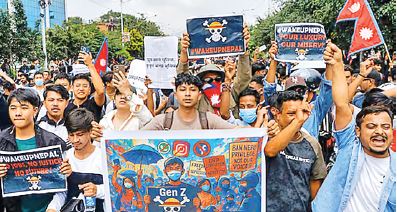
Discord has moved from niche gaming chat to a platform at the centre of high-profile controversies and political mobilisation. Recent reports link the app to both an alleged confession connected to the killing of a conservative activist and to student organisers in Nepal who used it to coordinate protests that led to a change of government. The two episodes illustrate how a single tool can serve very different social and political ends.
Launched in 2015 in San Francisco by Jason Citron and Stan Vishnevskiy, Discord began as a solution to a simple problem: players needed an easy way to talk while they were gaming. The founders built an app that supports text, voice and video communication along with screen sharing and live broadcasts. Early growth was rapid. Within a year of launch the platform had roughly 25 million users, and by 2019 that number had risen substantially. The service saw another surge during the Covid-19 pandemic, when people sought new ways to connect online.
Users and journalists describe Discord as a collection of invite-only communities known as servers. Each server can be divided into themed channels where members exchange messages, join drop-in audio sessions, share screens, host watch parties and broadcast gameplay. Moderators manage behaviour and membership within these spaces. While the app remains popular with gamers, its user base has diversified to include musicians, students, coders, creators, sports fans and political activists.
The app’s technical affordances have made it attractive to organisers who need private, real-time coordination. In Nepal, reports say students turned to Discord after the government blocked mainstream social platforms. With other services restricted, students used Discord to organise protests, hold discussions and even run an informal poll to test public sentiment about potential interim leaders. Participants told The Telegraph that the platform offered a way to connect without easy infiltration. The poll that followed drew thousands of votes and, according to reporting, helped focus attention on a shortlist that included a former chief justice. The former chief justice, Sushila Karki, was sworn in on September 12 as head of an interim government that will lead until elections scheduled for March 2026.
The app has also surfaced in criminal investigations. Media accounts link a small private group on Discord to Tyler Robinson, who is reported to have discussed the killing of a conservative activist. Posts attributed to Robinson include self-incriminating remarks and attempts at dark humour about reward money. Discord said it suspended the account for violating its off-platform behaviour policy and that it would cooperate with law enforcement. The company stated it condemns violence of any kind.
Discord’s history includes other high-profile abuses. Reporting has connected the platform to discussions among white nationalists before the 2017 “Unite the Right” rally and to the New York Buffalo gunman, who is said to have posted material on Discord before his attack. These precedents have heightened scrutiny of how online spaces can be repurposed for extremism or criminal coordination.
At the same time, interviews with users underline the platform’s value as a social lifeline. Several young people told The Telegraph that Discord became essential during lockdowns, replacing in-person contact and helping them form lasting friendships.
The contrast is stark. Discord can be a place for creative collaboration, learning and social connection. It can also provide a private, resilient channel for groups seeking to evade bans or coordinate harmful acts. As the platform evolves, the debate over moderation, privacy and responsibility is likely to intensify. For regulators, platform operators and users, the question is how to preserve the positive social functions while limiting the risks that arise when powerful, private communication tools fall into the wrong hands.