


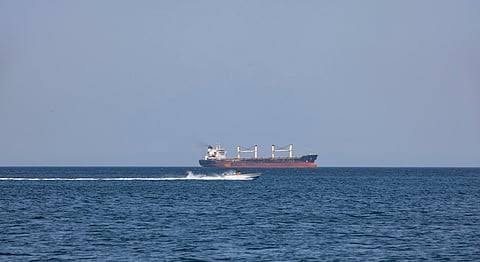
The Iran-Israel-US war and the intensifying Russia Ukraine conflict are simultaneously disrupting some of the world’s most important routes for oil, grain and fertiliser, raising concerns over a wider food and fuel supply shock. The disruption in the Strait of Hormuz, which typically carries about a fifth of global oil and gas supplies, is unfolding alongside severe disruption to Black Sea grain shipments. Attacks on Russian and Ukrainian ports and vessels have reduced agricultural exports, while alternative routes through the Danube, Baltic and other corridors face capacity, infrastructure, weather and security constraints. The situation is now creating what humanitarian agencies describe as a “triple chokepoint” for food supply routes, with the Strait of Hormuz and Black Sea disruption joined by growing risks around the Bab el Mandeb Strait and the Red Sea. Middle Eastern diesel shipments fell by half between March and August compared with a year earlier, while Russia’s fuel exports have also been affected by Ukrainian attacks on refineries and ports. Higher fuel prices matter for food security because diesel is used in farm machinery, irrigation, harvesting, processing and transportation, while higher marine fuel costs increase the expense of moving grain and other commodities. The humanitarian consequences are particularly significant for countries dependent on international aid. The World Food Programme (WFP) has warned that disruptions to the three maritime chokepoints are pushing up the cost of delivering food and other supplies. WFP acting executive director Carl Skau, on September 14, 2026, said the disruption was “all hitting at once”, while the United Nations High Commissioner for Refugees (UNHCR) warned that further deterioration around the Red Sea could force shipments to be rerouted around the Cape of Good Hope, adding 25-30 days to shipping times. Bab-el-Mandeb, the narrow strait connecting the Red Sea with the Gulf of Aden, has become a new pressure point after Iran backed Houthi forces made rapid territorial gains along Yemen’s western Red Sea coast and captured Perim Island. The development brings major shipping lanes within range of missiles, drones and artillery and increases the risk of disruption to vessels using the Red Sea. As much as 14 per cent of global maritime trade passes through the Red Sea. The UN agencies warned that disruption to the route would add to the higher food and oil costs already caused by the Iran war and Russia Ukraine conflict. The impact is particularly acute for humanitarian operations in Sudan. The WFP estimates that about 20 million people in Sudan are facing acute hunger, while 14 million have been displaced. The agency said the cost of basic food in Sudan had risen almost 40 per cent over seven months, while its shipping costs had increased 20 per cent and fuel costs for humanitarian flights had risen 35 per cent. The International Organization for Migration, which operates a common humanitarian pipeline for emergency relief distributions through a network of warehouses across Sudan and Chad, has also warned that it could be forced to halt relief supplies for hundreds of thousands of displaced Sudanese people without additional funding. Its 2026 crisis response plan requires $170.15 million to assist 1.321 million people, including 783,000 people targeted for life saving assistance. The Black Sea remains a critical corridor for global wheat trade. Russia and Ukraine accounted for 27.3 per cent of global wheat exports in 2025-26, according to S&P Global, with Russia exporting 48 million tonnes and Ukraine 14.1 million tonnes. Since July, attacks on ports and commercial shipping have damaged grain infrastructure and disrupted trade. London’s marine insurance market has expanded the Black Sea’s high-risk zone, according to Reuters, raising warrisk premiums. SovEcon estimates combined Russian and Ukrainian wheat exports could be roughly half their year-earlier level during July to September. Russia exported 4.4 million tonnes of grain in July and August, 31 per cent below a year earlier. September exports are expected at 2.45 million tonnes, about half the September 2025 level. But between August 1 and 26, Ukraine exported only 1.423 million tonnes of grains, oilseeds and processed agricultural products, according to the Ministry of Agrarian Policy and Food. Grain exports were 822,000 tonnes. Seaports handle about 90 per cent of Ukraine’s grain and oilseed exports, while alternative routes are more expensive. Shifting exports to these routes increased logistics costs by at least $50 per tonne in August. The European Union’s Solidarity Lanes have moved nearly 230 million tonnes of Ukrainian goods since May 2022, including 94 million tonnes of grain, oilseeds and related products, but cannot match the scale of Black Sea ports. Russia is similarly seeking alternatives, adapting Baltic and Arctic terminals for grain exports. Ust Luga, with a declared capacity of 37 million tonnes, began handling grain in August, while Murmansk, with capacity of up to 24 million tonnes, is preparing to start exports in October, according to a Reuters report. These routes have limited capacity or higher transport costs, making a full replacement of Black Sea shipments difficult. Global grain prices respond The effect is already being felt in international markets. The Food and Agriculture Organization’s Food Price Index rose to 133.3 points in August, up 1.9 per cent from July and 2.5 per cent from a year earlier. Its Cereal Price Index increased 2.2 per cent during the month, while international wheat prices rose 2.6 per cent. In its September 4 update, the Food and Agriculture Organization said the rise in cereal prices reflected robust import demand, growing concerns over crop prospects and continued uncertainty surrounding critical trade flows. International wheat prices rose 2.6 per cent in August and were 15 per cent above their year earlier level, with FAO citing persistent disruptions to Black Sea export logistics, lower production prospects in much of Europe after hot and dry weather and a weaker United States dollar. FAO also said world maize prices increased 2.5 per cent in August, driven by concerns over yields in parts of the United States, deteriorating production prospects in the European Union, strong demand from ethanol and feed sectors, disruptions to inputs linked to the closure of the Strait of Hormuz and disruptions to Ukraine’s export flows. The burden is greater for importdependent countries. Egypt, the world’s biggest wheat importer, sourced more than 82 per cent of its imported wheat from Russia and Ukraine combined during the first half of 2026, according to data cited by Food Tank.
Disruptions Across Strait of Hormuz, Black Sea
Disruptions Across Strait of Hormuz, Black Sea