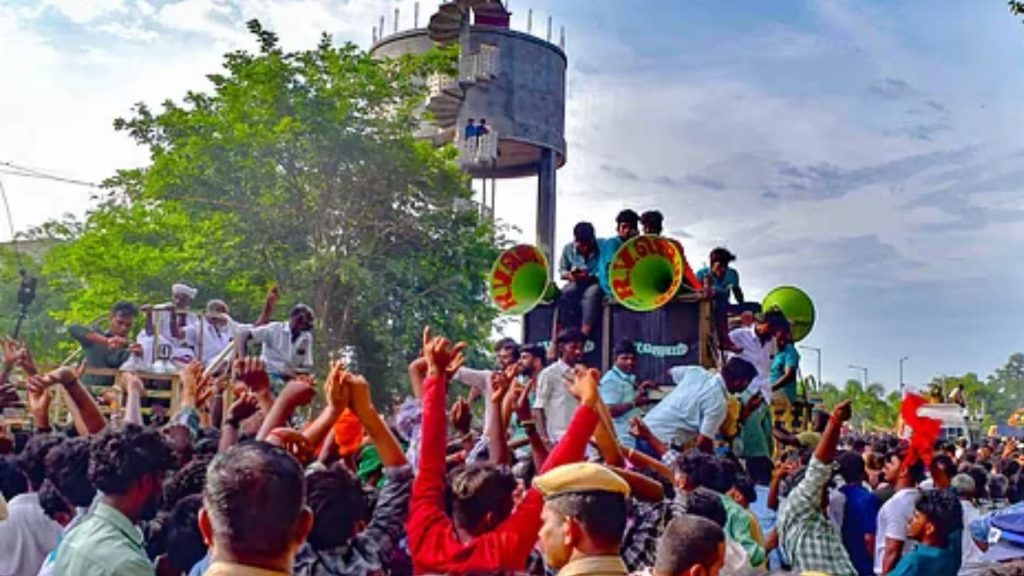
Conventional monitoring may not capture the changing intensity and duration of exposure as DJ vehicles move through neighbourhoods The rise of DJ processions in India underscores the limitations of existing noise pollution regulations, which fail to account for moving sound sources and their health impacts. Studies show elevated noise levels during festivals, causing stress and hearing issues. Experts advocate for advanced monitoring techniques, including noise mapping and individual exposure assessments, to safeguard public health. \During the festive season and the wedding months that follow, DJ sound systems blaring devotional and popular music are a common feature of public celebrations across India. These systems are now frequently mounted on vehicles that move through neighbourhoods and streets in processions, exposing residents along their routes to varying levels of noise. Such moving sources present a challenge for assessing noise pollution. A measurement taken at a single location may capture the sound level at one point in time, but not how exposure changes as a procession moves through different neighbourhoods or how long people remain exposed. Exposure to excessive noise can cause temporary hearing changes, persistent ringing in the ears and, in severe cases, permanent hearing loss. India’s Noise Pollution (Regulation and Control) Rules, 2000, regulate loudspeaker use and prescribe ambient noise limits to protect human health and environmental quality. The Rules prescribe ambient noise limits based on the energy-equivalent continuous sound level (Leq), which represents the logarithmic average of sound energy over a specified period. However, they do not cover other indicators, such as maximum sound level (Lmax) and statistical sound levels, which can reveal information about short-duration peaks and fluctuations that Leq alone may not capture. Moreover, if the source is a moving DJ vehicle, sound measurement at one point cannot show how exposure changes across the procession route, leaving gaps in understanding how vulnerable communities may be. So, can we assess the exposure and its impact on public and environmental health? Challenges in isolating DJ sounds Data from festival noise monitoring in Guwahati illustrate the difficulty of distinguishing DJ noise from the broader sound environment. In a 2025 study published in Asian Journal of Science, Kongkon Bordoloi, assistant professor at the department of physics at Majuli College, Assam, analysed data with the Assam Pollution Control Board during the days of the Durga Puja festival between 2019 and 2023, and Diwali in 2023.
Beyond decibels: India’s DJ processions expose gaps in noise pollution monitoring