


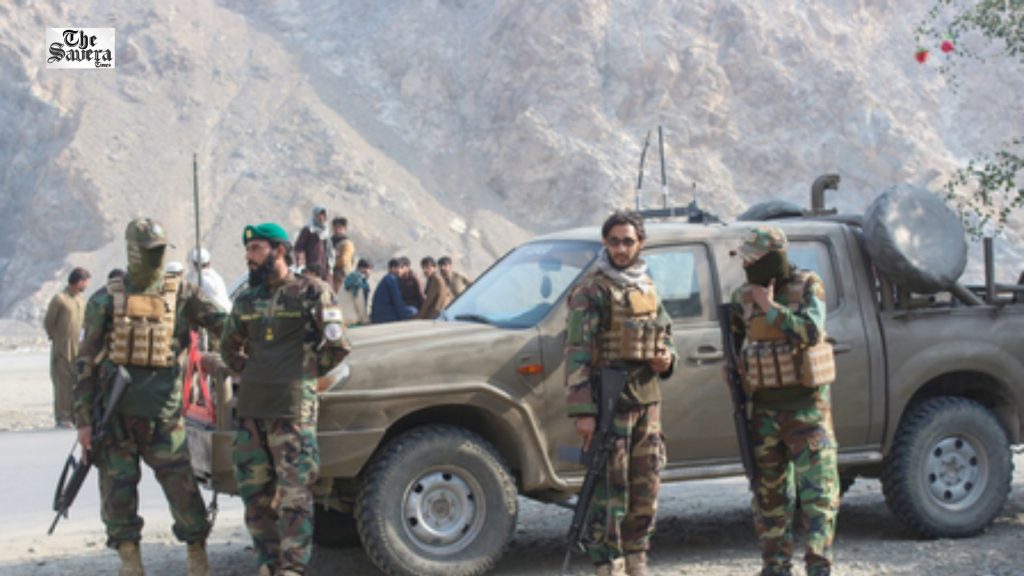
New Delhi: Tensions between Pakistan and Afghanistan have escalated again following fresh Pakistani airstrikes across the disputed Durand Line, with both sides exchanging accusations over cross-border militancy and the presence of armed groups.
Pakistan says its strikes are aimed at militant targets, including the Tehrik-e-Taliban Pakistan (TTP), which Islamabad alleges operates from Afghan territory. The Afghan Taliban administration has rejected the allegations and condemned the strikes as violations of Afghan sovereignty.
The latest escalation comes after Pakistan reported airstrikes on September 21 that it said killed 28 militants in Afghanistan. Afghan authorities and the United Nations, however, confirmed civilian casualties, with UNAMA reporting three civilians killed and four injured in Kunar province.
Pakistan-Afghanistan Tensions Escalate Along Border
The latest airstrikes have added to months of tensions along the Pakistan-Afghanistan border. Islamabad has repeatedly accused the Afghan Taliban of providing safe haven to TTP and other militant groups responsible for attacks inside Pakistan.
Kabul has rejected the allegations and maintained that Pakistan’s security problems are internal.
The renewed violence has also affected movement and trade along important border crossings, including Torkham and Chaman, where previous clashes and closures have disrupted the movement of people, trucks and goods.
UNAMA has documented significant civilian harm from cross-border fighting this year. In March, the UN mission said it had verified 185 civilian casualties in Afghanistan from late February to March 5 alone, including 56 deaths and 129 injuries. UNAMA has since reported that more than 1,100 civilian deaths and injuries have been recorded in Afghanistan from cross-border armed violence during 2026.
Why The Durand Line Remains Disputed
At the heart of the dispute is the Durand Line, the approximately 2,600-km boundary established in 1893 between Afghanistan and British India through an agreement involving Afghan ruler Amir Abdur Rahman Khan and British diplomat Sir Mortimer Durand. The boundary later became the frontier between Afghanistan and Pakistan after the creation of Pakistan in 1947.
Pakistan treats the Durand Line as its international border with Afghanistan. Successive Afghan governments, however, have disputed the boundary and argued that it divided Pashtun communities and territories.
The border cuts through areas inhabited by Pashtun communities on both sides, making it a longstanding source of political and security tensions. Historical records also show that the boundary has been a point of dispute between Afghanistan and Pakistan since the latter’s independence.
From Afghan War To Present-Day Security Crisis
The dispute is also linked to decades of mistrust between the two neighbours.
During the 1970s and 1980s, Afghanistan accused Pakistan of interfering in its internal affairs, while Pakistan supported Afghan Islamist groups during the Soviet occupation. Pakistan’s role as a frontline state in the US-backed campaign against Soviet forces further shaped relations between the two countries.
When the Taliban captured Kabul in 1996, Pakistan was among the countries that recognised the regime. Relations later deteriorated, particularly following the September 11, 2001 attacks, after which Pakistan joined the US-led War on Terror.
The Taliban’s return to power in August 2021 initially raised expectations of closer Pakistan-Afghanistan ties. Those expectations faded as disagreements over the Durand Line and allegations concerning TTP activity from Afghan territory intensified.
The current confrontation therefore combines a longstanding territorial dispute with competing security claims, militant activity and deteriorating relations between Islamabad and Kabul.