


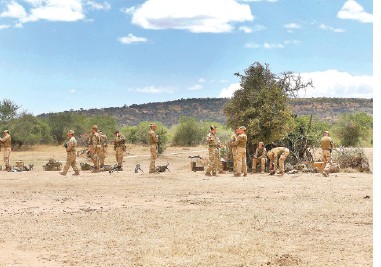
A Kenyan parliamentary report has levelled serious allegations of human rights violations, environmental degradation and sexual abuse against British troops stationed near the town of Nanyuki. The findings follow a detailed inquiry by Kenya’s departmental committee on defence, intelligence and foreign relations into the conduct of the British Army Training Unit in Kenya, known as Batuk. The inquiry drew from extensive public hearings held in Laikipia and Samburu counties and included testimony from affected civilians, survivors, community leaders, civil society organisations and public agencies. The Guardian reported that the investigation revealed deeply troubling patterns in the behaviour of some British soldiers deployed in the region.
According to the report, the committee faced significant institutional resistance throughout the process. Batuk declined to appear before the inquiry and repeatedly invoked claims of diplomatic immunity, which limited the committee’s ability to gather first-hand information from the unit. Despite these hurdles, the committee, chaired by Kenyan MP Nelson Koech, documented what it described as a disturbing pattern of sexual misconduct involving Batuk personnel. This included allegations of rape, assault and the abandonment of children fathered by soldiers. Survivors testified that many cases were quietly dropped or mishandled by local authorities, leaving victims without meaningful access to justice.
The report highlighted that Batuk had carried out an internal inquiry into rape allegations between 2003 and 2004. This inquiry allegedly seized evidence and dismissed most complaints as false, without publishing its findings. The Kenyan committee noted that no clear mechanism exists within either the UK or Kenyan justice systems to hold Batuk personnel accountable for child support obligations or other consequences arising from the misconduct.
One of the most prominent cases detailed in the report is the killing of Agnes Wanjiru, whose body was discovered in a septic tank in 2012. Wanjiru had last been seen at a hotel where she had been drinking with British soldiers. The report stated that the investigation into her death had faced interference and obstruction, allegedly from Batuk personnel. These disruptions have slowed efforts to secure justice. A former British soldier has since been arrested in connection with the case, and extradition proceedings have begun. The accused has denied wrongdoing and intends to contest the extradition.
Other serious allegations were also documented. The report described the killing of a man named Tilam Leresh, who was reportedly shot by a Batuk officer while herding livestock. Witnesses also reported injuries caused by unexploded ordnance left behind after military exercises. A former G4S supervisor claimed that military aircraft had intentionally frightened livestock, causing distress and losses for local farmers.
Environmental damage linked to Batuk operations emerged as another central theme of the report. Witnesses described extensive ecological harm, including soil degradation, damage to grazing land and threats to wildlife conservation efforts. The committee said the environmental impact had affected public health and local livelihoods, especially in communities that rely heavily on agriculture and animal husbandry. Residents of Laikipia and Samburu expressed concern that ongoing military training activities had made their land less productive and more hazardous.
In response to these findings, the parliamentary committee proposed several recommendations aimed at strengthening accountability and improving protections for local communities. Among them is the development of a visiting forces code of conduct that would explicitly set out behavioural expectations, including zero tolerance for sexual violence, as well as obligations relating to environmental protection and community welfare. The committee urged the creation of a survivor liaison unit to provide legal aid and support to victims of crimes involving foreign troops. It also recommended discussions between the British and Kenyan governments to establish mechanisms for enforcing child support responsibilities for children fathered by Batuk soldiers. A dedicated task force to investigate and prosecute crimes linked to foreign military personnel was also suggested.
In its response, the British Ministry of Defence acknowledged the publication of the report and reiterated its willingness to cooperate. It said it regretted the difficulties that had arisen regarding the British military presence in Kenya and emphasised that its submission to the inquiry had addressed several concerns raised during the process. The ministry stated that it was prepared to fully investigate any new allegations under its jurisdiction once relevant evidence is provided.
The report has intensified scrutiny of Batuk’s presence in Kenya and raised fundamental questions about the conduct of foreign military forces operating abroad. The inquiry’s findings are expected to prompt further diplomatic discussions between Nairobi and London as both countries consider the future framework governing Batuk’s operations.