


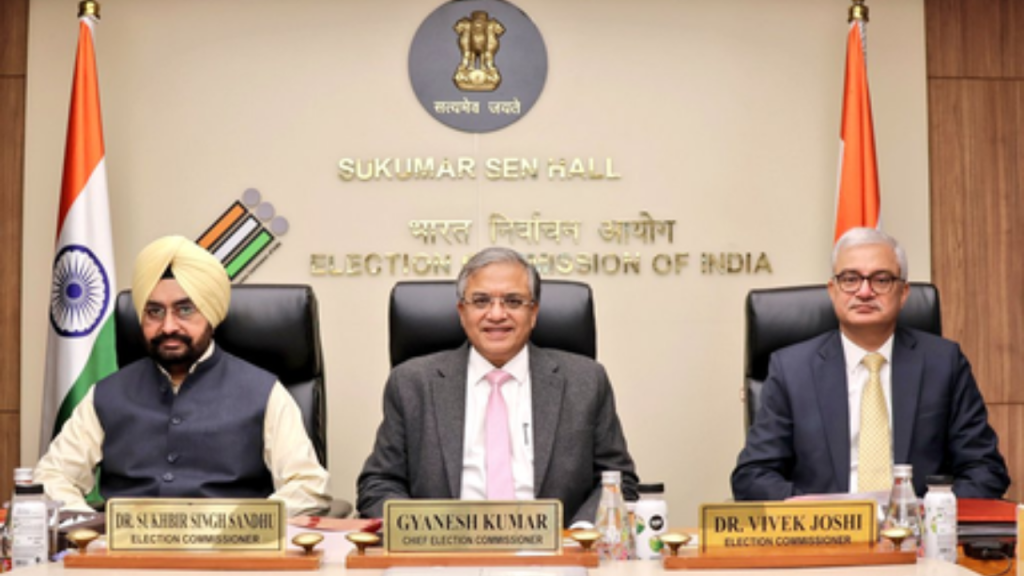
New Delhi: The Election Commission of India (ECI) on Friday held a high-level meeting with heads of various enforcement and regulatory agencies to devise a comprehensive strategy for ensuring smooth, transparent, and fair Bihar Assembly elections.
CEC Gyanesh Kumar Chairs Crucial Coordination Meeting
The meeting was chaired by Chief Election Commissioner (CEC) Gyanesh Kumar, with chiefs and senior representatives of several departments sharing insights, feedback, and suggestions to make the polling process foolproof.
The Bihar Chief Secretary, Director General of Police (DGP), and the state’s Chief Electoral Officer also attended the discussions via video conference.
Focus on Cash, Liquor, and Drug Seizures
Deliberations centred on tackling the illegal flow of cash, liquor, drugs, and other inducements aimed at influencing voters ahead of the polls.
Officials also discussed the challenge of fake news, which could potentially distort the electoral environment and mislead voters.
The ECI emphasised the importance of curbing covert expenditure by candidates and political parties and improving intelligence sharing among agencies for prompt action against financial and electoral misconduct.
17 Key Departments Join Coordination Effort
At least 17 central agencies and departments participated in the meeting, including:
CBDT, CBIC, ED, DRI, CEIB, FIU-IND, RBI, IBA, NCB, RPF, CISF, BSF, CRPF, SSB, BCAS, AAI, and the Department of Posts.
Officials also reviewed measures to prevent the smuggling of drugs, liquor, cash, and fake currency across inter-state and international borders.
Steps for Voter Convenience and Inclusivity
The poll panel reaffirmed its commitment to ensuring a comfortable and inclusive voting experience for all citizens.
It has issued guidelines to make polling stations more accessible for senior citizens and persons with disabilities, including installing booths on the ground floor, providing wheelchairs, and prioritising the elderly during voting.
The ECI has also undertaken measures to address identity verification concerns for burqa-clad women, an issue that has sparked political debate, to ensure that the voting process remains both fair and respectful.