


Rattan Chand Sharma
Polling for high stakes assembly elections closed on April 29, 2026. Now is time to assess, the impact of electoral deployment on border security. Elections and border security are antonyms adversely affecting each other. Election security management is a ping- pong battle between festival of democracy and border security. It starts with the announcement of election schedule, sets stage for mobilization of border guarding forces for elections.
Planning for mobilization, how to be exercised on ground, starts well in advance. It unsettles whole border management gamut. Let’s analyze impact of elections on border security keeping elections in five states in backdrop. Similar mobilization exercise is followed for all elections. Election schedule was announced on 15 March 26 for Assam, Kerala and Puducherry on April 9, 2026, Tamil Nadu on April, 23 and West Bengal on April 23 and 29.
Election security management basically is the responsibility of state police. Across the board, top heavy police establishment have been found unable to shoulder the responsibility for conduct of free and fair elections. It routinely overstates the need for central forces to election commission in discussions to monitor preparations for elections. As recent experience shows, election commission with degree variation, generally treat state police neutrality with skepticism, its trust quotient very low for ensuring free and fair elections. With states labelled as unable to ensure conduct of free and fair, violence free elections, election commission turns to Union Home Ministry, to mobilize Central Armed Police Forces (CAPFs).
The responsibility for conduct of elections rests with election commission, however responsibility to provide wherewithal in terms of security forces and police to be placed at the disposal of election commission solely rests with Ministry of Home Affairs and state concerned. Recent trends indicate zero confidence on state police and police leadership neutrality and need for heavy CAPF strength. The requirement of central forces is practically worked out by state police hierarchy though theoretically done by election commission after deliberations with state chief electoral officer, the state administration i.e. Chief Secretary and Director General of Police.
What can be provided by state is accounted for and gap is met by requisitioning Central Armed Police Forces (CAPF). This is well documented ritual carried out every now and then. Ideally the need for central forces should be met from Central Reserve Police Force, the nodal force for maintenance of internal security, followed by Central Industrial Security Force and Railway Protection Force.
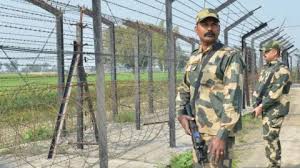
Pull out from borders for election management has become a ritual adversely affecting border security and consequently internal security. The tinkering with border deployment should only be resorted in exceptional circumstances and not routinely. The repercussions of massive pull out from borders are not documented since no conceptualized discussion ever takes place on this important issue, despite government of India accepting recommendations of Kargil Review committee (KRC) chaired by then Home Minister and Deputy Prime Minister Sh L K Advani. It says in chapter IV internal security in para 4.8 that Central Para Military Forces while playing commendable role, have often been diverted for prolonged deployment on variety of duties other than those for which they were raised and this has adversely affected their training and recuperation schedules and strongly felt that they should revert to their original role. It further says that repeated withdrawal, in large numbers, from border guarding duties for internal security and counter insurgency duties has led to neglect of the borders. These forces have also been unable to perform optimally due to cannibalization of battalions and even companies. It further says that withdrawal of border guarding forces limits their capabilities to guard the borders effectively.
Pull out from borders have long term national security repercussions, the magnitude of which may not reveal itself immediately but after prolonged lull. Unfortunately, there are no conceptualized discussions on this topic from border guarding forces, Ministry of Home Affairs, Army under whose operational control border guarding forces have war time role and security think tanks. It is doubtful that those at the helm in CAPFs have ever flagged the consequences of pull-out from borders on border security i.e. smuggling of arms, ammunition, drugs, on training, conventional war preparations, internal security and national security.
Newtons third law of motion, for every action there is equal and opposite reaction is applicable for border security and election deployment. Pull out from borders thins deployment, creates porosity and gaps, exposing borders to vulnerability and exploitation by anti-national elements from across and own side of border since pull out renders well documented protocol specifying quantum of troops in terms of units and subunits required to dominate border worked out based upon terrain, approachability, threat, historical legacy, local environment and administrative factors. The violation of basic principles of density of deployment exposes borders to exploitation jeopardizing border and internal security. The other aspect connected with this is increased work load upon already overburdened troops with little /no rest and relief, cancellation and ban on leave, a measure rarely resorted even during hot war, anxiety and stress among troops and fall in discipline standard. The repercussions are devastating for border security which unfortunately are neither discussed nor analyzed for corrective actions.
Connected is the aspect of frequent interruption in training, already a major casualty of over commitment in internal security duties, diluting professionalism in weapon and equipment handling, physical and mental fitness and diluting collective coordination, cooperation, regimentation diluting unit and subunit professionalism in border security and conventional war fighting.
Subunits frequently committed in election duties are exposed to highly politicized environment and using troops for activities other than area sanitization and domination influences them negatively degrading combat potential. A few may be influenced by political environment and may act in partisan manner rendering major blow to neutrality, a trait for which Central Armed Police forces known and trusted. Political charges and counter charges on their partisan conduct not only shatters the aura of neutrality which CAPFs carry, also degrade their professional conduct which sets in demoralization. What is the solution to avoid pull out from borders.
Border guarding forces and Ministry of Home Affairs need to carry out an empirical study of electoral and internal security deployment for last five years which has been met through resorting to pull out from borders. Along with this also work out quantitative requirement of troops for next ten years for electoral deployment. Ministry of home affairs should raise that number of battalions to meet electoral and internal security needs so that border security is not compromised every now and then at the altar of electoral and internal security deployment. Ministry of Home affairs must act now and act fast to maintain the sanctity of borders in the interest of internal and national security. Procrastination in initiating measures to ensure foolproof border