


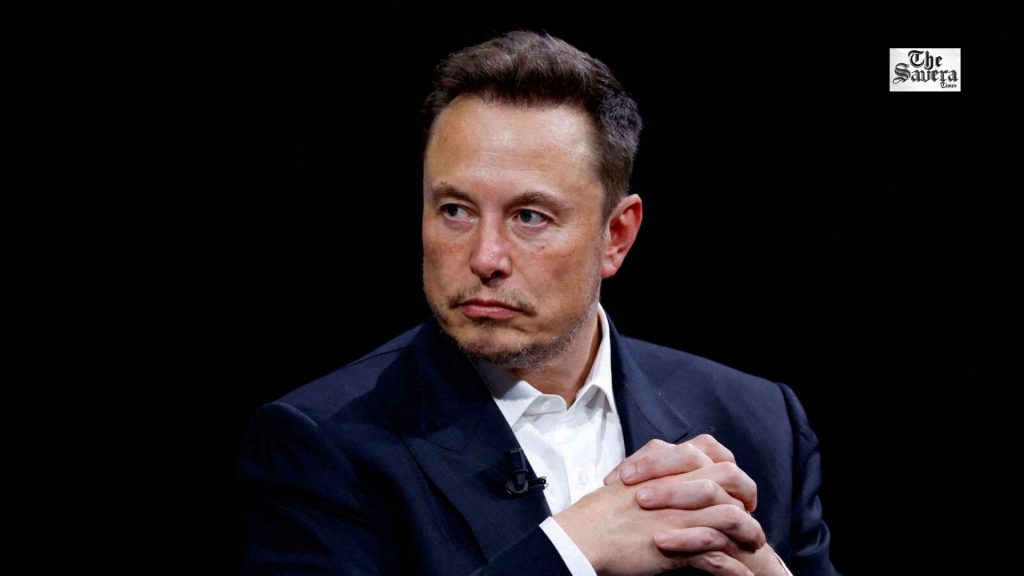
New Delhi: The Centre on Thursday rejected Elon Musk’s allegation that “certain oligarchs” are blocking his company’s satellite communication services in India, calling the claim “baseless and misconceived.”
In a statement, the Ministry of Communications said the government has established a fair and non-discriminatory authorisation framework for all telecommunication services, including satellite communication services.
The ministry said telecom licences have been granted to three Global Mobile Personal Communication by Satellite (GMPCS) service providers using non-geosynchronous orbit-based satellite communications. It said the move reflects the government’s commitment to enabling satellite communication services in India.
Centre Explains Satellite Service Approval Process
Under the licence conditions, every licensee is required to demonstrate compliance with security requirements. The ministry said the security assessment is intended to ensure that satellite communication services meet necessary standards for the safety of users and their data.
The security assessment process is currently underway for all three licensed entities. Once the process is completed for an entity, it can move to the next stage of seeking spectrum assignment.
“At present, all the three entities are at broadly the same regulatory stage,” the ministry said.
It added that the suggestion that India’s regulatory framework or its application is unfair or discriminatory is “baseless and misconceived.”
What Elon Musk Said About Starlink
Musk had alleged that his satellite internet company Starlink was being blocked in India by “certain oligarchs” to protect their “monopolistic chokehold” over the country.
He made the remarks while responding to a post by the X account DogeDesigner about gaps in mobile connectivity across Indian villages.
“Unfortunately, we are being blocked by certain oligarchs in order to maintain their monopolistic chokehold on the Indian people,” Musk wrote, adding that the situation was a “crime against the people of India.”
The post cited a claim that 11,256 listed villages in India still lacked 4G coverage as of May 2026 and argued that Starlink could provide another connectivity option for underserved areas.
DogeDesigner also referred to BharatNet’s fibre network and claimed that while more than 850,000 route-km of fibre had been laid and around 221,000 Gram Panchayats had been made service-ready, only 80,472 Gram Panchayats were reported to have operational Points of Presence in June 2026.
All Three Satellite Operators at Similar Regulatory Stage
The government’s response comes as satellite communication companies continue to go through security and regulatory clearances before receiving spectrum assignment.
The Communications Ministry reiterated that the same authorisation framework applies to satellite communication service providers and that security requirements must be met before the next regulatory stage.
The Centre’s clarification therefore directly challenges Musk’s suggestion that Starlink is being selectively prevented from entering the Indian market.