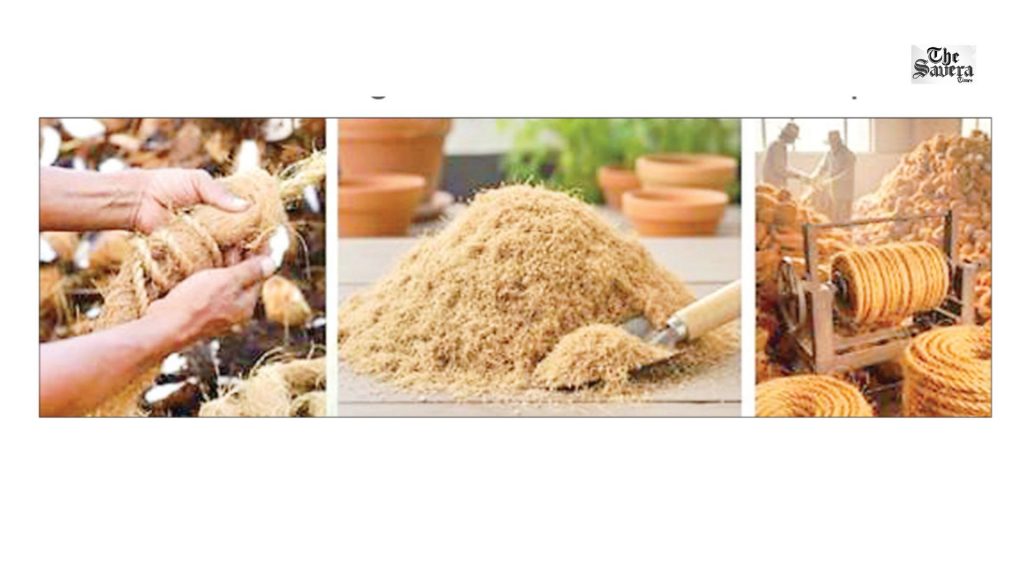
Swachh Bharat Mission (SBM), launched in 2014, has evolved into a broader movement for cleanliness, waste management, and behavioural change. The mission also created space for wider citizen participation through Swachhata Hi Seva (SHS), launched in 2017 as an annual campaign for collective cleanliness action. The campaign has expanded its focus to plastic waste management, visual cleanliness, and garbagefree public spaces. Parallelly, the idea of Waste to Wealth is changing how waste is viewed and managed across India. It treats discarded material as a resource that can be recovered, reused, and converted into value. The Government has linked this approach with circularity, resource efficiency, and sustainable waste management. Under Swachh Bharat Mission – Urban 2.0, cities are encouraged to strengthen source segregation, waste processing, and recovery of value from waste. The change is visible not only in large processing plants, but also in homes, communities, and local institutions. For many Indian households, turning kitchen waste into compost is not a new idea. It is a practice that is finding a fresh place in today’s waste management systems. In Vijayawada, Andhra Pradesh, senior citizen K. Subbalakshmi has shown how this familiar habit can be adopted at home. The municipal corporation recently shared her experience to encourage more citizens to take up home composting. The wet waste generated in her kitchen is converted into compost and used in her garden, returning what would otherwise be discarded to the soil. A similar effort began in Chandigarh during the COVID-19 pandemic. Resident Kamaljeet Kaur Deol started composting wet kitchen waste at home. What began as a household practice gradually grew into awareness activities to encourage others to adopt home composting. Her efforts have since helped inspire citizens to contribute towards a cleaner and greener city. As these individual efforts began encouraging wider participation, the idea also found a place in organised community learning. In Siddipet, Telangana, the dedicated waste management learning centre ‘Swachh Badi’ is providing young people with hands-on exposure to practical waste management practices, from home composting to community-level composting. Building on this approach, similar centres are planned across 141 municipal areas, bringing awareness and practical learning on responsible waste management closer to communities. What begins with a small compost bin can therefore have a wider effect. It gives new life to plants while keeping a regular stream of wet waste away from landfills. More importantly, it shows how waste management can begin where waste itself is generated. Beyond household waste, communities are also finding uses for materials that have long been difficult to manage. In Borchila village of Assam’s Morigaon district, this approach is being applied to a plant that has become a persistent challenge for communities living around water bodies. Water hyacinth, locally known as ‘pani meteka’, is an invasive aquatic plant that spreads rapidly across water bodies. Despite its aesthetic appeal, water hyacinth has become a problematic weed, overcrowding freshwater bodies such as rivers, ponds, and lakes. Its overgrowth hampers activities like fishing, transportation, and recreation, making these water sources less viable. However, the women of Borchila village have found a new way to turn water hyacinth into an opportunity. Instead of viewing the plant only as an unwanted growth in water bodies, they have begun transforming it into handicrafts. Supported under the Assam State Rural Livelihoods Mission, the initiative has created an additional source of income for the participating women, who earn at least Rs 10,000 a month through this work. What was once seen as a problem for water bodies is thus being transformed into a resource for livelihoods and enterprise. The experience demonstrates that resource recovery can extend beyond waste management to create value and livelihood opportunities. By transforming materials that might otherwise remain a burden into useful products, such initiatives can support local enterprise while promoting more sustainable use of resources. From an invasive plant being transformed into a source of rural livelihood, the focus now shifts to another material contributing to the urban waste burden. In Patna, coconut shells, fibres and other residues are being recovered and processed into useful products. The city generates around 25–30 metric tonnes of coconut shell every day, which previously added to the volume of waste reaching landfill sites. To address this waste stream, the Patna Municipal Corporation has established a processing facility in the Danapur area, creating a pathway for converting discarded coconut residues into productive resources.
Finding New Purpose in What We Discard