


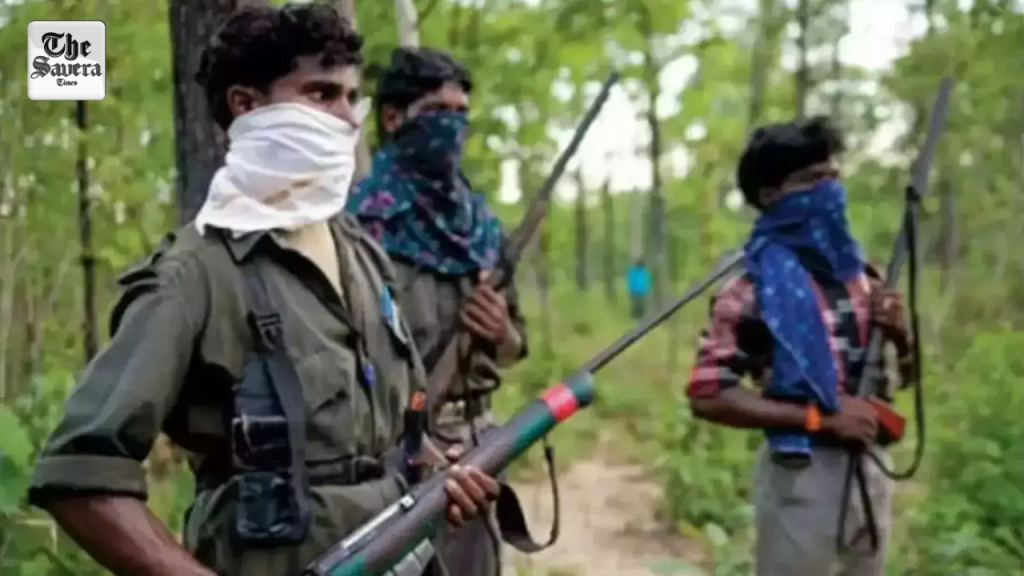
Raipur: In a major boost to anti-LWE operations in central India, four senior Maoists surrendered before security forces in Gariaband district, striking a significant blow to the insurgent network in the region.
Among the surrendered cadres was Deepak alias Bhima Mandavi, a divisional committee member (DVCM) carrying a reward of Rs 8 lakh. The combined bounty on the four stood at Rs 19 lakh, according to police officials.
Profiles of the Surrendered Cadres
Alongside Mandavi, those who gave up arms included:
-
Kailash alias Bhima Bhogam, member of the Protection Team
-
Ranita alias Paiki, an Area Committee member
-
Sujita alias Uren Karam
All had been active in the Dhamtari-Gariaband-Nuapada Division since 2013, with individual rewards ranging between Rs 1 lakh and Rs 5 lakh.
Recovery of Maoist Funds and Arms
Based on intelligence provided by the surrendered cadres, security forces recovered Rs 16 lakh in cash hidden in forested hideouts—believed to be part of Maoist operational funding for logistics and recruitment.
The operation also led to the seizure of 31 live cartridges, two empty magazines, eight BGL rounds, detonators, 12 bore ammunition, and a cache of Maoist literature used for propaganda and recruitment.
Recent Setbacks Weakening Maoist Network
Officials noted that the surrender reflects a deeper crisis within the Maoist organisation, worsened by financial disruption and sustained security pressure.
The development follows a major joint operation in January 2025 near the Chhattisgarh-Odisha border, in which 16 Maoists—including Central Committee member Jairam alias Chalpathi—were killed. That offensive, backed by drone surveillance and coordinated intelligence, has since disrupted the Maoist command structure.
Growing Signs of Collapse
Senior officials, including Raipur Range IG Amarendra Mishra and IG (Naxal Operations) Ankit Garg, highlighted that Maoist cadres are increasingly demoralised and opting to surrender.
With each defection, the insurgent infrastructure weakens further, offering relief to communities long impacted by the conflict. Authorities believe the combination of leadership losses, financial hits, and rehabilitation opportunities is accelerating the decline of the Maoist movement.