


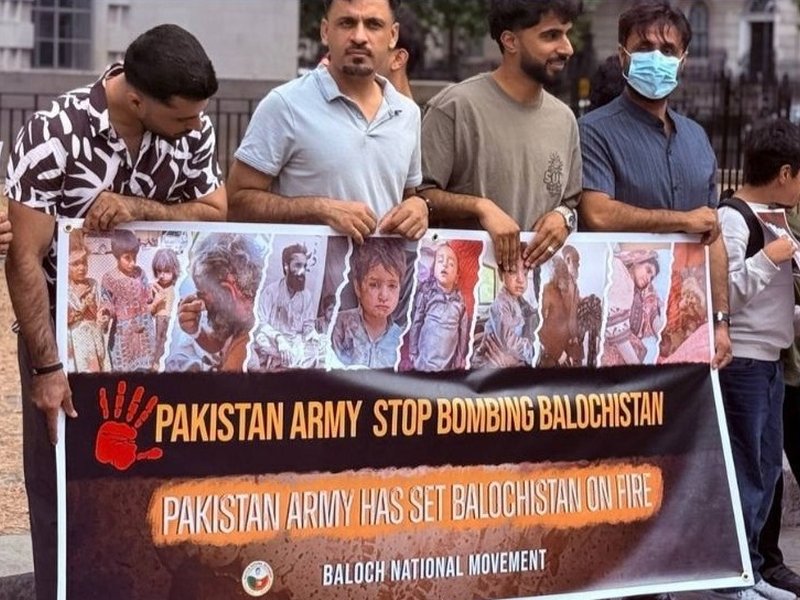
The current phase of the conflict in Pakistan’s Balochistan province resurfaced in the early 21st century, driven by longstanding disputes over political autonomy, representation and control of the region’s rich natural gas and mineral resources, while its strategic importance has grown with the Gwadar port and its role as a crucial hub of the so-called China–Pakistan Economic Corridor (CPEC).
It noted that the roots of the Balochistan crisis stretch back to Pakistan’s formative years, when Kalat was incorporated in 1948, triggering successive cycles of insurgency, the deadliest of which unfolded between 1973 and 1977.
From restive Balochistan to Pakistan-occupied Kashmir (PoK), geography shapes more than where people live; it also influences the security prism through which the state views them. As these peripheral regions seek greater political space, the centre has moved towards an increasingly concentrated system of military command.
Pakistan’s policy of enforced disappearances in Balochistan has left behind families who have waited years for answers.
Baloch activist Sammi Deen Baloch was just 10 when her father, Deen Mohammed Baloch, disappeared in 2009. Her years-long search for him turned her into one of the most recognisable voices of families of the disappeared. Yet the disappearances have continued.
In April 2026, Dad Shah, the brother of activist Fozia Baloch, disappeared from his home in Karachi.
Restrictions in PoK long predate 2026. US-based advocacy group Human Rights Watch documented curbs on political expression and activity as early as 2006, while UN reports in 2018 and 2019 raised concerns over freedom of expression and assembly, the use of counterterrorism laws, and allegations of enforced disappearances in the occupied territory.
In 2026, however, those restrictions took a new turn. On June 5, Pakistani authorities banned the Joint Awami Action Committee (JAAC) under counterterrorism legislation, followed by telecommunications disruptions and arrests ahead of planned protests.
In March 2026, serious allegations of human rights violations in Balochistan, including the repression of ethnic and religious communities, were explicitly raised before the United Nations Human Rights Council in Geneva.
Deadly clashes during protests in PoK in June 2026 also drew international attention to allegations of police violence and the deaths of protesters, with growing calls for greater scrutiny and accountability.
One can only hope that the international community, too, will mobilise in response to the daily human rights violations taking place in Balochistan and PoK.