


New Delhi: Imagine walking into a fancy European palace in the 1700s, where queens and nobles are draped in bright, flowery fabrics that feel like a summer breeze. Surprise! Those trendy outfits weren’t born in Paris or London—they came straight from India’s clever weavers.
For centuries, India hasn’t just followed fashion; it’s been the quiet boss, designing trends that the whole world copies.
From ancient motifs on shawls to modern gowns at star-studded galas, India’s style has shaped global closets.
Let’s dive into this colorful story of how India became the world’s go-to fashion designer.
When Europe Fell for Indian Fabrics
Back in the 1600s and 1700s, Europe’s fashion scene was buzzing about India’s chintz—a light, colorful cotton fabric printed with flowers and vines.
French ladies like Baroness d’Oberkirch couldn’t get enough of it for their gowns and room decor. Even Queen Mary of England lined her bedroom with it.
The craze was so big that France and England banned imports in 1686 to protect their own makers. But people smuggled it anyway, risking jail or worse! Women caught wearing chintz faced fines or had their dresses taken away in public.
Why the fuss? Chintz was comfy, vibrant, and way ahead of Europe’s heavy silks. By 1759, the bans lifted because locals learned to copy it using machines. This kickstarted Europe’s cotton boom, all thanks to India’s original skills.
The Twist of Paisley: From Kashmir to Catwalks
Ever seen those teardrop patterns on scarves or shirts? That’s paisley, a global favorite in designs from Dolce & Gabbana to JW Anderson. But it started as “buta” in India’s Kashmir—a mix of flowers and a sacred tree symbol from ancient Persia.
In the 1700s and 1800s, traders brought luxurious Kashmir shawls to Europe. These were super pricey, like buying a house! Soon, factories in Scotland’s Paisley town copied them, and the name stuck. Today, paisley pops up everywhere, proving India’s motifs never go out of style.
Khadi: The Fabric of Freedom Goes Global
Khadi, the hand-spun cotton, isn’t just cloth—it’s a hero of India’s freedom fight. Mahatma Gandhi pushed it during the 1900s to boycott British goods, calling it the “Livery of Freedom.” He wanted people to make and wear their own stuff for self-reliance.
After independence, India set up the Khadi and Village Industries Commission in 1957, creating huge co-ops. Though it dipped in popularity, khadi’s back big time. Designers like Vivienne Westwood blend it with silks for cool collections. It’s shown at events like Lakmē Fashion Week in March 2025, loved for its honest, handmade vibe.
- Why it’s hot now: People want real stories in fashion—khadi feels grounded and eco-friendly.
- Global boost: Stars and runways embrace it for its “quiet power.”
Sari: The Ultimate Style Icon
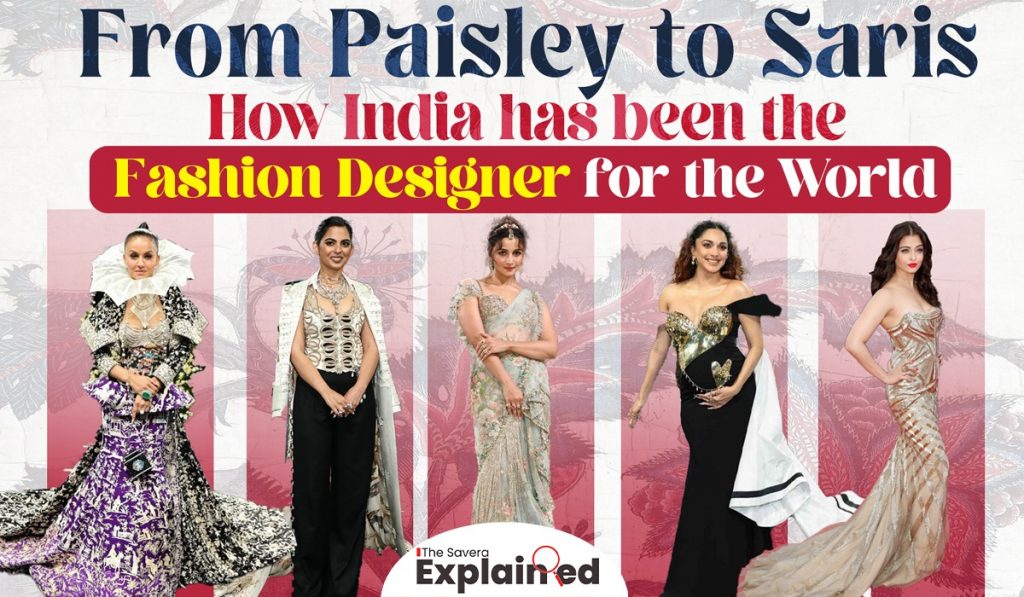
The sari, a simple draped garment, has inspired the West forever. Big names like Hermes, Balenciaga, and Gucci have twisted it into modern looks. At Cannes 2025, Alia Bhatt wore a Gucci version with a backless top and flowing drape.
It’s not “sorry”—it’s timeless! The sari shows India’s genius in effortless elegance.
India’s Big Moment on the World Stage
Fast-forward to today: Indian designers are stealing the spotlight. Sabyasachi, Rahul Mishra, and Gaurav Gupta dress stars at Met Galas and fashion weeks. At this year’s Met, Manish Malhotra’s jewelry sparkled on Rihanna, while Gaurav Gupta created a motherhood-themed gown for Kiara Advani.
Even Pharrell Williams’ Louis Vuitton show at Paris Fashion Week 2025 drew from India’s Snakes and Ladders game, with trunks embroidered in florals and paisleys.
- Met Gala highlights: Natasha Poonawalla in Manish Malhotra, Isha Ambani in Anamika Khanna.
- Growth ahead: India’s fashion market could hit Rs 45.3 lakh crore by 2032, growing over 10% yearly, per the India Brand Equity Foundation.
India’s fashion is no fleeting trend—it’s a timeless thread woven into global style. From smuggled chintz to dazzling red-carpet creations, India’s designs have shaped wardrobes with unmatched creativity and soul. As the world keeps turning to its fabrics and motifs, the next big fashion moment might just be another Indian masterpiece reimagined.