


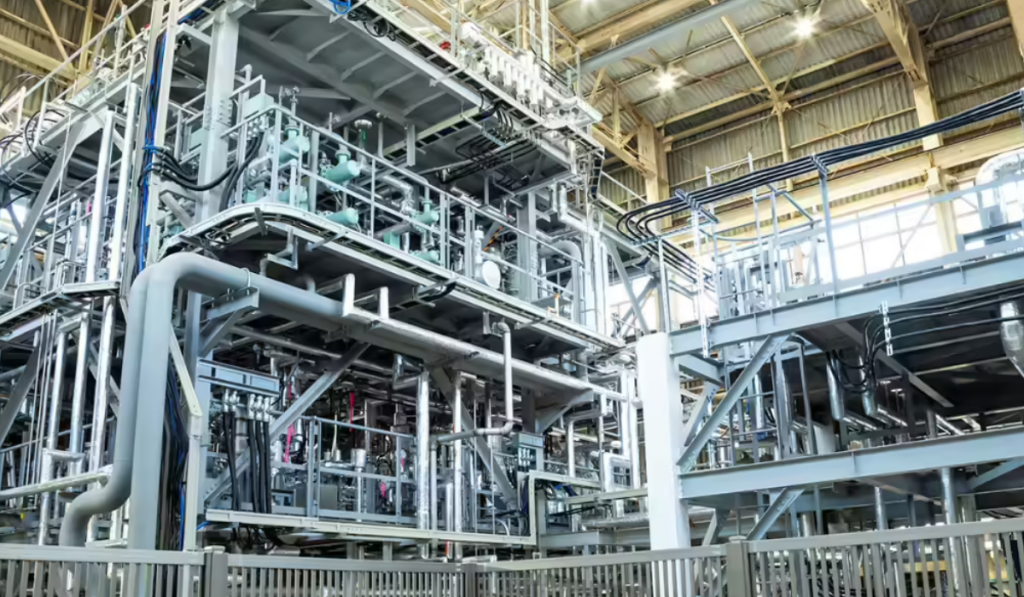
What if fuel didn’t come from oil wells, but from the air itself? That concept moved closer to reality when ENEOS Corporation successfully produced synthetic fuel using captured carbon dioxide and hydrogen at its Yokohama demonstration plant.
The achievement proved that liquid fuel compatible with existing engines can be created while recycling atmospheric carbon.
It marked an important step toward low-carbon energy, especially for industries where electrification is difficult. However, just as the technology showed promise, the project was unexpectedly paused, raising questions about its future.
How Fuel Was Created From Air
The process is based on reusing carbon already present in the atmosphere instead of extracting new fossil carbon. It begins with Direct Air Capture, where CO₂ is collected from ambient air or industrial emissions.
This carbon is then combined with hydrogen produced through electrolysis powered by renewable energy.
The final stage uses Fischer–Tropsch synthesis, which converts these elements into liquid hydrocarbons like synthetic diesel or aviation fuel. These fuels are “drop-in ready,” meaning they can be used in existing engines and infrastructure without modification.
Why This Innovation Matters
Synthetic e-fuels offer a solution where electricity alone falls short. While electric vehicles are transforming passenger transport, sectors like aviation, shipping, and heavy industry still rely on energy-dense fuels.
E-fuels could help reduce emissions in these sectors by creating a closed carbon loop—reusing CO₂ instead of adding new emissions.
This is particularly valuable for countries like Japan, which depend heavily on imported fossil fuels.
The Scaling Challenge
Despite its promise, the technology is far from large-scale deployment. The Yokohama plant currently produces about one barrel of fuel per day—enough to demonstrate feasibility, but not to meet demand.
ENEOS had aimed to scale production to 10,000 barrels per day by 2040. However, scaling requires massive renewable energy supply, hydrogen production systems, and efficient carbon capture—all of which are complex and costly.
High Costs Remain a Major Barrier
The biggest hurdle is affordability. Producing hydrogen through electrolysis consumes significant energy. When combined with carbon capture and fuel synthesis, the process becomes less efficient than using electricity directly.
According to the International Energy Agency, e-fuels require much more renewable energy compared to electric alternatives, making them expensive. Currently, they cost significantly more than fossil fuels and even other low-carbon options like biofuels.
Why ENEOS Paused the Project
In 2025, ENEOS decided to halt further development of CO₂-based synthetic fuels for now. The decision was driven by rising hydrogen costs, expensive infrastructure needs, and uncertain financial returns.
Instead, the company shifted focus toward biofuels and sustainable aviation fuels, which are closer to commercial viability. The pause reflects strategy, not failure.
A Global Industry Trend
Japan’s experience is not unique. Around the world, companies and governments are experimenting with synthetic fuels, but most projects remain in pilot stages. While the science works, economic challenges limit widespread adoption.
Energy firms globally are diversifying investments across hydrogen, electrification, and biofuels rather than relying solely on e-fuels.
The Future of E-Fuels
E-fuels are unlikely to replace fossil fuels entirely in the near future. Instead, they may serve niche sectors like aviation and shipping. Their success will depend on cheaper renewable energy, improved hydrogen production, better carbon capture, and supportive government policies.
Beyond the Pause: What It Means
The ENEOS project highlights a key truth about clean energy innovation: technological success alone is not enough—economic viability is crucial.
Creating fuel from air is no longer just a theory. The real challenge now is scaling it affordably. The pause reflects the current stage of the global energy transition—where innovation exists, but practical implementation still faces significant hurdles.