


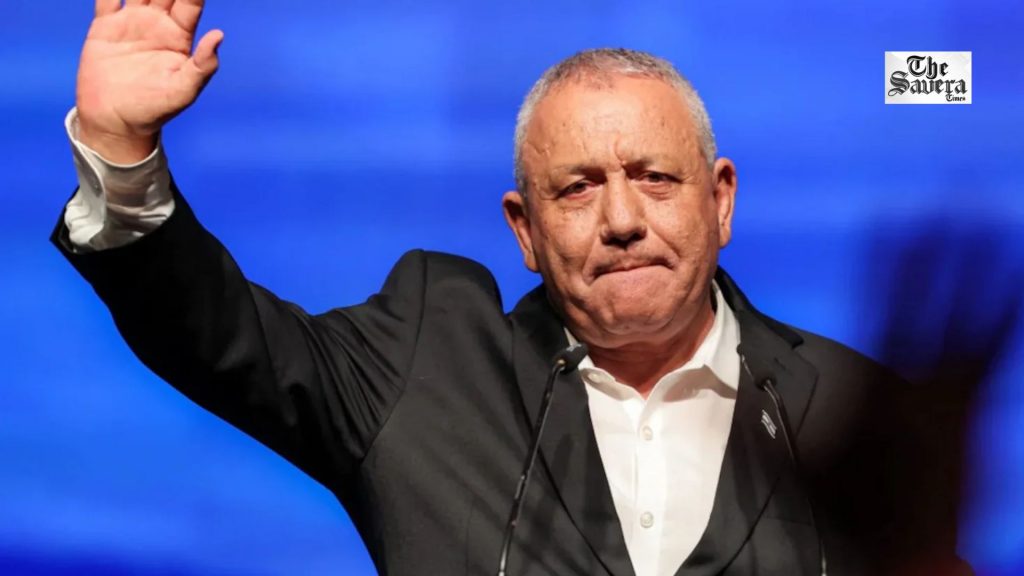
Jerusalem: Israeli opposition leader Gadi Eisenkot has secured the backing of 67 lawmakers to receive the mandate to form the next government, giving him a clear lead over Prime Minister Benjamin Netanyahu, whose support stands at 46 endorsements.
The latest development came on Thursday after the Arab-led Joint List announced that it would recommend Eisenkot to President Isaac Herzog during consultations on government formation. The decision followed an earlier endorsement by Ra’am, another Arab-led party.
The endorsements give Eisenkot the support of a majority in the 120-member Knesset. However, they do not automatically mean that all 67 lawmakers will join or support his government.
Joint List’s Support Takes Eisenkot’s Endorsements to 67
The Joint List, which holds 11 seats in the Knesset, decided to back Eisenkot’s bid to replace Netanyahu. The alliance said its decision was aimed at preventing Netanyahu and his government from returning to power.
Before the Joint List’s announcement, Eisenkot had received 56 recommendations, including support from Ra’am’s eight lawmakers and 48 lawmakers from Jewish opposition parties.
With the Joint List’s 11 seats added, his total reached 67, crossing the 61-seat majority mark in the Knesset.
Ra’am, led by Mansour Abbas, had earlier recommended Eisenkot during its meeting with President Herzog.
Netanyahu’s Support Falls to 46 as UTJ Refuses to Back Him
Netanyahu’s position weakened after his longtime ultra-Orthodox ally, United Torah Judaism (UTJ), declined to recommend any candidate for prime minister.
The seven-member party’s decision left Netanyahu with 46 endorsements, while Eisenkot continued to widen his lead.
UTJ’s two factions, Degel HaTorah and Agudat Yisrael, had been instructed by their respective spiritual leaders not to endorse either Netanyahu or Eisenkot.
The party’s decision is linked to its demand for legislation protecting exemptions from military service for ultra-Orthodox religious students. Its representatives have indicated that their support for any future government would depend on the issue being addressed.
Herzog to Decide Who Gets the First Chance to Form Government
President Isaac Herzog is holding consultations with political parties following Israel’s October 27 parliamentary election, which failed to produce a clear governing majority.
The president must decide which lawmaker has the best chance of forming the next government. His decision is expected by November 11.
The lawmaker selected will have 28 days to form a government, with a possible extension of up to 14 days.
Although Eisenkot now has 67 recommendations, the challenge will be to turn that backing into a workable coalition that can secure the Knesset’s confidence.
Netanyahu’s Likud emerged as the largest party in the election with 27 seats, but his political bloc has struggled to secure sufficient support to retain power.
The latest endorsements have therefore strengthened Eisenkot’s position in the race to replace Netanyahu, although the final outcome will depend on coalition negotiations.