


In India, there is a tradition of gifting during festivals. Dhanteras is a festival in which, according to the cultural inclination of Indians, buying gold or silver is considered auspicious. Apart from gold and silver, the markets selling other metals as per their capacity also shine on this day. Indians take the initiative to buy gold so that it can be useful in future during the marriage of their children. Before the upcoming Dhanteras i.e. 6th November, the prices of gold and silver are on the decline. Three years ago, the price of gold was up to Rs 52 thousand per ten grams, which has recently touched the level of more than Rs 1.5 lakh per ten grams and silver has also come down after touching the peak of Rs 2 lakh per kilogram. Despite this, the craze for gold and silver has not decreased. Those who couldn’t afford expensive gold, got new, lightweight jewelry made from their old gold, and in a way, a trend for lightweight jewelry began. The market is unique. Gold and silver prices have steadily declined this year. Compared to January, gold prices today have fallen by -21.57 percent. Silver has fallen even more, falling by -52.64 percent. In October alone, gold prices have fallen by 5.30 percent. Turning to actual prices, on Monday, 24-carat gold was priced at ₹137,534 per ten grams, and silver was priced at ₹179,972 per kilogram. Compared to last year, gold has seen a slight increase, an average of only 3.25 percent, while in the last nine months, gold has become cheaper by ₹37,816 per ten grams. Silver has fallen by 22 percent from its opening price this year. Silver is currently selling at ₹1.77 lakh per kilogram. However, this price is also high for poor people. Even the middle class could not give up the fascination for jewellery, but the burden of jewellery definitely started reducing. Even amidst the ups and downs, there was never a decline in the jewellery market. Today, if a two tola gold jewellery is made, it will be cheaper by around Rs 69 thousand from its highest price. It should be mentioned that the gold mines in the country do not produce much, rather we import most of it, yet for ages gold and silver have been adorning the lockers of common people as well as the rich. Even in the basements of some religious places, there is huge amount of gold lying there, in fact, so much so that the country’s budget can be managed for many years. But for centuries, there is a habit of hoarding gold and silver. In the current downturn, should the wealthy buy gold en masse this Dhanteras? The country’s leading fund managers advise against doing so, as prices rise and fall quickly. One shouldn’t take on such a risk by investing in a volatile market that it could lead to a complete collapse later. These fluctuations will continue to be visible to customers in the near term. Therefore, customers should buy gold in a phased manner during the downturn and store it safely during the upturn, or sell it if necessary. Currently, India has vast reserves of gold sitting in homes, lockers, or religious places, as dead capital. In a developing country, all capital should be functional. But will traditional Indians, always seeking ways to secure their insecure future, bother to use their accumulated gold for any constructive work? It seems unlikely
Gold-silver Prices Fall Ahead of Dhanteras
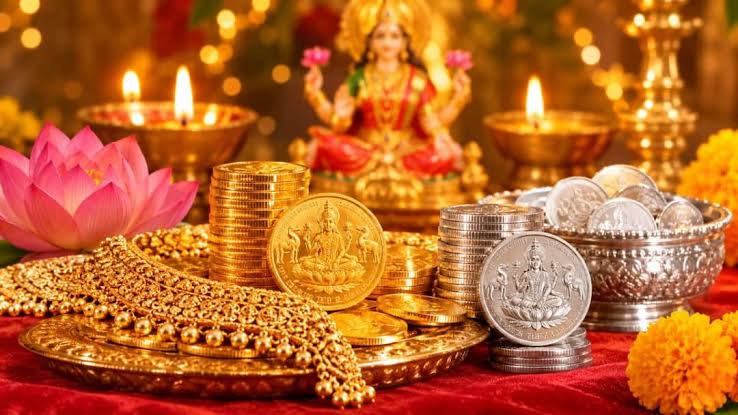
Gold-silver Prices Fall Ahead of Dhanteras