


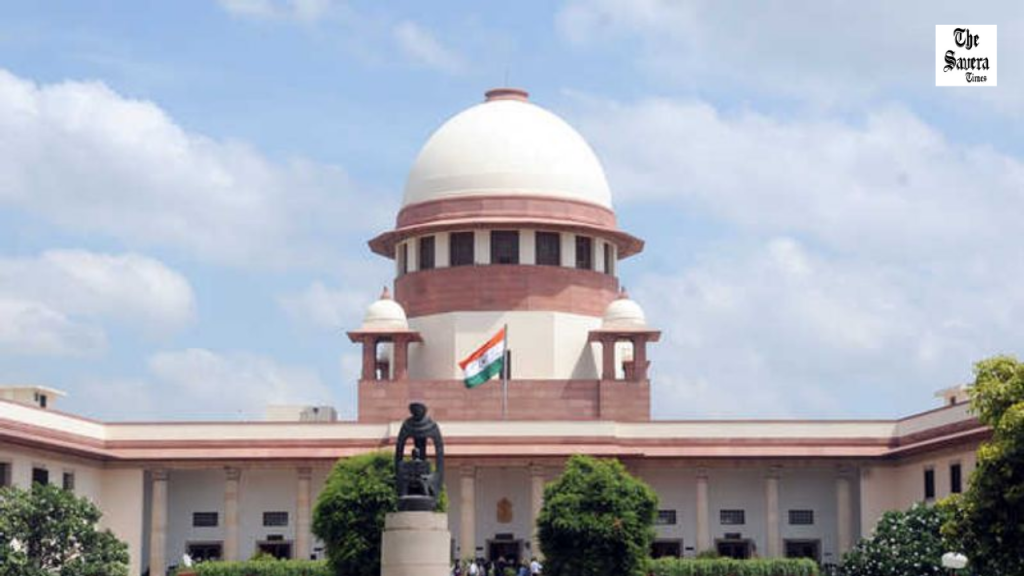
The Supreme Court of India has agreed to examine a petition filed by the Himachal Pradesh government seeking permission to withdraw criminal cases lodged against sitting and former MPs and MLAs from the state. The top court’s notice comes after the Himachal Pradesh High Court declined to allow complete withdrawal of these cases, setting the stage for a key judicial review.
A bench led by Chief Justice of India Surya Kant issued notice on the petition and has scheduled the hearing for March 16, 2026. The move signals that the apex court will now delve into the legal and constitutional aspects of withdrawing prosecutions involving political figures.
Background: Himachal Govt’s Withdrawal Request
The Himachal government had moved the Supreme Court after the High Court’s April 26, 2024, order refused to allow the complete withdrawal of all cases. The state had initially recommended 65 cases for withdrawal, but the High Court had permitted only 15 to be dropped.
Among these cases are FIRs registered during the tenure of the previous government, including cases connected to protests and rallies held during the COVID-19 pandemic. During the High Court proceedings, it was noted that five of the 65 recommended cases, including one against Chief Minister Sukhvinder Singh Sukhu, were disposed of while the petition awaited hearing.
Legal Context: Why High Court Permission Was Needed
Normally, under Section 321 of the Criminal Procedure Code (CrPC), the state does not require court permission to withdraw prosecutions involving non-serious offences. However, the requirement for High Court sanction in this instance arose due to a Supreme Court precedent in the Ashwani Kumar Upadhyay vs Union of India (2020) case, which held that withdrawal of prosecution against sitting and former MPs/MLAs requires judicial scrutiny to ensure public justice is served.
Because of this precedent, the High Court held that even for relatively minor offences, withdrawal must be careful and justified in accordance with the law. It refused to allow withdrawal for cases involving offences such as negligent acts likely to spread infection, criminal intimidation, assault on public servants, and violations under the National Highways and Disaster Management Acts.
State Government’s Argument
In its plea before the Supreme Court, the Himachal government, represented by senior advocate V. Giri, argued that the withdrawal of these cases was in the public interest. It sought judicial permission after obtaining independent opinions from public prosecutors, district attorneys, district magistrates, and superintendents of police.
The state contended that the charges in many of the cases were relatively minor, non-serious and politically contextual, and that continued prosecution would not serve the broader ends of justice. It maintained that proper consultations and steps had been taken at the administrative level before seeking withdrawal.
Why This Matters
The Supreme Court’s examination of this petition could have wide implications for how criminal cases involving lawmakers are handled across India. The decision may influence future petitions on withdrawal of cases against politicians, especially in scenarios where charges are linked to political activity.
Critics and legal analysts argue that judicial oversight is crucial to prevent misuse of withdrawal powers, while supporters of the petition say that clearing minor politically motivated cases helps ease administrative burden and electoral politics. Whichever way the top court rules, it could set an important precedent on the balance between public justice and political considerations.
Next Hearing Date
The Supreme Court will hear the Himachal Pradesh government’s petition on March 16, 2026, when it is expected to examine the constitutional and procedural grounds for allowing the withdrawal of these cases.