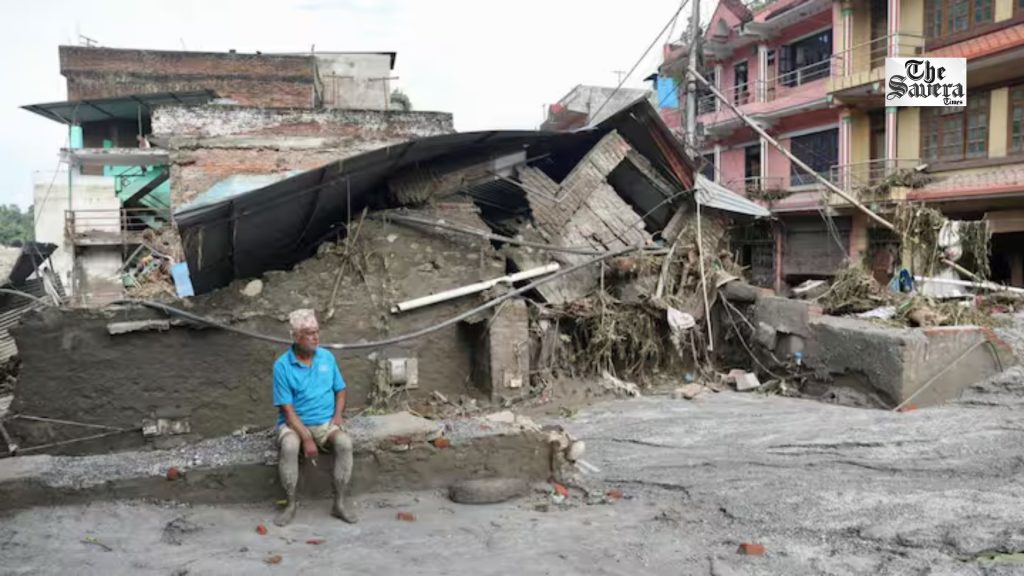
New reports have recently emerged that, following the devastating tragedy in Nepal, which killed at least 1,400 people, a glacier burst in Bhutan has also caused significant damage to highways and roads. Thousands of people have had to be evacuated. The question arises: why is water unleashing its catastrophic form? Why are lives being lost in floods, landslides, and mountain cracks? Northern Nepal, southeastern Tibet, and much of Uttarakhand are currently threatened by risky construction efforts designed to attract tourists. Recently, a journal called Scientific has issued a dire warning about the dangers facing residents and tourists in the Himalayan region. The warning is that investors, lured by tourism and modern development in the Himalayas, are not refraining from undertaking risky construction. The Scientific Journal states that despite the warnings, risky construction in these areas has increased by 45 percent between 2016 and 2023. This reckless construction, coupled with the blasting of mountains to create roads, has exposed 300,000 people to the risks. In areas at risk from glacial lake flooding, the pace of construction is not slowing down; instead, it has increased by approximately 78 percent. According to the journal, this is only a rough estimate; the actual number could be much higher. Remember, this survey is valid until 2023. The recent events in Nepal have left hundreds dead and thousands displaced. Many homes damaged. Bhutan is in danger of facing a similar fate. Uttarakhand is hit by natural disasters every year. Why aren’t governments and people alert to these events? Why aren’t construction slowing down? The answer is the lure of making money from tourists. Now, in these areas, even in homes built in dangerous locations in the name of adventure, homestays have been created for tourists. On the other hand, there’s global warming, a changing weather pattern. Scientists say that glaciers no longer form as heavy and deep as they once did. Due to global warming, they melt quickly, and the excess water suddenly flows into rivers and streams, causing catastrophic floods. The solution is to build slowly, according to scientific standards, and to be friendly to nature.
The Himalayas are vulnerable, with millions vulnerable to disaster