


Authored by: Sheena Sandhu
The idea of India he died for
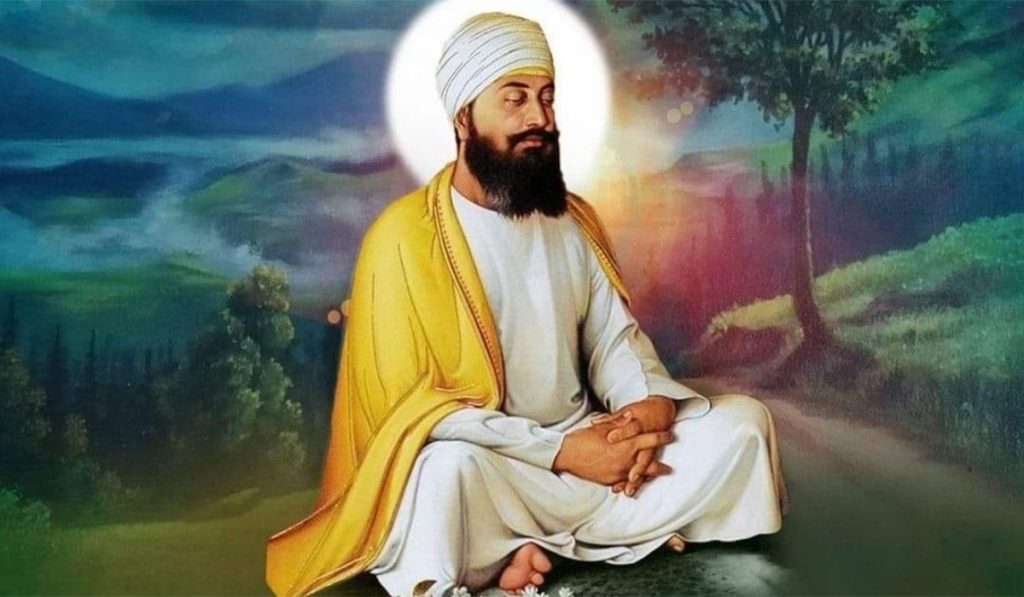
The 9th Sikh Guru, Guru Tegh Bahadur, was executed in Delhi in November 1675 after refusing to convert under imperial pressure. His sacrifice—remembered as Shaheedi Divas and centrally associated with the Kashmiri Pandits’ plea for protection— endures as a moral charter for India’s pluralism: the state must not coerce belief, and power must answer to conscience. That is why generations have called him Hind Di Chadar—the Shield of Hindustan.
The context and the choice
The Sikh tradition is unflinching: Kashmiri Pandits, led by Pandit Kirpa Ram, sought the Guru’s help amid persecution. Guru Tegh Bahadur resolved to stake his life so others could keep their faith. Arrested and brought to Delhi, he was ordered to perform a miracle or convert; he refused. His companions—Bhai Mati Das, Bhai Dayal Das and Bhai Sati Das—were tortured to death before his eyes.
The Guru was publicly beheaded in Chandni Chowk. The sites that hold this memory—Gurdwara Sis Ganj Sahib and Gurdwara Rakab Ganj Sahib—are living architecture of conscience etched onto the capital’s geography.
The principle: freedom of conscience
This was not a sectarian stand; it was a civilizational argument. By defending the religious freedom of Hindus—people of another faith—Guru Tegh Bahadur offered perhaps the most luminous Indian statement of freedom of conscience before the Enlightenment: no ruler may command the soul. In Sikh idiom, Sarbat da Bhala—the welfare of all—frames this ethic.
His title, Hind Di Chadar, is best understood not as majoritarian triumphalism but as the protection of a diverse civilisation’s right to believe, doubt, dissent—and to refuse.
How he protected India
- He drew a constitutional line against coercion in religion, placing liberty of conscience at the centre of Indian public ethics centuries before modern rights charters.
- He fused spiritual authority with moral dissent, refusing miracle-mongering or courtly compromise and demonstrating that authority serves truth, not power.
- He created a political language for pluralism: a Sikh Guru died for the religious freedom of Hindus, hardening a civilisational consensus that pluralism is non-negotiable.
- He sanctified resistance to tyranny; the martyrdom of his companions alongside him tempered communities against capitulation to fear—an ethic later institutionalised by Guru Gobind Singh in the Khalsa.
The living commemoration— and its meaning
Across Sikh institutions and state bodies, the 350th anniversary of his martyrdom is being observed with wide public participation this year. The commemorations underline that his sacrifice is not merely Sikh patrimony but a national inheritance—a covenant of conscience across communities and generations.
SGPC’s pan-India commemoration plan, including the Assam–Punjab Nagar Kirtan
- A grand, Panthic Nagar Kirtan began from Gurdwara Dhobri Sahib in Assam—an historic site associated with the Guru— on August 21. The theme is “Dharam Het Saaka Jini Keeya” (one who made supreme sacrifice for faith).
- The procession is slated to traverse roughly 20 states, weaving through the East, Centre and North of India, and culminating at Sri Anandpur Sahib in late November to coincide with the martyrdom observances.
- The opening leg covers Dhubri to Siliguri, onward to Malda and Kolkata; it then proceeds to Asansol, Jamshedpur, Ranchi, and Takht Sri Harmandir Ji Patna Sahib, before moving west and north via Sasaram, Varanasi, and major cities of Uttar Pradesh, eventually entering Uttarakhand, Delhi and Haryana en route to Punjab.
- Alongside the main procession, the SGPC has planned Gurmat samagams, special kirtans, and heritage-focused programmes in key urban centres to foreground the Guru’s message of religious freedom and human dignity.
- The culminating week at Anandpur Sahib features daily diwans, recitations from Guru Granth Sahib, tributes to Bhai Mati Das, Bhai Sati Das and Bhai Dayal Das, and youth focused seminars on conscience, rights, and interfaith harmony.
Note: Some state governments and Sikh bodies have announced complementary yatras and public events converging on Anandpur Sahib in the week of November 19–25. The Sikh leadership has also called for Panthic unity and institutional coordination so that commemorations remain focused on the Guru’s legacy rather than organisational rivalry.
Beyond ownership: a shared legacy
From time to time, contemporary polemics ask whether “their” Guru saved “our” dharma. The record makes the question smaller than the deed. Guru Tegh Bahadur did not die to exalt one community over another; he died so that no Indian—of any community— would be forced to betray faith or self under state compulsion. His memory cannot be contained by sectarian ownership. It belongs to everyone who believes that the republic’s soul rests on the freedom to believe, to doubt, and to refuse.
The unfinished work
To honour Guru Tegh Bahadur at 350 is to do more than hold yatras and erect tent cities. It is to recommit to legal and social guarantees that no Indian will be coerced in matters of conscience; that minorities will not be hounded; that the powerful will not demand miracles from the powerless; and that the public square will remain wide enough for all shrines and all silences. In that sense, his martyrdom continues to protect India—whenever the state restrains itself, whenever society shelters the vulnerable, whenever faith refuses to become a cudgel.
A last word from Delhi’s memory
In Chandni Chowk, the arterial heart of the old imperial city, the place of beheading now houses prayer. The hum of traders and the hush of devotees mingle there, as if the city still understands what the Guru insisted on with his life: that power is transient, but conscience, once defended, remakes a people. On the 350th year of his sacrifice, that remains India’s hardest test— and its greatest promise.
Author Sheena Sandhu is a retired civil servant and views are personal