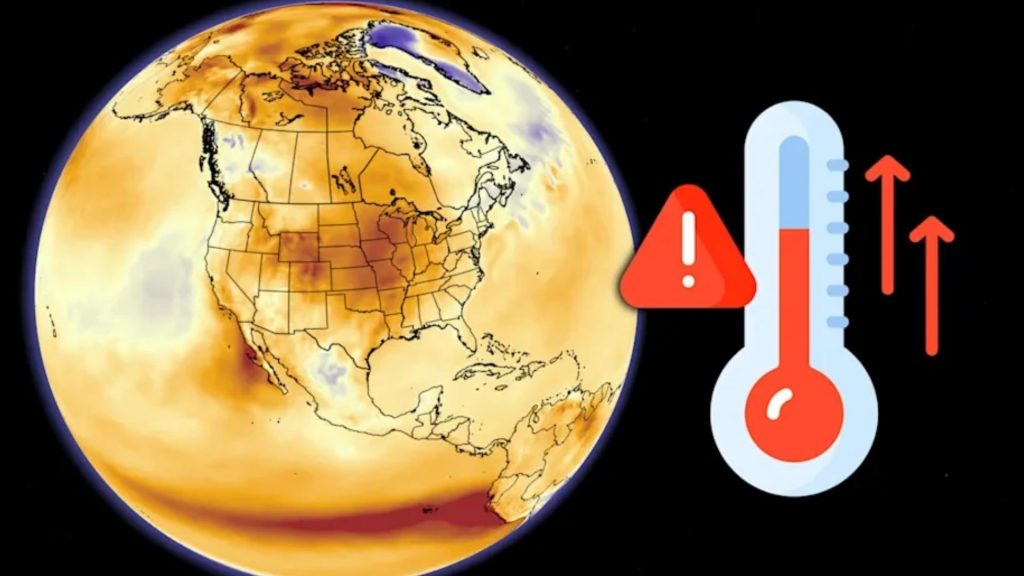
October 2026 was the warmest October on record globally, with 2026 on course to exceed 1.5 degrees Celsius (°C) above the pre-industrial average (1850-1900), according to the latest update from the Copernicus Climate Change Service (C3S), implemented by the European Centre for Medium-Range Weather Forecasts (ECMWF). If this happens, 2026 would become the second year after 2024 to breach the 1.5°C threshold. The global average surface air temperature in October was 15.35°C, which was 0.9°C above the 1991-2020 average and 1.75°C above the preindustrial average, according to C3S. October was the third consecutive month, after August and September, to exceed 1.5°C above the pre-industrial average. The last time three consecutive months breached this threshold was between February and April 2025. Based on temperature data recorded up to October, C3S estimated that the annual global average temperature in 2026 would likely be between 1.56°C and 1.61°C above pre-industrial levels. There is an 80 per cent probability that 2026 will become the second-warmest year on record and a 20 per cent chance that it could equal or surpass 2024 as the warmest year on record. The four-year average global temperature for 2023-2026 is also expected to exceed 1.5°C above pre-industrial levels. The average sea surface temperature (SST) in oceans outside the polar regions reached 20.95°C in October 2026, the highest on record for the month, surpassing the previous record set in October 2023. The SST anomaly in the Niño 3.4 region, which is used to measure the strength of the ongoing, exceptionally strong El Niño event, also broke records. According to report, in October, the monthly average SST in the Niño 3.4 region reached an all-time high of 29.94°C, with a record anomaly of 3.21°C. Both values exceeded those reached during the peaks of the previous very strong El Niño events of 1982-1983, 1997-1998 and 20152016, highlighting the exceptional intensity of the current El Niño.
Hottest October Across the Globe