


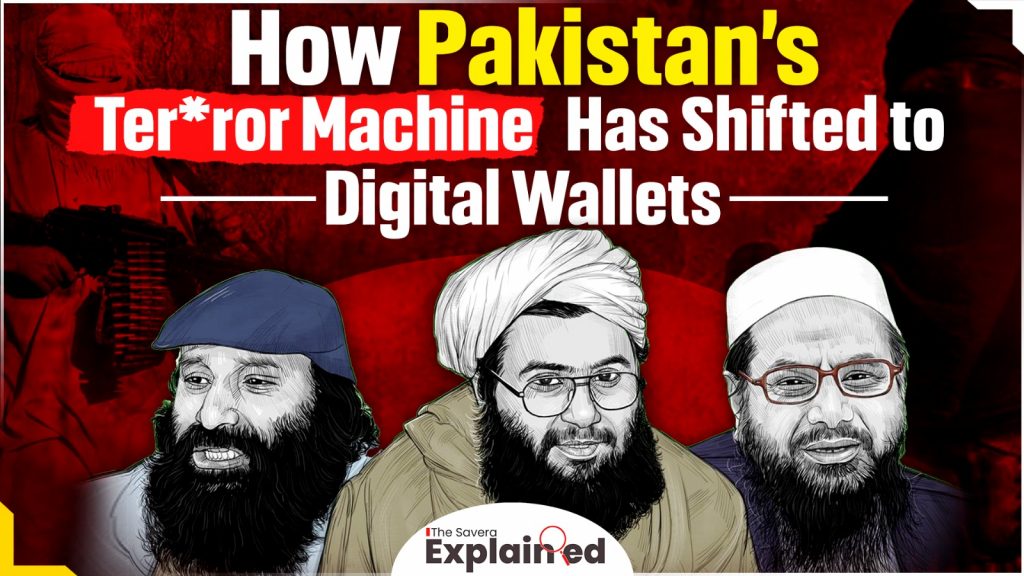
New Delhi: Months after India’s Operation Sindoor decimated terror camps in Pakistan and Pakistan-occupied Kashmir (PoK), groups like Jaish-e-Mohammed (JeM) have shifted gears—this time, into the digital world.
Intelligence inputs reveal that JeM, backed by Pakistan’s spy agency ISI, is now funnelling donations through digital wallets instead of bank accounts, making it harder to trace and block their money trail.
The new model allows JeM to evade global watchdogs such as the Financial Action Task Force (FATF), which mainly monitors banking systems, while quietly rebuilding its shattered infrastructure.
With a funding target of PKR 3.9 billion and plans to set up 313 new religious centres across Pakistan, JeM’s adaptation underscores a dangerous reality: even as military strikes neutralise terror camps, Pakistan’s proxy outfits are evolving, using fintech tools to keep their networks alive and thriving.
From Bank Accounts to Digital Wallets
For years, Indian agencies tracked terror financing through formal banking routes, exposing how Pakistan’s ISI and outfits like Lashkar-e-Taiba (LeT) and JeM sustained their infrastructure. But the May 7 Operation Sindoor—precision strikes that demolished nine terror launch pads in Pakistan and PoK, killing over 100 terrorists—has forced terror groups to adapt.
Instead of relying on banks, JeM has shifted to digital wallets like EasyPaisa and SadaPay, funnelling donations through accounts held in the names of family members of its chief, Masood Azhar. At least five such wallets with direct links to JeM have been identified. These platforms allow wallet-to-wallet and wallet-to-cash transfers that remain largely invisible to global watchdogs such as the Financial Action Task Force (FATF), which mainly tracks bank transactions.
According to intelligence estimates, nearly 80 per cent of JeM’s finances are now managed via wallets, with annual transactions of around PKR 80–90 crore. The switch enables Pakistan to claim that terror funding through banks has been cut, while the money pipeline continues through alternate digital channels.
The Scale of JeM’s New Fundraising
Intelligence inputs suggest JeM has drawn up a PKR 3.9 billion plan to set up 313 new “markaz” (religious centres) across Pakistan, mirroring Lashkar-e-Taiba’s old model of mixing religious outreach with recruitment. Each centre is pegged at PKR 12.5 million (₹1.25 crore), with appeals being circulated online through encrypted channels, Facebook groups, WhatsApp forwards, and even letters attributed to Masood Azhar himself.
JeM has also widened its collection base. Money is being raised not just in Pakistan but also from expatriate Pakistanis and sympathisers in Gulf nations, who contribute directly into rotating sets of digital wallets. JeM reportedly operates 30 fresh wallets every month, changing them every few weeks to stay ahead of detection.
On the ground, mosques continue to play a role in collections. Under the guise of humanitarian donations—often framed as support for Palestinians in Gaza—JeM commanders collect cash that is later channelled into wallets. The Al Rahmat Trust, a Bahawalpur-based charity long tied to JeM, remains a crucial financial arm, routing funds through parallel accounts and providing a cover of legitimacy.
How the Money Is Used
Once pooled, funds raised via wallets are converted into smaller tranches or withdrawn as cash. Intelligence agencies believe the money is then deployed across four main areas:
- Rebuilding destroyed infrastructure: JeM is attempting to revive training centres flattened in Indian strikes, including Markaz Subhanallah and Markaz Bilal.
- Procurement of arms and tech: Funds are being spent on weapons, secure communication systems, and surveillance equipment.
- Lifestyle support: Reports suggest part of the money bankrolls luxury cars, safehouses, and upkeep for Azhar’s family.
- Recruitment and propaganda: Financing of local clerics, social media campaigns, and community outreach through new markaz.
The estimated 80–90 crore rupees yearly flow underscores how critical these wallets have become to keeping JeM’s terror network alive despite military setbacks.
Why It Matters for India and the World
India’s Operation Sindoor may have dealt a severe blow to JeM’s physical infrastructure, but the pivot to digital wallets highlights the resilience of Pakistan’s proxy terror machine. By sidestepping banks, groups like JeM not only evade FATF scrutiny but also complicate Indian counter-terror financing efforts.
The development also raises questions about Pakistan’s complicity. Reports suggest Islamabad even pledged financial support to rebuild some of the destroyed facilities after the May strikes. Meanwhile, by tolerating wallet-based fundraising, Pakistan can continue to officially deny banking links while still ensuring terror groups are resourced.
For India, the challenge is two-fold: cutting off online fundraising campaigns that target diaspora communities, and working with global regulators and tech platforms to flag and freeze suspicious wallets. For the international community, it is a reminder that terror financing is no longer confined to traditional banking—digital payments are the new frontier.
As JeM adapts to survive, India’s counter-terror strategy will need to move beyond the battlefield to the digital ecosystem that is fast becoming the backbone of Pakistan’s terror economy.