


Abhishek Vij
India is hailed as the world’s largest democracy. We take pride in the fact that, to date, every government elected to Parliament has been chosen through democratic means. Concurrently, the impartiality and neutrality of the Election Commission of India have remained steadfast since its inception—a foundation upon which the dignity of our democracy rests intact.
Now, in a new development, Members of Parliament (MPs) from the country’s opposition parties have submitted notices in both Houses of Parliament seeking to initiate impeachment proceedings against the Chief Election Commissioner.Prior to this, last year, opposition parties had also moved no-confidence motions against the Deputy Chairman of the Rajya Sabha, Jagdeep Dhankhar, and—just a few days ago—against the Speaker of the Lok Sabha, Om Birla. These motions were subsequently rejected after deliberation, as they failed to garner the requisite majority support.
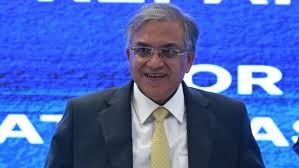
Now, a notice for an impeachment motion has been served against the Chief Election Commissioner. The notice bears the signatures of 103 MPs from the Lok Sabha and 63 MPs from the Rajya Sabha. As per the procedural rules governing impeachment, a minimum of 100 signatures from Lok Sabha MPs and 50 signatures from Rajya Sabha MPs are required to initiate such proceedings. Among those who have signed are MPs from the Aam Aadmi Party (AAP), even though AAP is not formally part of the broader opposition alliance. This marks the first instance in history where a notice has been served seeking the removal of a Chief Election Commissioner. The stance of the opposition parties regarding the Election Commissioner and the Election Commission is unequivocal: they allege that Election Commissioner Gyanesh Kumar, through his conduct, acts as an advocate for the Central Government.
The opposition also harbors a grievance regarding the intensive revision of voter lists currently underway across various states; they contend that this exercise is inherently discriminatory. They allege that a significant number of voters in each state are being struck off the rolls simply because they are supporters of parties affiliated with the opposition. Opposition parties have also raised complaints regarding Electronic Voting Machines (EVMs), whereas the ruling party counters that when opposition parties win elections in a particular state, the EVMs are deemed reliable; however, when they lose, allegations of rigging are leveled against the machines. The judiciary, too, has previously ruled that voting conducted via EVMs is free from error. The notice issued against the Chief Election Commissioner contains allegations of biased conduct, deliberately obstructing investigations into electoral fraud, and disenfranchising a large number of voters. It has been alleged that the Special Information Report (SIR) process currently being conducted by the Election Commission is intended to benefit the ruling party at the Centre.
West Bengal Chief Minister Mamata Banerjee is currently the most vocal critic of the Election Commission. Mamata Banerjee and her party have accused the Chief Election Commissioner of being incompetent and biased. A notice seeking his removal may be moved in either House of Parliament. It remains to be seen—with considerable interest—in which House this motion will be introduced this coming Friday. To substantiate the grounds for impeachment and remove the Chief Election Commissioner from his post, a two-thirds majority of the total membership of the House is required. The recent succession of motions—first a no-confidence motion against the Deputy Chairman of the Rajya Sabha (and former Vice President) Jagdeep Dhankhar, followed by one against the Lok Sabha Speaker Om Birla, and now one against the Chief Election Commissioner—raises a pertinent question: does this not imply that the dignity of these pivotal constitutional offices is being called into question?
Ideally, the conduct of the distinguished individuals occupying these offices should be impartial, while the opposition, in turn, should accord them due respect. However, the political atmosphere in the country has currently become so vitiated that even such revered national institutions—and the eminent personalities presiding over them—are being dragged into the quagmire of partisan politics.
Until now, everyone has reposed their faith in the impartiality and neutrality of these offices. Well, the outcome is already clear—that the motion will not be passed; however, in a vast democracy like India, aspersions should not be cast upon such dignified offices. Every side must cultivate the habit of listening to the other; furthermore, where genuine errors exist, no hesitation should be shown in rectifying them.