


Abhishek Vij
In recent days, US President Donald Trump has said countless times that raising tariff rates is a powerful weapon for him. With the help of this weapon, he has stopped wars and tensions between 8 countries. Despite 6 trade negotiations with India, a free trade agreement could not be reached, and the tariff rates remain unchanged. However, with the emerging trends in global trade, both large and small economies want to enter into free trade agreements. In the last few years, India has signed free trade agreements with Mauritius, Australia, UAE, EFTA countries including Switzerland and Norway, Britain, and Oman.
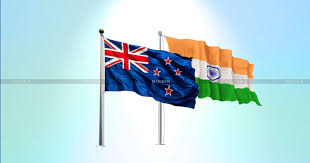
Next month, India’s free trade agreement with the European Union, which includes more than two dozen countries, will be finalized. The prevailing sentiment suggests that the US and Canada will also eventually have to enter into a free trade agreement with India because ignoring the demand market of a country with a population of 1.4 billion is tantamount to economic suicide, and even wealthy countries will eventually understand this. Free trade talks between India and New Zealand were also concluded on Monday. According to this agreement, 100 percent of trade between India and New Zealand will be covered. This has been termed a Comprehensive Economic Partnership Agreement. New Zealand is a wealthy country. We are currently exporting goods worth $47 billion to New Zealand. Now, Indian goods will be tariff-free in New Zealand, meaning there will be no tax on our exports to New Zealand.
This means that Indian textiles, footwear, engineering goods, pharmaceuticals, automobiles, agricultural products, handicrafts, and jewelry can be sold there without taxes. Prime Minister Narendra Modi and New Zealand PM Christopher Luxon have announced this agreement. India, from its side, will keep 54.11 percent of New Zealand’s products tariff-free from day one. This figure will reach 79 percent in ten years. The agreement will take 7 to 8 months to be fully implemented. While India is currently negotiating free trade agreements with many countries, New Zealand is significant because this prosperous nation is home to 292,000 people of Indian origin, making them the third-largest ethnic group in the country. Indian investment in New Zealand is very low, at only Rs.1,700 crore, while New Zealand’s investment in India is Rs.23,000 crore.
The total trade between the two countries amounts to Rs.21,000 crore. Clearly, this agreement will boost our trade with New Zealand, and our investments in that country are also likely to increase. Another positive aspect is that agricultural products have been excluded from this free trade agreement, meaning India has protected its agriculture and dairy sectors. The tax-free environment will not affect these sectors, ensuring that our farmers do not face unnecessary competition when selling their products.
This free trade agreement also includes concessions for Indian expatriates. Indian students will be allowed to work during their studies for three years, and will also have the right to employment and professional mobility. Indian students can work up to 20 hours a week. This facility will continue even if there is a change in government in New Zealand. After graduation, those with a bachelor’s degree will be allowed to work for three years, and those with a PhD for four years. In addition, Indians will also be eligible for temporary visas. It is expected that in the coming days, Indians will increasingly look towards New Zealand, in addition to Canada, as a destination for work and study